
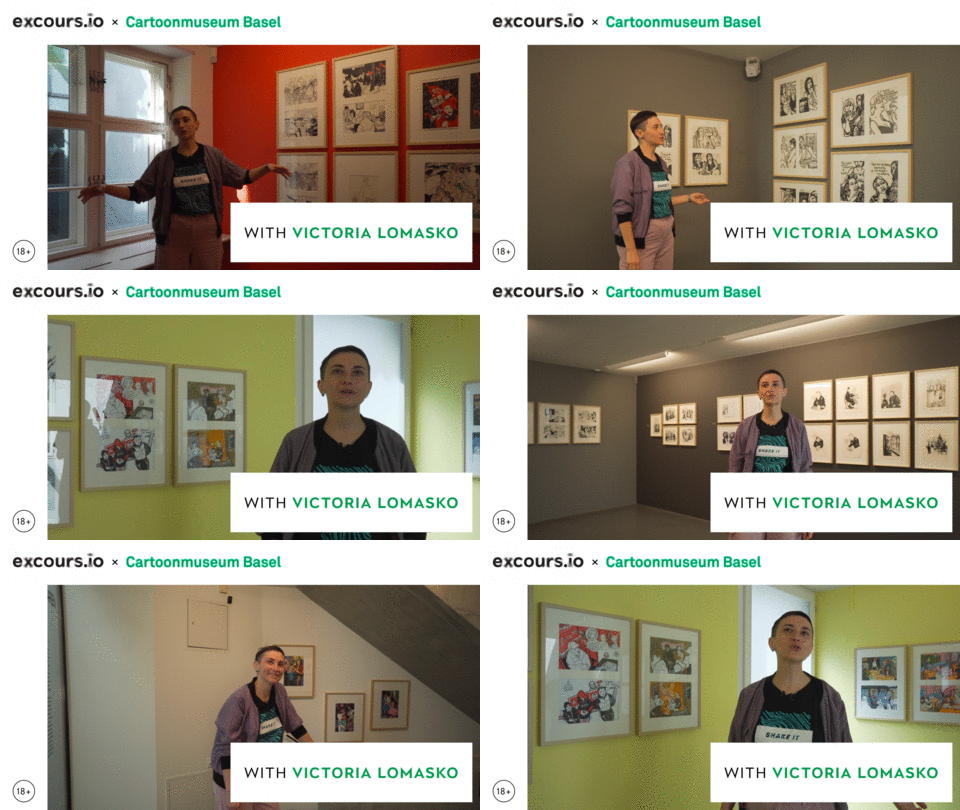
Victoria Lomasko. Other Russias
 Switzerland
 Basel
Basel
 2019
2019
 41
41
Victoria Lomasko’s retrospective at Cartoonmuseum Basel invites viewers to engage deeply with her explorations of Russia’s marginalized communities. This vibrant exhibition showcases her striking murals and drawings, which intricately depict the lives of LGBT activists, sex workers, and migrant laborers. Through her keen observations and bold, expressive style, Lomasko highlights the social injustices and political repression faced by these groups.
Why should you watch this?
Victoria Lomasko’s retrospective at Cartoonmuseum Basel resonates profoundly with today’s global landscape of social justice and human rights. As she illuminates the lives of Russia’s marginalized communities, her work serves as a poignant reminder of the ongoing struggles faced by those often overlooked in society. In a world increasingly confronted with issues of inequality, discrimination, and political repression, Lomasko’s murals and drawings act as both a testament to resilience and a call for advocacy. By capturing the essence of these lived experiences she invites audiences to reflect on the shared responsibility we hold in addressing injustices, igniting conversations that transcend borders. The exhibition serves as both a visual narrative and a call to action, reflecting her long-standing commitment to human rights advocacy. This exhibition underscores the enduring relevance of her work in fostering empathy and inspiring change in our contemporary era.
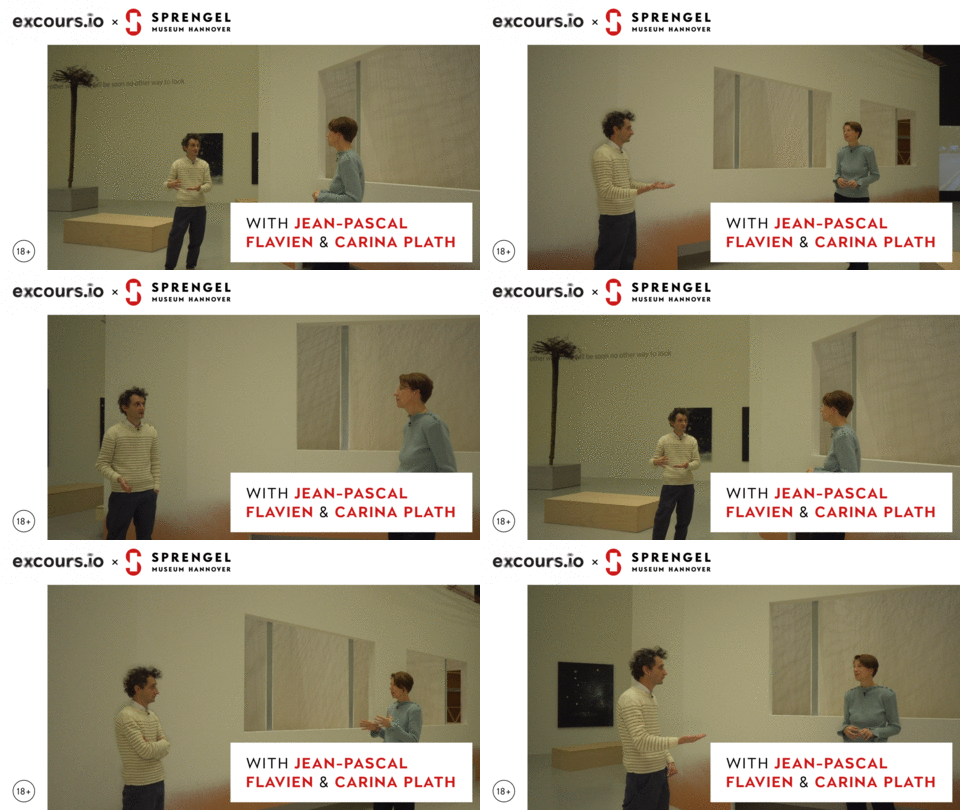
HOW TO SURVIVE ― Art as Survival Strategy | with Jean-Pascal Flavien & Carina Plath
Germany
Hanover
2020
31
The group exhibition presents a compelling exploration of how art provides resilience in times of personal and societal crisis. The exhibition features works by renowned artists like Gustav Metzger, Shusaku Arakawa, and Alina Szapocznikow, each of whom faced extreme adversity and transformed their experiences into profound artistic statements. Whether addressing environmental destruction, illness, or existential threats, these artists used creativity as a means to survive and challenge the limits of human endurance. The exhibition emphasizes the power of art to propose alternative perspectives when the world seems trapped in binary thinking. By engaging with radical artistic responses to crisis, visitors are invited to reflect on how creativity can offer strength, hope, and new possibilities for navigating the uncertainties of modern life. Art, in this context, becomes more than expression — it becomes a strategy for survival and transformation.
Why should you watch this?
The exhibition tackles pressing issues like climate change, personal trauma, and social upheaval, and having a knowledgeable guide helps to bring those themes to life. It’s not just about admiring the art; it’s about understanding the stories and survival strategies that inspired each piece. This context makes the art resonate even more, helping you connect with the messages in a meaningful way. In a time when we’re all looking for ways to navigate challenges, a guided tour offers fresh insights that can spark reflection and inspire hope.
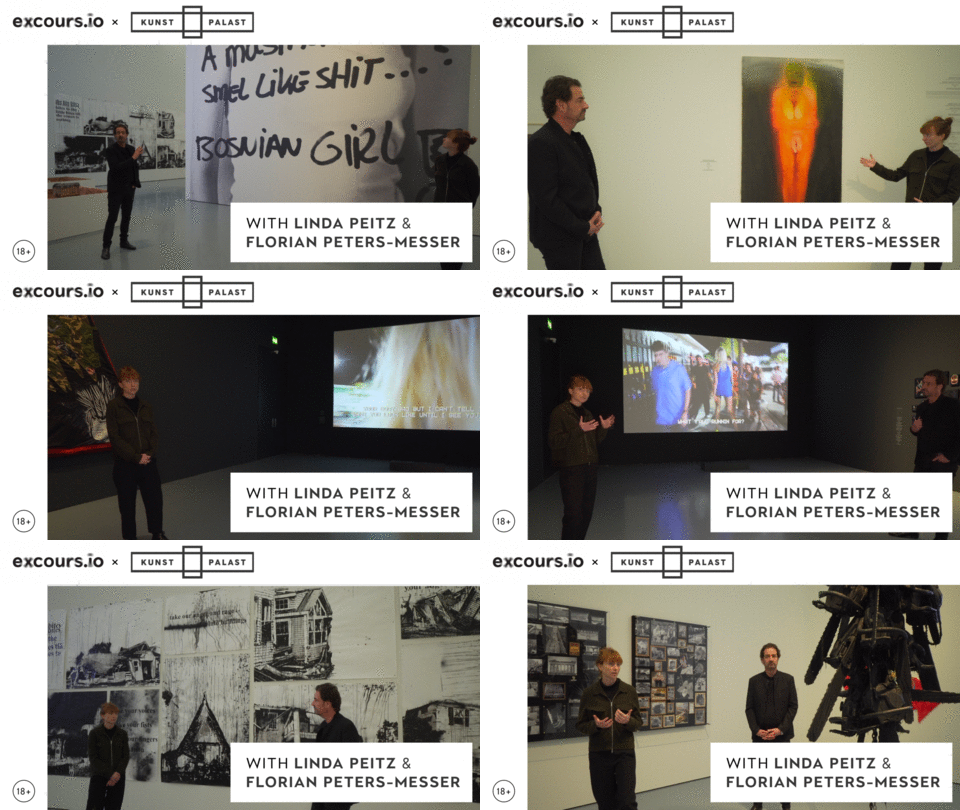
TIME FOR OUTRAGE! Art in Times of Social Anger | Feminism
Germany
Dusseldorf
2020
23
Can anger and rage be justified in a world riddled with oppression and inequality? Are these emotions destructive forces or vital catalysts for social change? As democracy faces crises and populism gains ground globally, these questions have sparked renewed debate. Contemporary artists have responded, using their work to navigate and challenge the pressing issues of our time.
The exhibition ‘Time for Outrage!’ in Düsseldorf explores these questions through six thematic blocks: Right-wing Shift, Trumpism, Protest, Postcolonialism, Feminism, and Discrimination. Across a diverse range of mediums — including installations, drawings, paintings, sculptures, photography, and video art — 40 international artists immerse viewers in the visceral realms of protest, social dissent, and public anger. The exhibition doesn’t just present anger as a raw emotion; it portrays it as a vehicle for dialogue, resistance, and empowerment in the face of systemic injustice.
A substantial portion of the works on display come from the collection of entrepreneur and collector Florian Peters-Messer, whose commitment to socially engaged art amplifies the urgent messages these pieces convey.
Why should you watch this?
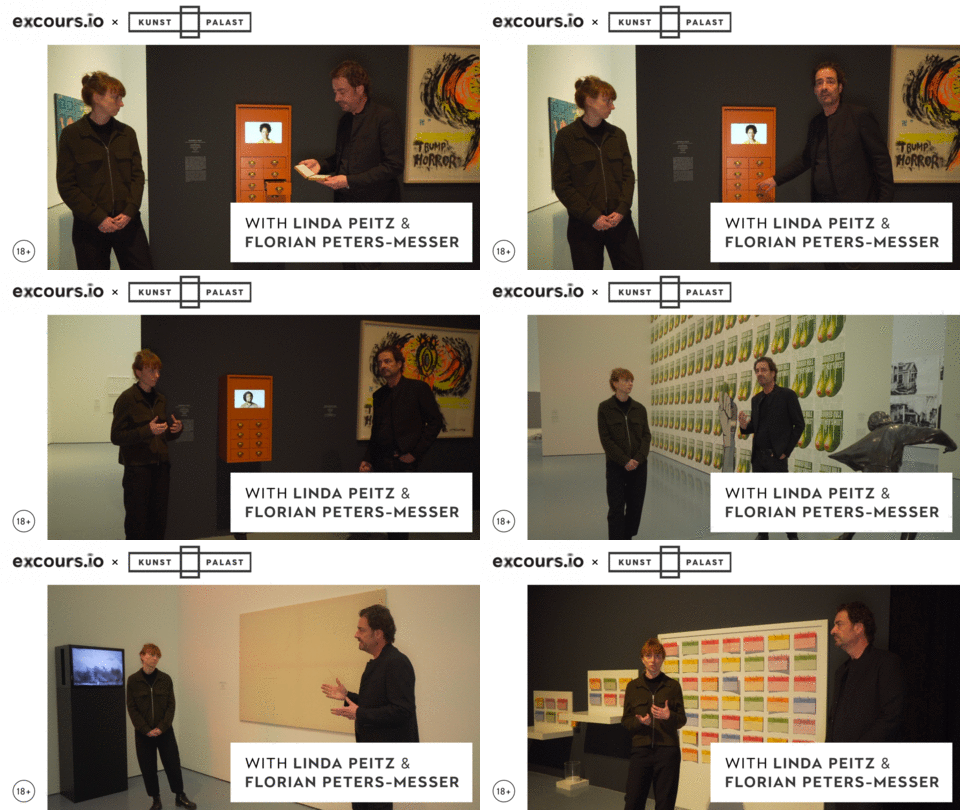
TIME FOR OUTRAGE! Art in Times of Social Anger | Postcolonialism
Germany
Dusseldorf
2020
36
Can anger and rage be justified in a world riddled with oppression and inequality? Are these emotions destructive forces or vital catalysts for social change? As democracy faces crises and populism gains ground globally, these questions have sparked renewed debate. Contemporary artists have responded, using their work to navigate and challenge the pressing issues of our time.
The exhibition ‘Time for Outrage!’ in Düsseldorf explores these questions through six thematic blocks: Right-wing Shift, Trumpism, Protest, Postcolonialism, Feminism, and Discrimination. Across a diverse range of mediums — including installations, drawings, paintings, sculptures, photography, and video art — 40 international artists immerse viewers in the visceral realms of protest, social dissent, and public anger. The exhibition doesn’t just present anger as a raw emotion; it portrays it as a vehicle for dialogue, resistance, and empowerment in the face of systemic injustice.
A substantial portion of the works on display come from the collection of entrepreneur and collector Florian Peters-Messer, whose commitment to socially engaged art amplifies the urgent messages these pieces convey.
Why should you watch this?
TIME FOR OUTRAGE! Art in Times of Social Anger | Protest
Germany
Dusseldorf
2020
24
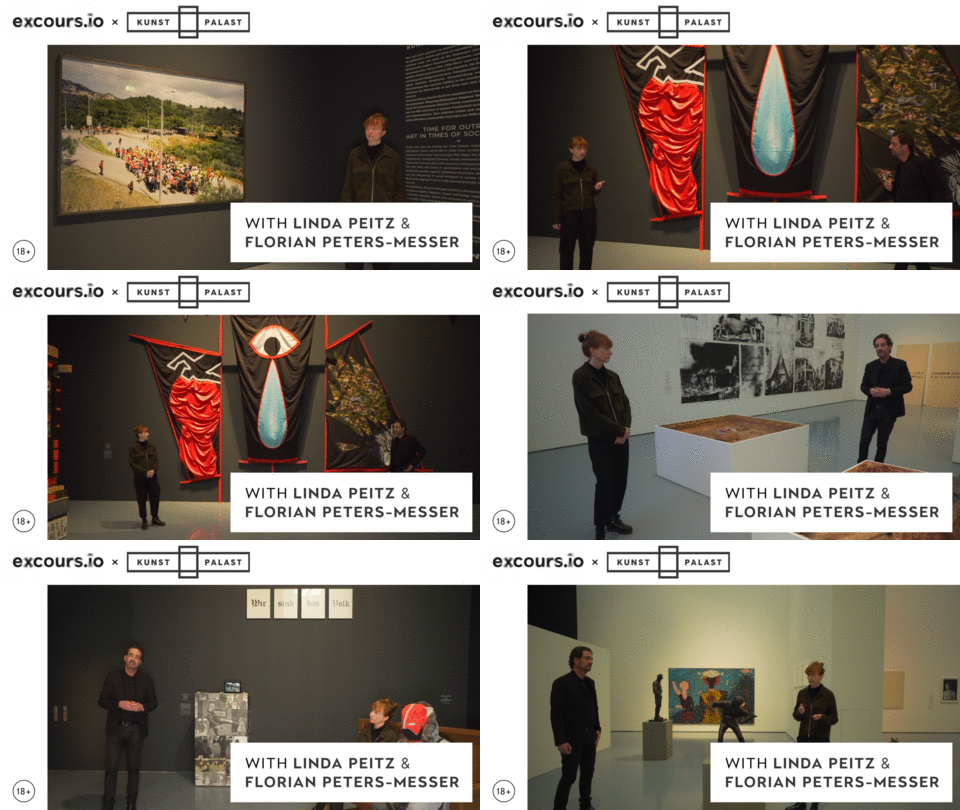
Can anger and rage be justified in a world riddled with oppression and inequality? Are these emotions destructive forces or vital catalysts for social change? As democracy faces crises and populism gains ground globally, these questions have sparked renewed debate. Contemporary artists have responded, using their work to navigate and challenge the pressing issues of our time. The exhibition Time for Outrage! in Düsseldorf explores these questions through six thematic blocks: Right-wing Shift, Trumpism, Protest, Postcolonialism, Feminism, and Discrimination. Across a diverse range of mediums — including installations, drawings, paintings, sculptures, photography, and video art — 40 international artists immerse viewers in the visceral realms of protest, social dissent, and public anger. The exhibition doesn’t just present anger as a raw emotion; it portrays it as a vehicle for dialogue, resistance, and empowerment in the face of systemic injustice.
Why should you watch this?
TIME FOR OUTRAGE! Art in Times of Social Anger | Discrimination
Germany
Dusseldorf
2020
24
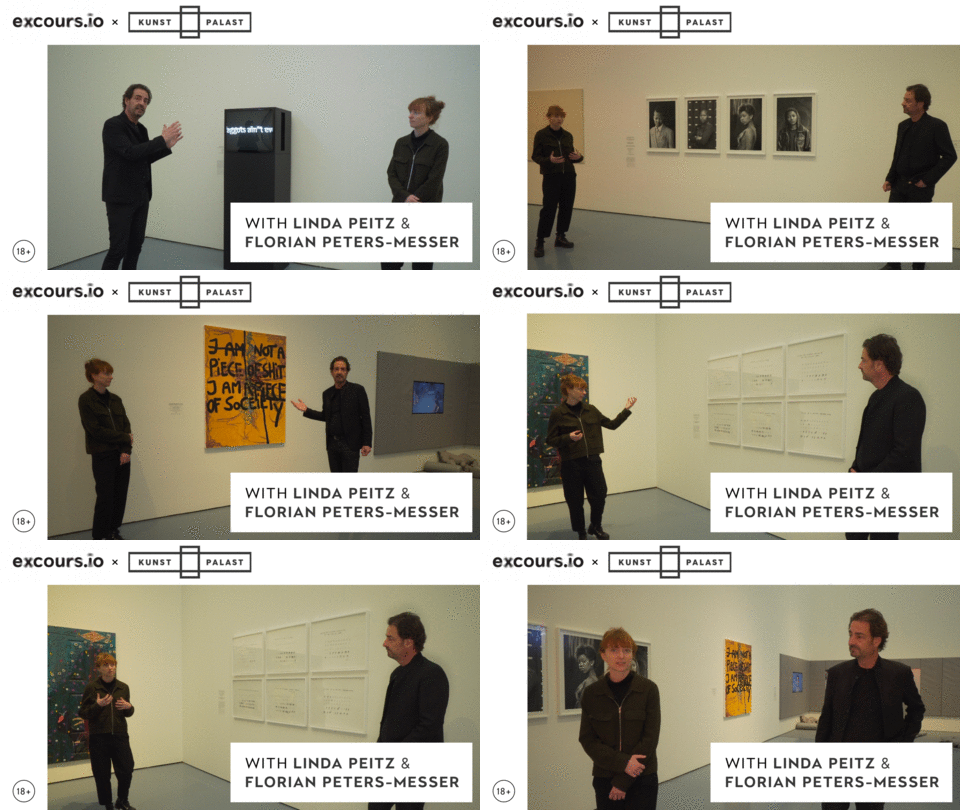
Can anger and rage be justified in a world riddled with oppression and inequality? Are these emotions destructive forces or vital catalysts for social change? As democracy faces crises and populism gains ground globally, these questions have sparked renewed debate. Contemporary artists have responded, using their work to navigate and challenge the pressing issues of our time.
The exhibition ‘Time for Outrage!’ in Düsseldorf explores these questions through six thematic blocks: Right-wing Shift, Trumpism, Protest, Postcolonialism, Feminism, and Discrimination. Across a diverse range of mediums — including installations, drawings, paintings, sculptures, photography, and video art — 40 international artists immerse viewers in the visceral realms of protest, social dissent, and public anger. The exhibition doesn’t just present anger as a raw emotion; it portrays it as a vehicle for dialogue, resistance, and empowerment in the face of systemic injustice.
A substantial portion of the works on display come from the collection of entrepreneur and collector Florian Peters-Messer, whose commitment to socially engaged art amplifies the urgent messages these pieces convey.