
Sergiy Bratkov. My Brother’s Cats | Curatorial Introduction with Annegret Laabs
 Germany
 Magdeburg
 2024
2024
 25
25
Why should you watch this?
Agitprop Trains
Russia
Moscow
2018
55
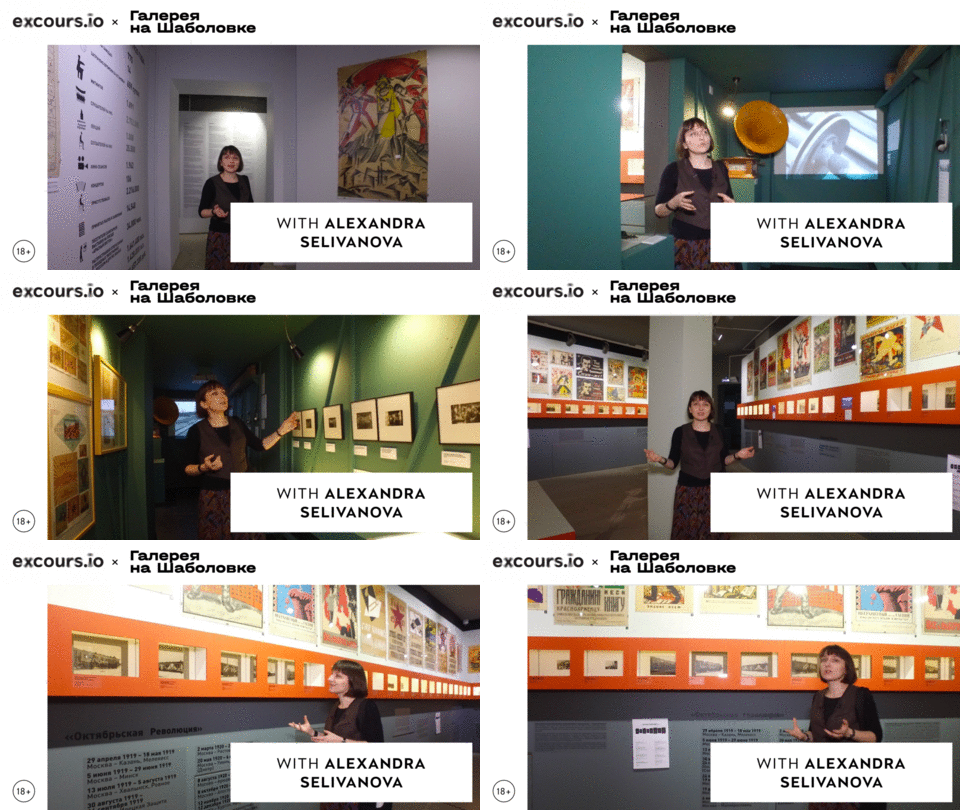
The exhibition delves into a groundbreaking aspect of Russian cultural history birthed from the revolution—mobile propaganda trains. These unique vehicles served as a fusion of art and technology, transforming into vibrant mobile platforms that combined exhibitions, theater, libraries, and cinema on wheels. Launched in 1918 under the directive of the All-Russian Central Executive Committee, these trains traversed vast distances, reaching from Odessa to Irkutsk and engaging communities with their painted exteriors and rich artistic content. Supervised by renowned graphic artist Ignatiy Nivinsky, the trains featured contributions from a diverse array of artists, blending Symbolism with early avant-garde ideas. This exhibition promises an in-depth exploration of their socio-political significance during the Civil War, showcasing archival photos, posters, and various artifacts that capture the ethos of an era where art became instrumental in uniting and inspiring a nation.
Why should you watch this?
Watching a guided tour of this exhibition is particularly essential in today’s context, as it illuminates the enduring power of art as a vehicle for social change and collective identity. In a world increasingly fractured by division and misinformation, the exhibition serves as a poignant reminder of how creative expression can be mobilized to unite communities and convey critical messages. As contemporary society grapples with its own political upheavals, understanding the historical context of these mobile propaganda trains reveals the importance of merging various forms of media and art to engage the public constructively. This tour not only highlights the innovative spirit of artists who contributed to the movement but also encourages dialogue about the role of culture in shaping our narratives and responding to social challenges.