
Actually, the Dead Are Not Dead. Una forma de ser. | Introduction
 Germany
 Stuttgart
 2020
2020
The exhibition explores the interplay between celebration and political expression, rooted in the context of marginalized communities. Drawing inspiration from the Bergen Assembly 2019, this exhibition examines how festivities serve as platforms for social emancipation and self-determination, particularly within the Rom*nja, Flamenco, and Bohemian cultures since the 19th century. By interweaving historical and contemporary works, the exhibition highlights the transformative power of communal gatherings, where joy, rebellion, and artistic innovation intertwine. Una forma de ser invites visitors to reflect on the significance of togetherness, creativity, and resilience in the face of adversity.
Why should you watch this?
If our soup can could speak: Mikhail Lifshitz and the Soviet Sixties
Russia
Moscow
2018
 59
59
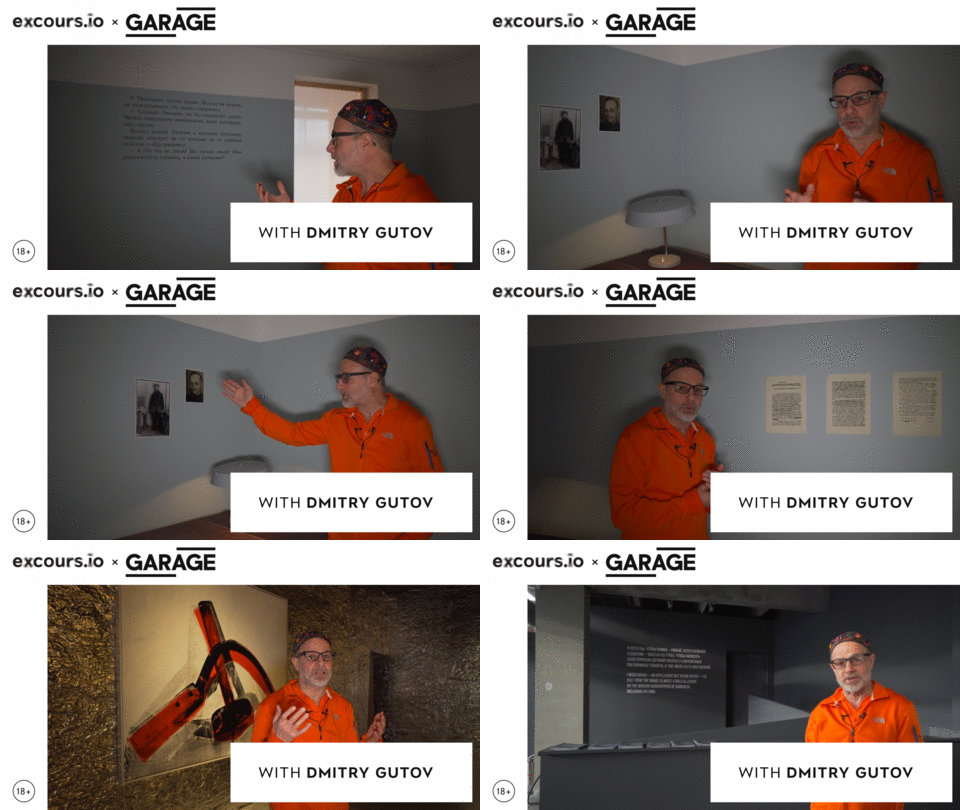
The exhibition is dedicated to one of the most enigmatic, mysterious, and controversial philosophers of the USSR and his famous anthology of polemical texts, The Crisis of Ugliness, which criticizes the art of the 20th century. The retrospective showcases never presented before archive documents, Lifshitz’s texts, and artworks in ten interiors, each representing a milestone in the development of modernism or Lifshitz’s thought: 10 rooms – 10 stages of Soviet history – 10 knots in Lifshitz’s biography. The project is the first large-scale analysis attempt of the tense relationship between so-called progressive art and politics in the XX-XXI century.
Why should you watch this?
This exhibition is a must-see for anyone interested in the deep connections between art, politics, and society. Lifshitz’s The Crisis of Ugliness offers a rare Soviet critique of modernism, challenging Cubism and Pop Art in ways that still resonate today. The exhibition’s exploration of these ideas through archival materials, artworks, and Lifshitz’s own writings sheds light on the complex relationship between avant-garde art and political ideology. In a time of global crisis, Lifshitz’s critiques are more relevant than ever, inviting viewers to reconsider the role of art in shaping social consciousness.
Maya Schweizer – Voices
Germany
Munich
2020
43
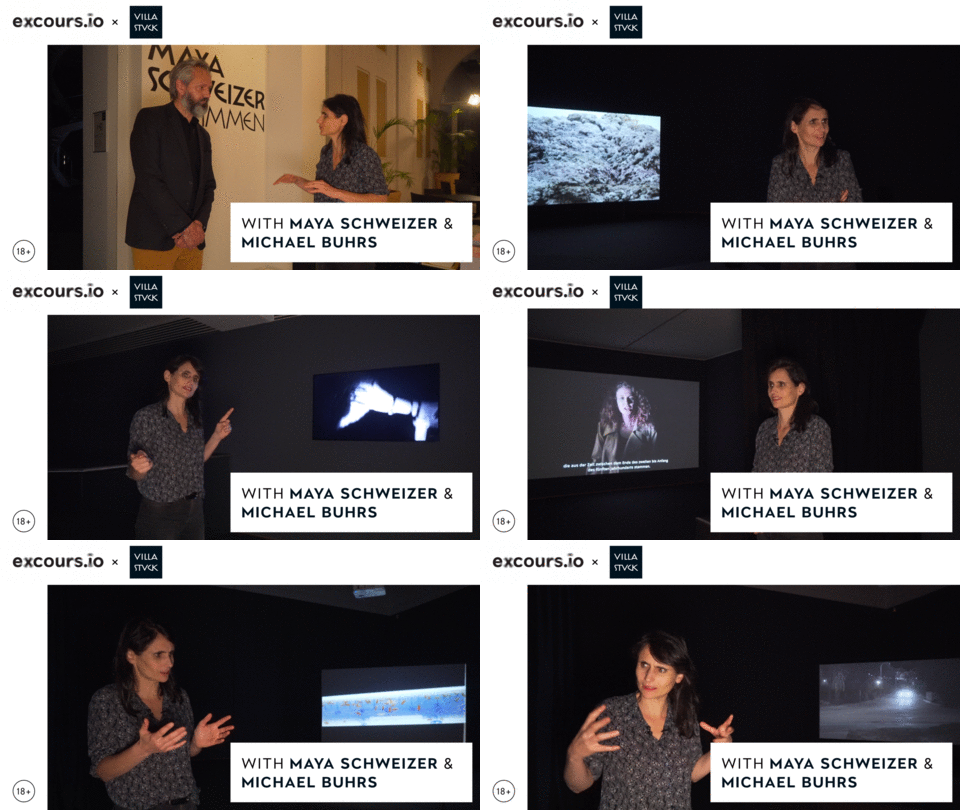
Human perception of time often resembles a collage — fragmented and layered, shaped by memory and experience. Berlin-based artist Maya Schweizer captures this complexity through her unique language of short film. In her work, everyday spaces become carriers of memory, interweaving found footage, situational observations, and soundscapes to create immersive, multifaceted narratives. Schweizer’s art subtly explores the intricacies of cultural identity and the role individuals play as political actors, encouraging deeper reflection on how we engage with our surroundings and their embedded histories. In her solo exhibition Stimmen (Voices) at the Museum Villa Stuck, composed of 10 films spanning the past 14 years, Schweizer gives voice to those who have disappeared, recounting stories of violence, memory, and loss, particularly within the context of German history and Munich’s past. By blending personal and collective histories, her work oscillates between documentation and staged reality, using urban spaces as laboratories for examining overlapping historical layers. As viewers dive into the culture of remembrance, Schweizer uncovers new and often unsettling depths of human memory, sparking a reflection on the invisible ties between people, places, and their histories.
Why should you watch this?

From Kerenkа to Sovznak: Money and Revolution
Russia
Saint Petersburg
2017
38
The exhibition invites viewers into the intricate narrative of Russia’s monetary evolution during a time of upheaval. It explores the profound impact of the 1917 revolution on currency, showcasing how money served as both a reflection and catalyst of societal change. Visitors can discover unique artifacts, many on display for the first time, organized into sections such as “Stable Ruble,” “Money and War,” and “The New Economic Policy.” Highlights include the first “Kerensky” notes, designs featuring Marx, and the initial Soviet currency.
Why should you watch this?
This exhibition offers a fascinating glimpse into a pivotal period in Russian history, exploring how currency reflects the societal upheavals of the early 20th century. It presents unique artifacts, many on public display for the first time, showcasing the evolution of money from the stable ruble to revolutionary currencies. Each section meticulously details the impact of World War I and the 1917 revolution on the monetary system, featuring highlights like the iconic “Kerensky” notes and innovative designs for Soviet currency. This exploration not only reveals the artistic and political significance of currency but also connects past struggles with contemporary economic debates, making it a thought-provoking experience for anyone interested in history, art, or economics.