
TIME FOR OUTRAGE! Art in Times of Social Anger | Introduction

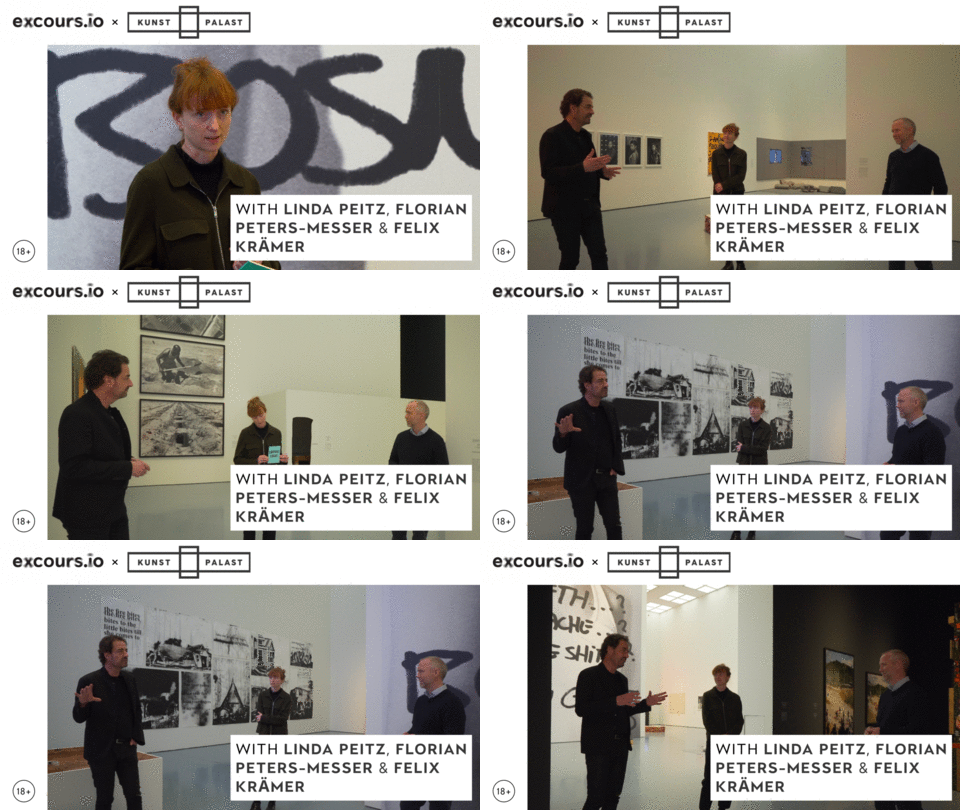
Can anger and rage be justified in a world riddled with oppression and inequality? Are these emotions destructive forces or vital catalysts for social change? As democracy faces crises and populism gains ground globally, these questions have sparked renewed debate. Contemporary artists have responded, using their work to navigate and challenge the pressing issues of our time.

The exhibition ‘Time for Outrage!’ in Düsseldorf explores these questions through six thematic blocks: Right-wing Shift, Trumpism, Protest, Postcolonialism, Feminism, and Discrimination. Across a diverse range of mediums — including installations, drawings, paintings, sculptures, photography, and video art — 40 international artists immerse viewers in the visceral realms of protest, social dissent, and public anger. The exhibition doesn’t just present anger as a raw emotion; it portrays it as a vehicle for dialogue, resistance, and empowerment in the face of systemic injustice.

A substantial portion of the works on display come from the collection of entrepreneur and collector Florian Peters-Messer, whose commitment to socially engaged art amplifies the urgent messages these pieces convey.

Why should you watch this?
As political polarization, social inequality, and widespread protests dominate global headlines, the exhibition sheds light on the emotional and political power of anger as a response to injustice. The tour offers nuanced insights into how contemporary artists interpret and challenge societal issues like fake news, racial violence, and the erosion of democratic values. By exploring the different artistic expressions of outrage, viewers gain a richer understanding of how these works speak to our current moment, making the exhibition incredibly relevant as we navigate a world increasingly defined by conflict and resistance.

GASTEV. How to Work

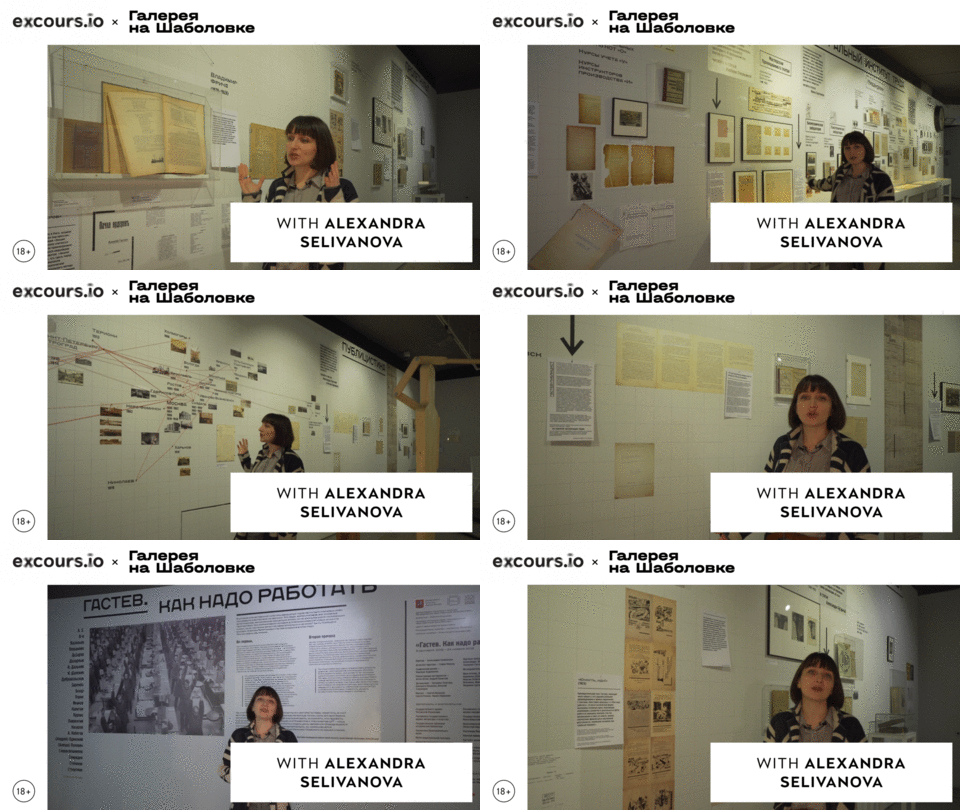
The exhibition GASTEV. How to Work examines the profound influence of Alexey Gastev, a key figure in Soviet thought and the founder of the Central Institute of Labor (CIT). Gastev’s work in the 1920s and 1930s revolutionized labor practices through his development of scientific labor organization (NOT), blending Marxist ideology with avant-garde approaches to efficiency, biomechanics, and human-machine interaction. His theories sought to transform workers into precise, efficient elements of industrial production, reflecting the broader Soviet utopian vision of reshaping society through labor. The exhibition contextualizes Gastev’s role not just as an organizer but as a visionary whose ideas on human potential and mechanization resonate with contemporary discussions on automation and the future of work. Despite his execution during the Stalin’s Great Purge/Terror, Gastev’s legacy continues to provoke thought on the relationship between labor, politics, and the shaping of the modern human.
More at http://avantgarde.center/gastev (in Russian only)

Why should you watch this?

This exhibition’ topic is especially relevant now because it connects Gastev’s groundbreaking theories on labor and mechanization to current debates about automation, AI, and the future of work. As industries rapidly evolve, Gastev’s vision of optimizing human potential through scientific organization offers critical insights into the challenges we face today. The show raises urgent questions about how labor is being transformed, the role of technology, and the balance between human and machine — a timely reflection in an era where these issues impact our daily lives more than ever.