
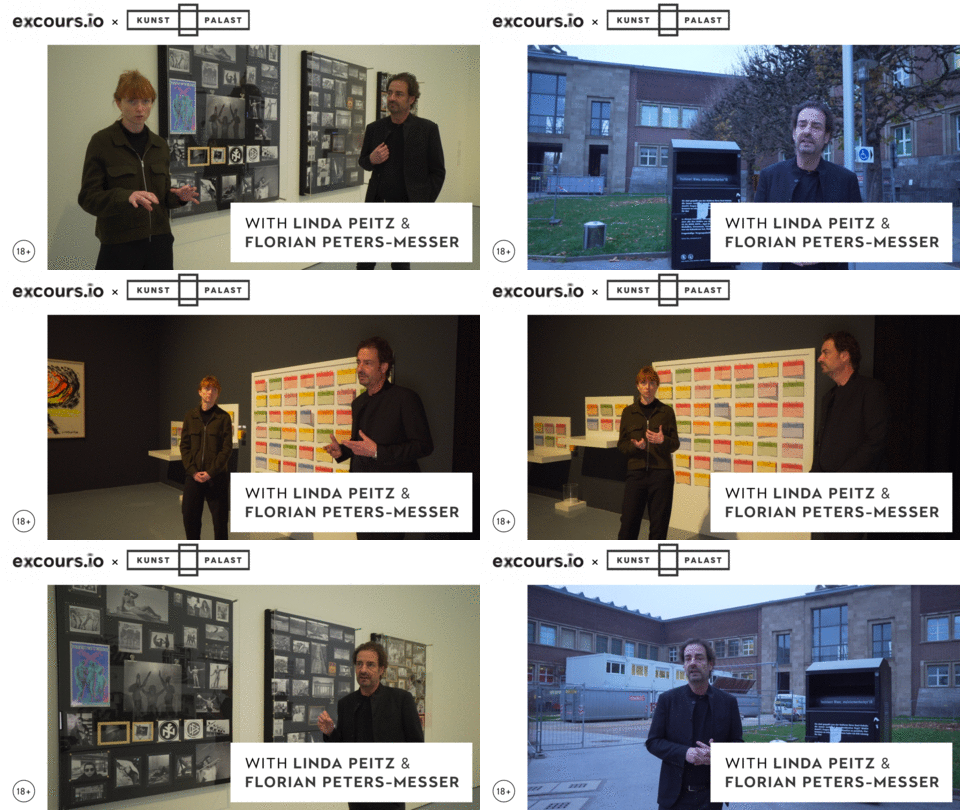
TIME FOR OUTRAGE! Art in Times of Social Anger | Right-wing Shift
 Germany
 Dusseldorf
 2020
2020
 32
32
Can anger and rage be justified in a world riddled with oppression and inequality? Are these emotions destructive forces or vital catalysts for social change? As democracy faces crises and populism gains ground globally, these questions have sparked renewed debate. Contemporary artists have responded, using their work to navigate and challenge the pressing issues of our time.
The exhibition ‘Time for Outrage!’ in Düsseldorf explores these questions through six thematic blocks: Right-wing Shift, Trumpism, Protest, Postcolonialism, Feminism, and Discrimination. Across a diverse range of mediums — including installations, drawings, paintings, sculptures, photography, and video art — 40 international artists immerse viewers in the visceral realms of protest, social dissent, and public anger. The exhibition doesn’t just present anger as a raw emotion; it portrays it as a vehicle for dialogue, resistance, and empowerment in the face of systemic injustice.
A substantial portion of the works on display come from the collection of entrepreneur and collector Florian Peters-Messer, whose commitment to socially engaged art amplifies the urgent messages these pieces convey.
Why should you watch this?
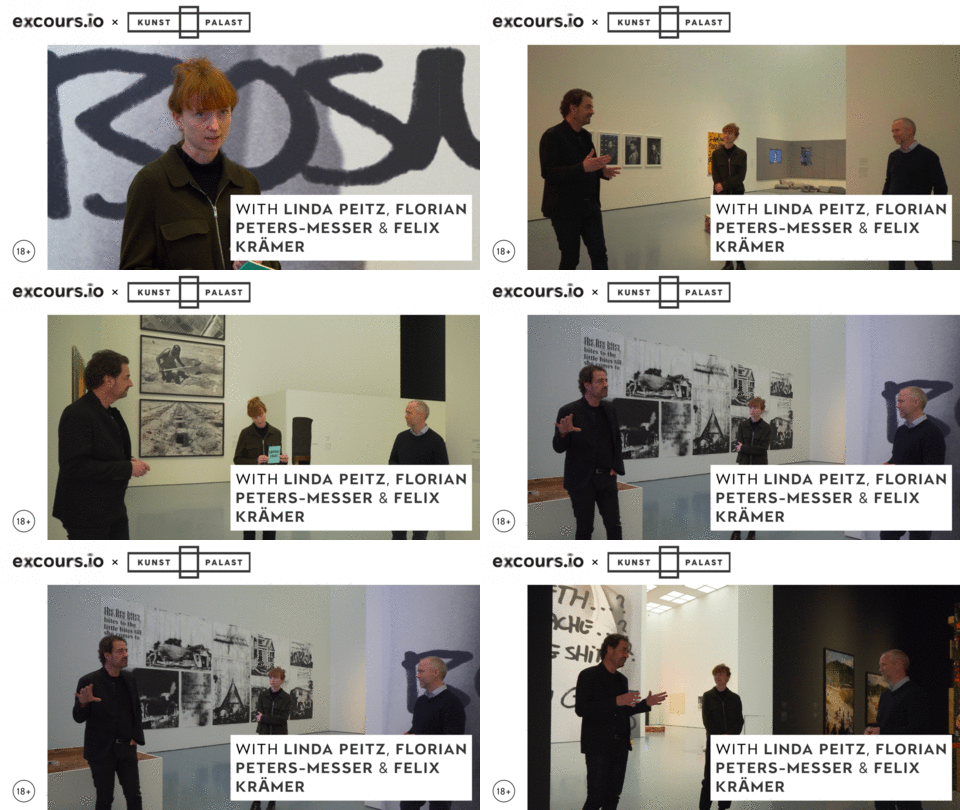
TIME FOR OUTRAGE! Art in Times of Social Anger | Introduction
Germany
Dusseldorf
2020
27
Can anger and rage be justified in a world riddled with oppression and inequality? Are these emotions destructive forces or vital catalysts for social change? As democracy faces crises and populism gains ground globally, these questions have sparked renewed debate. Contemporary artists have responded, using their work to navigate and challenge the pressing issues of our time.
The exhibition ‘Time for Outrage!’ in Düsseldorf explores these questions through six thematic blocks: Right-wing Shift, Trumpism, Protest, Postcolonialism, Feminism, and Discrimination. Across a diverse range of mediums — including installations, drawings, paintings, sculptures, photography, and video art — 40 international artists immerse viewers in the visceral realms of protest, social dissent, and public anger. The exhibition doesn’t just present anger as a raw emotion; it portrays it as a vehicle for dialogue, resistance, and empowerment in the face of systemic injustice.
A substantial portion of the works on display come from the collection of entrepreneur and collector Florian Peters-Messer, whose commitment to socially engaged art amplifies the urgent messages these pieces convey.
Why should you watch this?
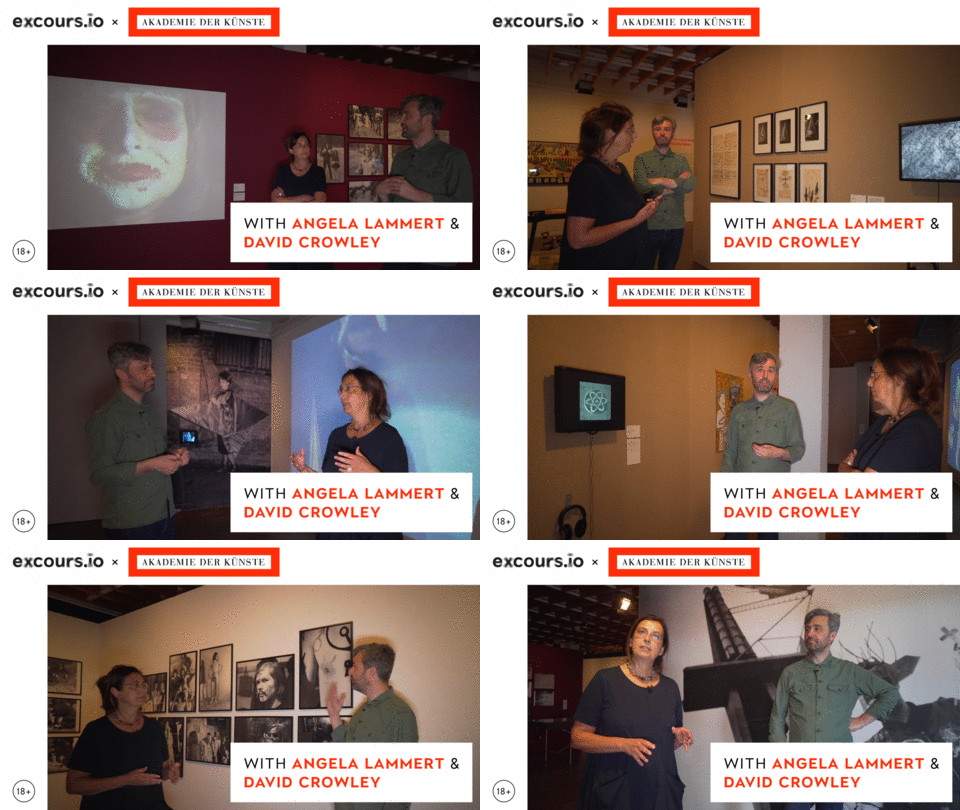
Notes from the Underground. Art and Alternative Music in Eastern Europe 1968-1994
Germany
Berlin
2018
56
The exhibition Notes from the Underground. Art and Alternative Music in Eastern Europe 1968–1994 examines the intersection of underground music and visual arts under communist regimes in Eastern Europe. It highlights how rock, punk, and new wave music, alongside performance art, fashion, and film, became tools of countercultural expression against state control. In response to censorship and scarcity, artists and musicians created homemade instruments, produced Samizdat magazines, and distributed recordings. The exhibition underscores the role of improvisation and irony in resisting authoritarianism, with works from Poland, Yugoslavia, the Soviet Union, and Czechoslovakia, offering a new perspective on how art and music intertwined as forms of dissent.
Why should you watch this?
In a time where freedom of expression remains a contested issue, Notes from the Underground. Art and Alternative Music in Eastern Europe 1968–1994 draws vital parallels between past and present struggles against authoritarianism. By showcasing how rock, punk, and new wave music intertwined with visual arts to resist state control, the exhibition highlights the subversive power of creativity. From DIY instruments to Samizdat magazines, it captures the spirit of rebellion and improvisation that thrived under repressive regimes, making it a timely exploration of art’s role in confronting oppression and fueling collective resistance.
Katrin Nenasheva. Between Here and There: Stories of City Isolations
Russia
Moscow
2017
50
Between Here and There: Stories of Urban Isolation is an exhibition by Katrin Nenasheva that explores the lives of individuals permanently isolated in psychiatric institutions. In her performance, Nenasheva traversed city streets wearing virtual reality glasses displaying panoramic images from these institutions, highlighting the barriers that separate their world from ours. She engaged with the public in various locations, including the subway and Red Square, inviting them to experience her perspective and share the motivations behind her work. The exhibition presents documentation of her journey, allowing visitors to engage with virtual reality themselves, fostering a dialogue between “here” and “there.” This immersive experience encourages reflection on societal isolation and connection.
Why should you watch this?
Katrin Nenasheva’s exhibition Between Here and There: Stories of Urban Isolation offers a profound exploration of the often-overlooked lives of individuals in psychiatric institutions. By donning virtual reality glasses that display panoramic views of these spaces, Nenasheva creates a striking connection between the isolated and the public, inviting visitors to step into her shoes as she navigates familiar urban landscapes. This immersive performance, paired with documentation of her interactions in locations like the subway and Red Square, blurs the lines between separation and engagement. Through this unique experience, attendees are encouraged to confront their perceptions of mental health, societal isolation, and human connection, prompting vital conversations about empathy and understanding in our communities.
Anthropocene Island. The Tallinn Architecture Biennale 2017
Estonia
Tallin
2017
68
The Tallinn Architecture Biennale (TAB) 2017delved into the future of urban environments through the lens of biotechnology and non-human-centered design. Curated by Prof. Claudia Pasquero, this fourth edition featured a diverse program comprising the Curatorial Exhibition, a thought-provoking symposium titled “Polycephalum City”, and the Tallinn Vision Competition, alongside satellite events like the Installation Programme exhibition and the bio.School showcase. Over two days, distinguished architects and researchers, including Mitchell Joachim and Rachel Armstrong, gathered to exchange insights on architecture’s intersection with biology and computation, envisioning cities as self-organizing systems. This Biennale not only highlighted innovative architectural practices but also prompted essential discussions on the evolving role of urban spaces in our rapidly changing world.
Why should you watch this?
In our current context, when climate change and urbanization demand urgent attention, it’s crucial to learn about the creative solutions sustainable architecture can provide. This exhibition serves as a vital platform to explore innovative solutions at the intersection of architecture, biology, and technology, emphasizing the importance of sustainable urban development. In today’s rapidly evolving society, where environmental crises impact our daily lives, understanding how cities can evolve into self-organizing entities is more relevant than ever. A guided tour illuminates the intricate relationships between human and non-human systems, fostering a deeper appreciation for how architecture can adapt to our ecological challenges. By engaging with expert interpretations, viewers can gain insight into the pressing issues of resilience, sustainability, and the ethical considerations of urban design, making this experience not only educational but transformative in our quest for a more sustainable future.
Klaus Staeck. Sand for the Gears
Germany
Essen
2018
55
Why should you watch this?
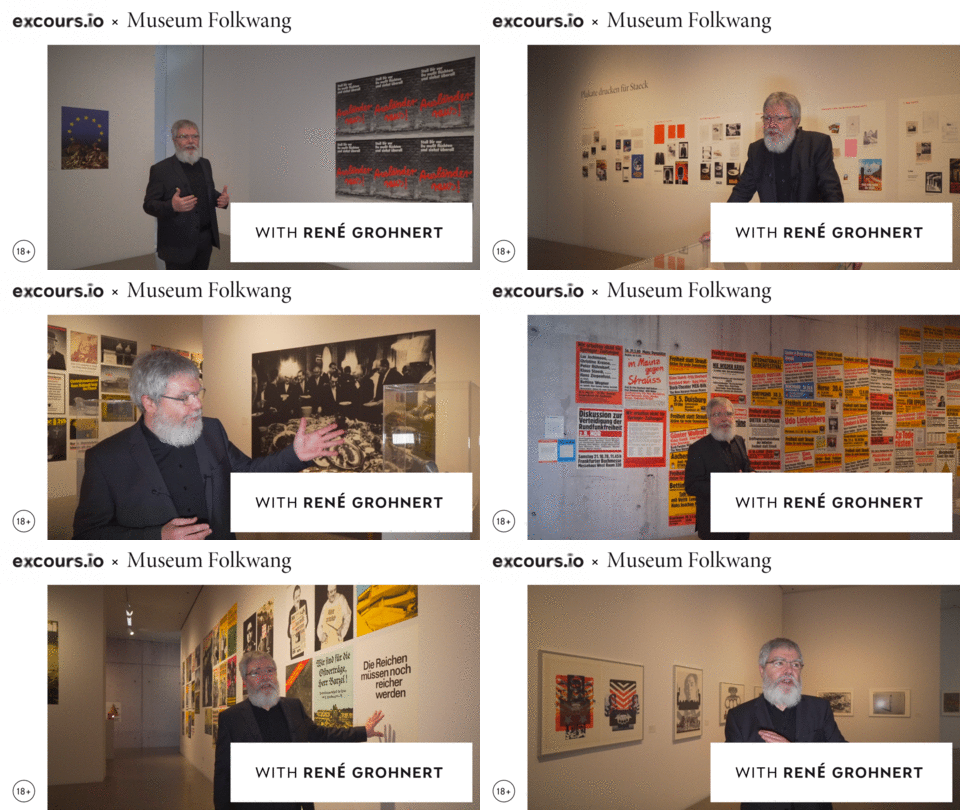
Klaus Staeck’s exhibition resonates deeply with contemporary audiences, serving as a powerful reminder of art’s capacity to provoke thought and inspire social change. In an age marked by political polarization and social unrest, Staeck’s nearly 180 posters challenge us to confront uncomfortable truths and reflect on the role of dissent in shaping public discourse. His bold, often scandalous imagery speaks to the importance of artists as catalysts for conversation, urging society to engage with pressing issues such as inequality, identity, and civic responsibility. As we navigate our own crises today, Staeck’s work underscores the timeless relevance of art as a tool for advocacy and a vehicle for sparking new dialogues. This exhibition not only honors a pivotal figure in art history but also invites us to consider how we, too, can use creativity to effect change in our communities.