
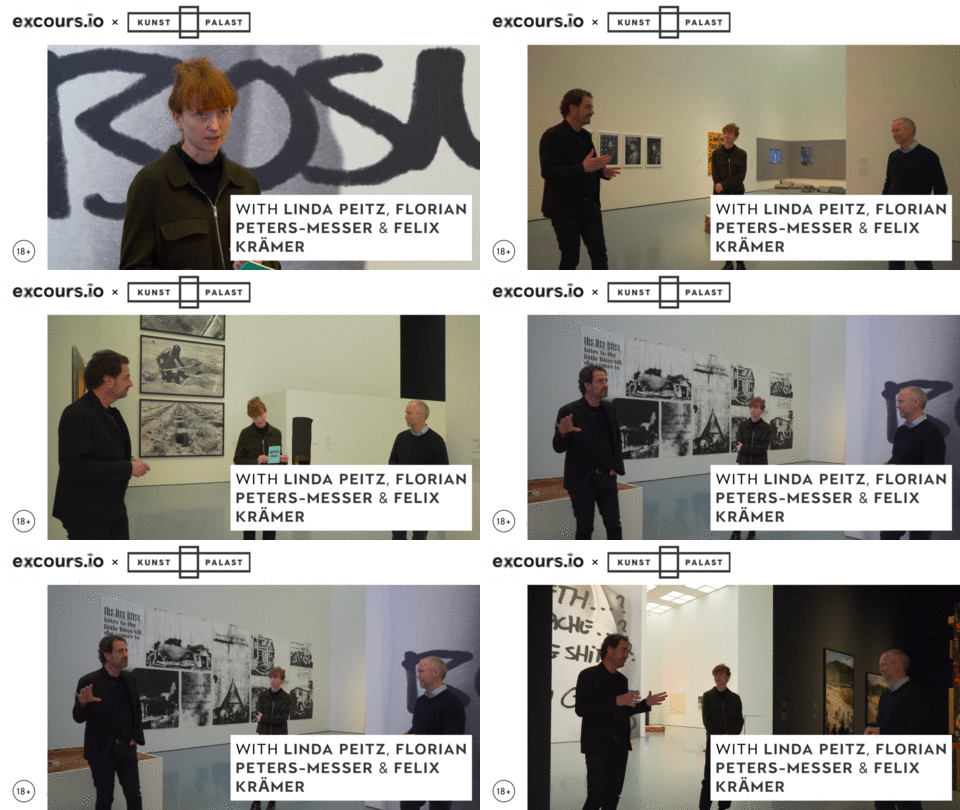
TIME FOR OUTRAGE! Art in Times of Social Anger | Introduction
 Germany
 Dusseldorf
 2020
2020
 27
27
Can anger and rage be justified in a world riddled with oppression and inequality? Are these emotions destructive forces or vital catalysts for social change? As democracy faces crises and populism gains ground globally, these questions have sparked renewed debate. Contemporary artists have responded, using their work to navigate and challenge the pressing issues of our time.
The exhibition ‘Time for Outrage!’ in Düsseldorf explores these questions through six thematic blocks: Right-wing Shift, Trumpism, Protest, Postcolonialism, Feminism, and Discrimination. Across a diverse range of mediums — including installations, drawings, paintings, sculptures, photography, and video art — 40 international artists immerse viewers in the visceral realms of protest, social dissent, and public anger. The exhibition doesn’t just present anger as a raw emotion; it portrays it as a vehicle for dialogue, resistance, and empowerment in the face of systemic injustice.
A substantial portion of the works on display come from the collection of entrepreneur and collector Florian Peters-Messer, whose commitment to socially engaged art amplifies the urgent messages these pieces convey.
Why should you watch this?
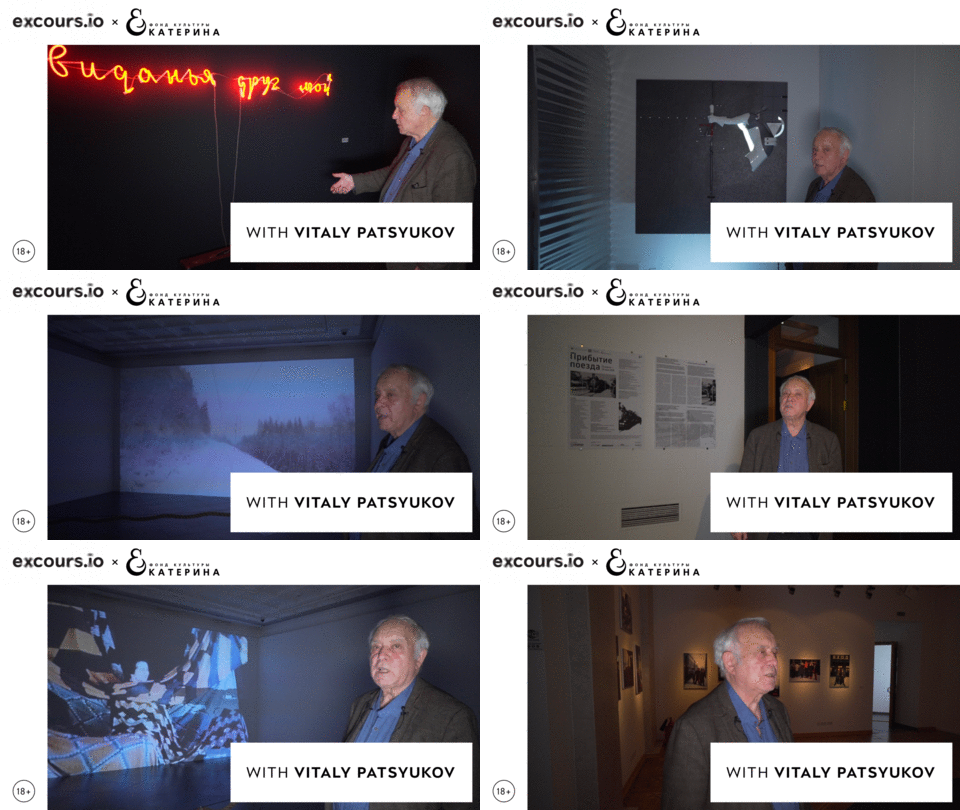
Train Arrival
Russia
Moscow
2018
56
“Arrival of the Train” is a captivating exhibition that unites over a hundred artistic works from both Russian and international creators, celebrating the train’s rich cultural significance as a harbinger of change and progress. It delves into the multifaceted roles of trains throughout history—from transformative technological marvels to poignant symbols in art—inviting viewers to journey through time and space. Showcasing everything from the historic funeral train of Lenin to the nostalgic echoes of the Trans-Siberian Railway, the exhibition highlights the train’s enduring impact on civilization and its power as a vessel for communication and innovation, ultimately crafting a shared narrative that connects cultures and eras in a uniquely dynamic way.
Why should you watch this?
The tour offers profound insights into our rapidly changing social landscape. In an era marked by globalization, technological advancement, and environmental challenges, the train serves as a metaphor for the interconnectedness of cultures and the migration of ideas. The exhibition elevates the experience, providing expert interpretations that illuminate how the train symbolizes not only progress but also the historical traumas associated with industrialization and modernization. As society grapples with issues like climate change, urbanization, and the quest for sustainable mobility, this exhibition invites reflection on our past and present relationship with transportation and technology. Engaging with these themes alongside knowledgeable curators allows viewers to critically assess their own narratives and environmental footprints, fostering a deeper connection to both art and contemporary global issues.
CLUBS of the FUTURE. Common Spaces in Transitional Societies
Germany
Berlin
2024
54
Why should you watch this?
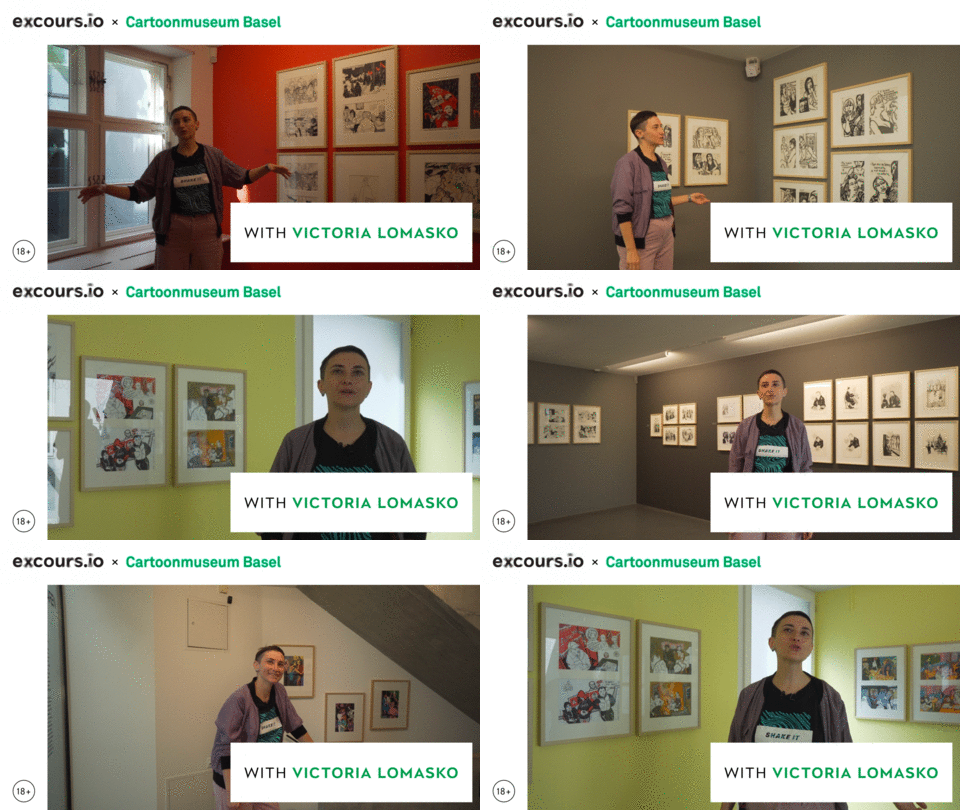
Victoria Lomasko. Other Russias
Switzerland
Basel
2019
41
Victoria Lomasko’s retrospective at Cartoonmuseum Basel invites viewers to engage deeply with her explorations of Russia’s marginalized communities. This vibrant exhibition showcases her striking murals and drawings, which intricately depict the lives of LGBT activists, sex workers, and migrant laborers. Through her keen observations and bold, expressive style, Lomasko highlights the social injustices and political repression faced by these groups.
Why should you watch this?
Victoria Lomasko’s retrospective at Cartoonmuseum Basel resonates profoundly with today’s global landscape of social justice and human rights. As she illuminates the lives of Russia’s marginalized communities, her work serves as a poignant reminder of the ongoing struggles faced by those often overlooked in society. In a world increasingly confronted with issues of inequality, discrimination, and political repression, Lomasko’s murals and drawings act as both a testament to resilience and a call for advocacy. By capturing the essence of these lived experiences she invites audiences to reflect on the shared responsibility we hold in addressing injustices, igniting conversations that transcend borders. The exhibition serves as both a visual narrative and a call to action, reflecting her long-standing commitment to human rights advocacy. This exhibition underscores the enduring relevance of her work in fostering empathy and inspiring change in our contemporary era.
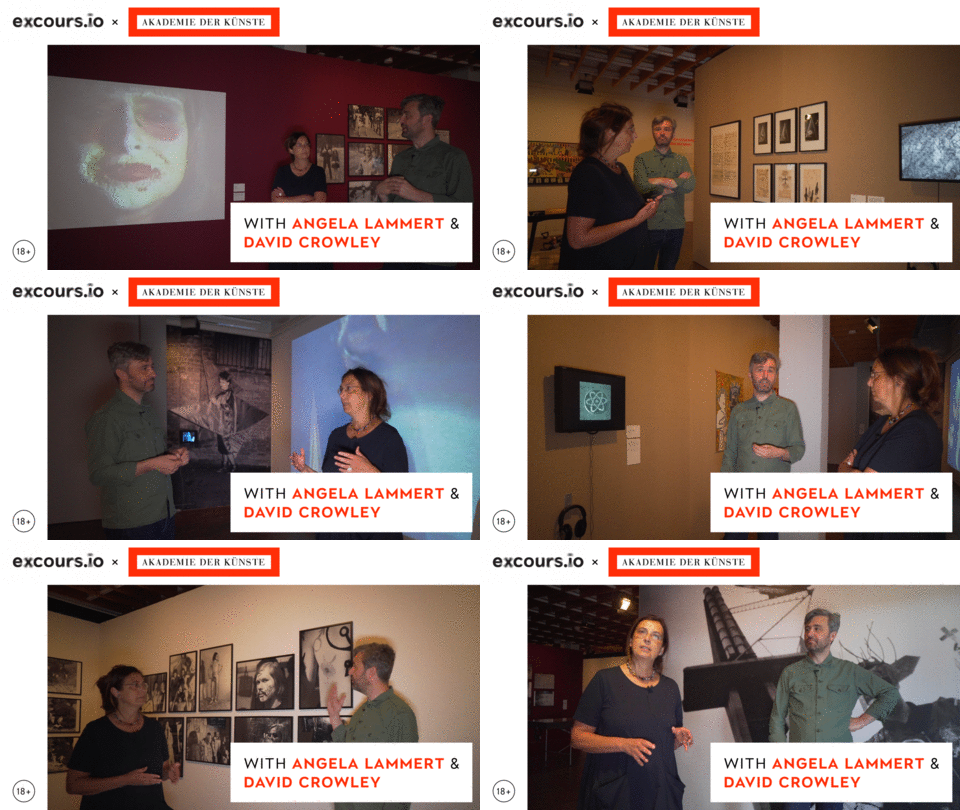
Notes from the Underground. Art and Alternative Music in Eastern Europe 1968-1994
Germany
Berlin
2018
56
The exhibition Notes from the Underground. Art and Alternative Music in Eastern Europe 1968–1994 examines the intersection of underground music and visual arts under communist regimes in Eastern Europe. It highlights how rock, punk, and new wave music, alongside performance art, fashion, and film, became tools of countercultural expression against state control. In response to censorship and scarcity, artists and musicians created homemade instruments, produced Samizdat magazines, and distributed recordings. The exhibition underscores the role of improvisation and irony in resisting authoritarianism, with works from Poland, Yugoslavia, the Soviet Union, and Czechoslovakia, offering a new perspective on how art and music intertwined as forms of dissent.
Why should you watch this?
In a time where freedom of expression remains a contested issue, Notes from the Underground. Art and Alternative Music in Eastern Europe 1968–1994 draws vital parallels between past and present struggles against authoritarianism. By showcasing how rock, punk, and new wave music intertwined with visual arts to resist state control, the exhibition highlights the subversive power of creativity. From DIY instruments to Samizdat magazines, it captures the spirit of rebellion and improvisation that thrived under repressive regimes, making it a timely exploration of art’s role in confronting oppression and fueling collective resistance.
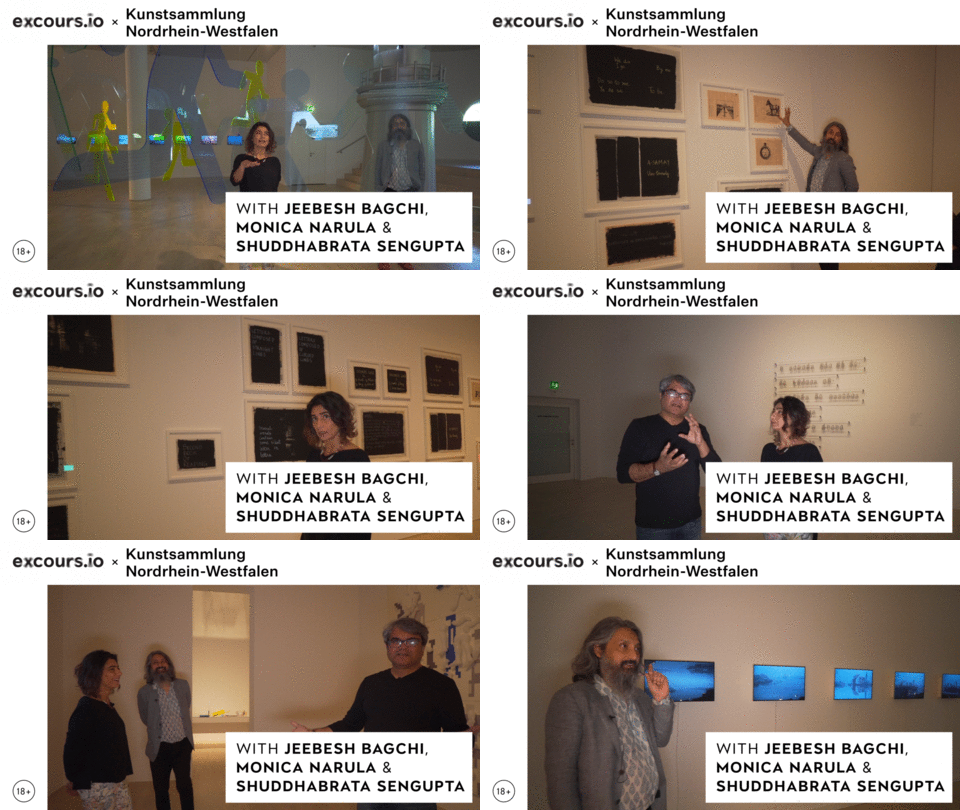
Raqs Media Collective. Everything Else is Ordinary
Germany
Dusseldorf
2018
97
Why should you watch this?
The Raqs Media Collective’s exploration of time as a force shaping human experience offers a profound critique of how society functions under capitalism. Their works challenge traditional notions of time, revealing its role in regulating life and framing historical narratives. By dismantling these fixed interpretations, they invite audiences to rethink the ways time is measured, experienced, and manipulated. In doing so, their practice merges art, history, and philosophy, making their work a compelling reflection on the rhythms that shape our individual and collective existence.
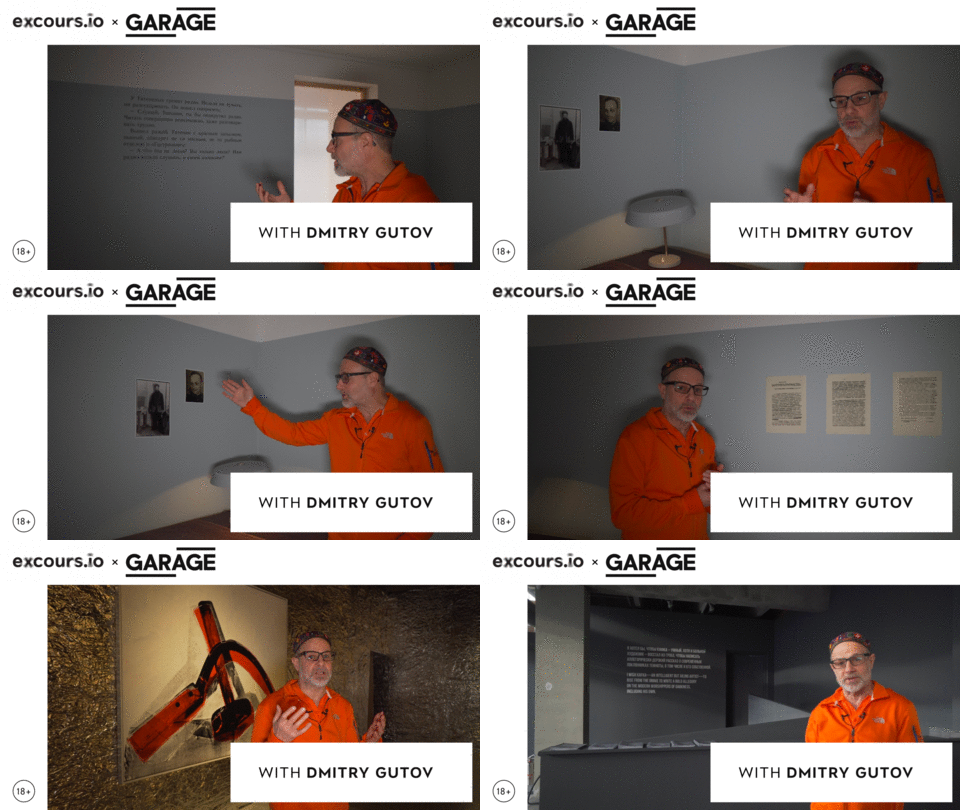
If our soup can could speak: Mikhail Lifshitz and the Soviet Sixties
Russia
Moscow
2018
59
The exhibition is dedicated to one of the most enigmatic, mysterious, and controversial philosophers of the USSR and his famous anthology of polemical texts, The Crisis of Ugliness, which criticizes the art of the 20th century. The retrospective showcases never presented before archive documents, Lifshitz’s texts, and artworks in ten interiors, each representing a milestone in the development of modernism or Lifshitz’s thought: 10 rooms – 10 stages of Soviet history – 10 knots in Lifshitz’s biography. The project is the first large-scale analysis attempt of the tense relationship between so-called progressive art and politics in the XX-XXI century.
Why should you watch this?
This exhibition is a must-see for anyone interested in the deep connections between art, politics, and society. Lifshitz’s The Crisis of Ugliness offers a rare Soviet critique of modernism, challenging Cubism and Pop Art in ways that still resonate today. The exhibition’s exploration of these ideas through archival materials, artworks, and Lifshitz’s own writings sheds light on the complex relationship between avant-garde art and political ideology. In a time of global crisis, Lifshitz’s critiques are more relevant than ever, inviting viewers to reconsider the role of art in shaping social consciousness.
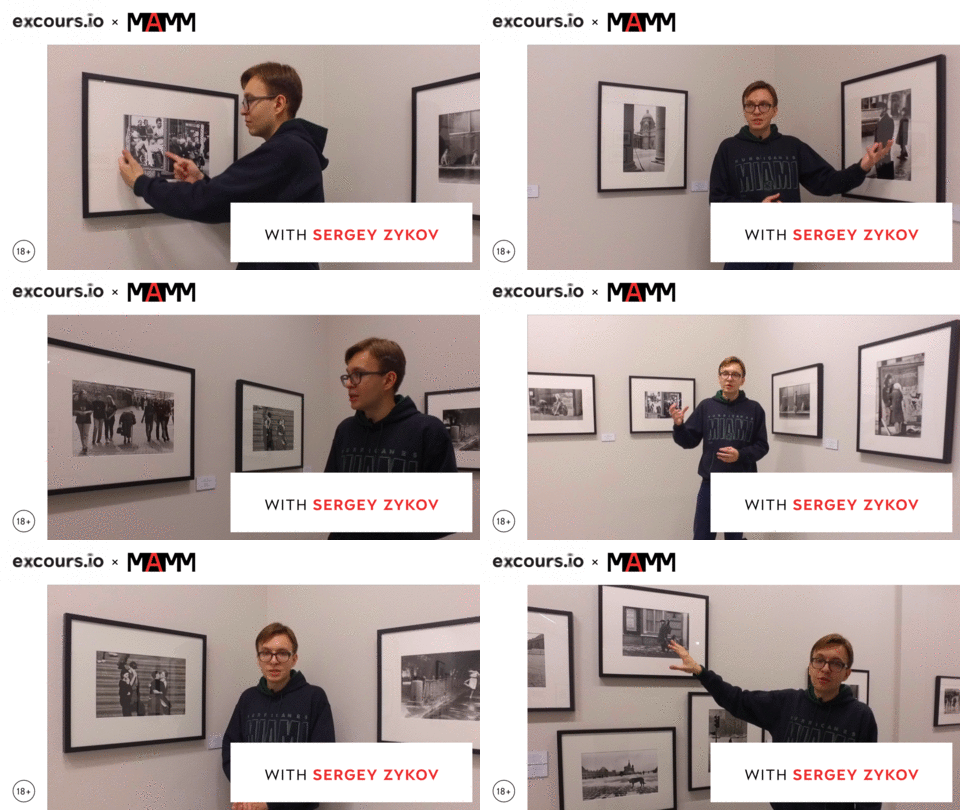
Vladimir Bogdanov. Retrospective. Part of The Classics of Russian Photography Program
Russia
Moscow
2017
80
As part of the Classics of Russian Photography program, MAMM presents the first large-scale retrospective of renowned contemporary photographer Vladimir Bogdanov. The exhibition features over 100 photographs from the Multimedia Art Museum, Moscow, highlighting his work from the 1960s to the 1990s. Born in 1937, Bogdanov’s artistic journey began during the Khrushchev thaw, a period that allowed artists to explore themes beyond socialist realism. This era marked a shift where humanism replaced official dogma, enabling photographers to capture the lives of ordinary people. In 1955, while studying at the Textile Institute, he joined the Leningrad photo club VDK, transforming his passion into a profession. His compelling images reflect a deep connection to Russian society and its complexities during a time of change.
Why should you watch this?
The retrospective exhibition of Vladimir Bogdanov at MAMM is a must-see for anyone interested in the evolution of Russian photography. With over 100 photographs spanning three decades, it showcases Bogdanov’s profound ability to capture the nuances of everyday life against the backdrop of a rapidly changing society. Emerging during the Khrushchev thaw, his work offers a rare glimpse into a time when artists could break free from the constraints of socialist realism. Each image is not just a photograph but a reflection of human experience and resilience, making this exhibition a poignant exploration of cultural identity and history. Engaging with Bogdanov’s art invites viewers to reflect on the complexities of Russian society, enriching their understanding of both past and present.