
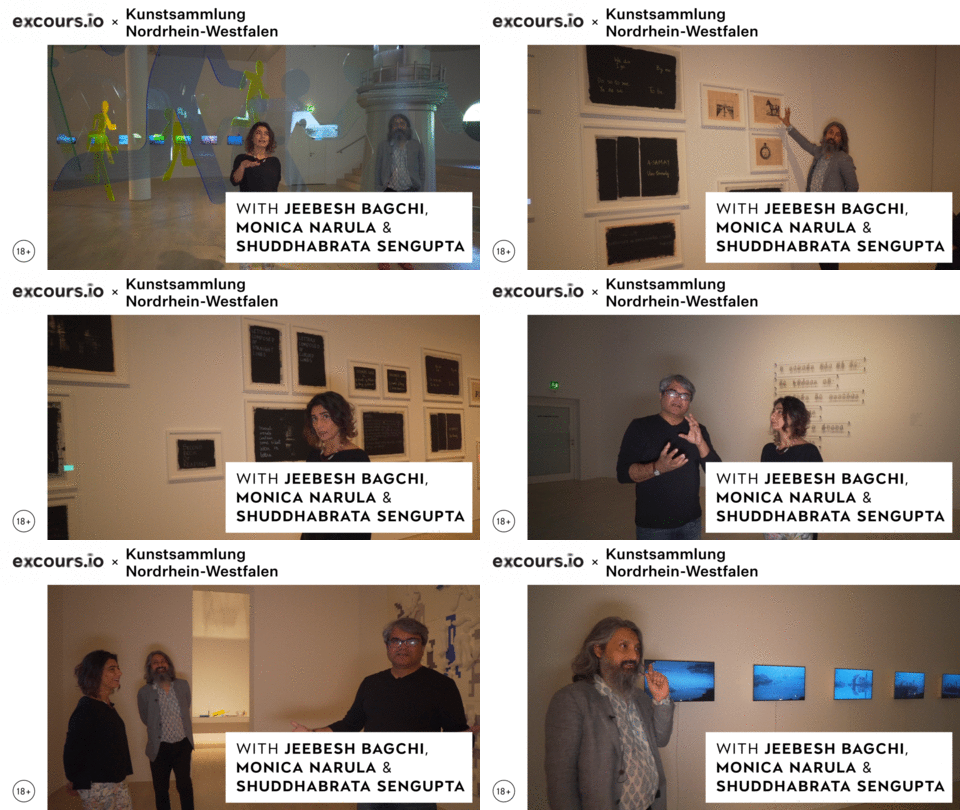
Raqs Media Collective. Everything Else is Ordinary
 Germany
 Dusseldorf
 2018
2018
 97
97
Why should you watch this?
The Raqs Media Collective’s exploration of time as a force shaping human experience offers a profound critique of how society functions under capitalism. Their works challenge traditional notions of time, revealing its role in regulating life and framing historical narratives. By dismantling these fixed interpretations, they invite audiences to rethink the ways time is measured, experienced, and manipulated. In doing so, their practice merges art, history, and philosophy, making their work a compelling reflection on the rhythms that shape our individual and collective existence.
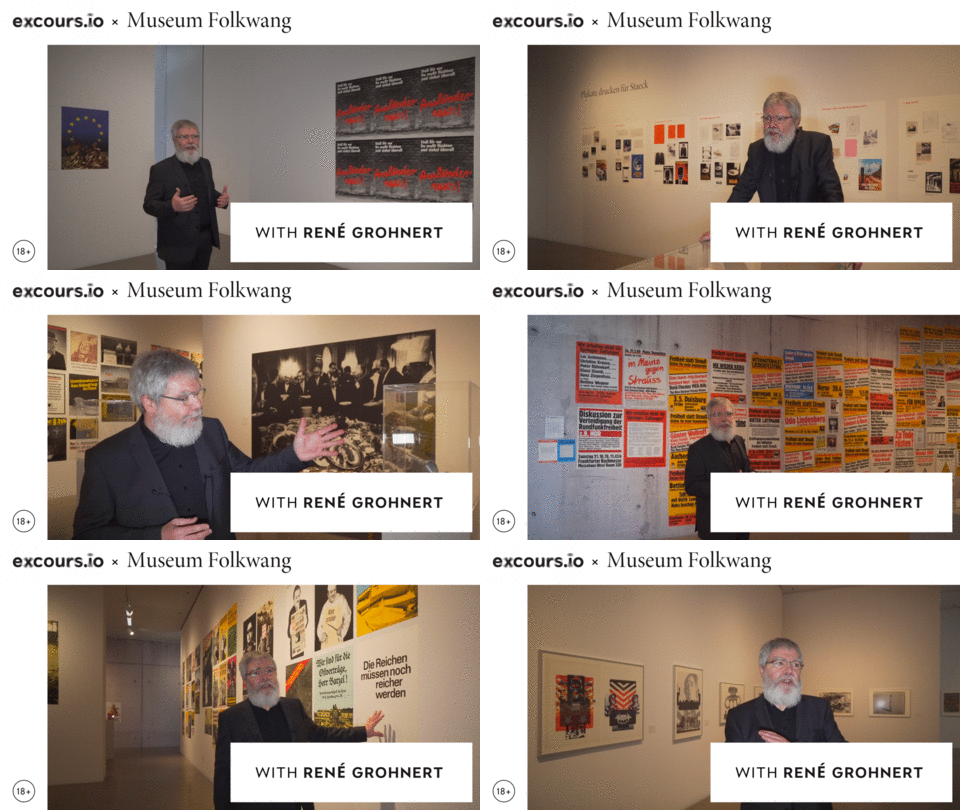
Klaus Staeck. Sand for the Gears
Germany
Essen
2018
55
Why should you watch this?
Klaus Staeck’s exhibition resonates deeply with contemporary audiences, serving as a powerful reminder of art’s capacity to provoke thought and inspire social change. In an age marked by political polarization and social unrest, Staeck’s nearly 180 posters challenge us to confront uncomfortable truths and reflect on the role of dissent in shaping public discourse. His bold, often scandalous imagery speaks to the importance of artists as catalysts for conversation, urging society to engage with pressing issues such as inequality, identity, and civic responsibility. As we navigate our own crises today, Staeck’s work underscores the timeless relevance of art as a tool for advocacy and a vehicle for sparking new dialogues. This exhibition not only honors a pivotal figure in art history but also invites us to consider how we, too, can use creativity to effect change in our communities.
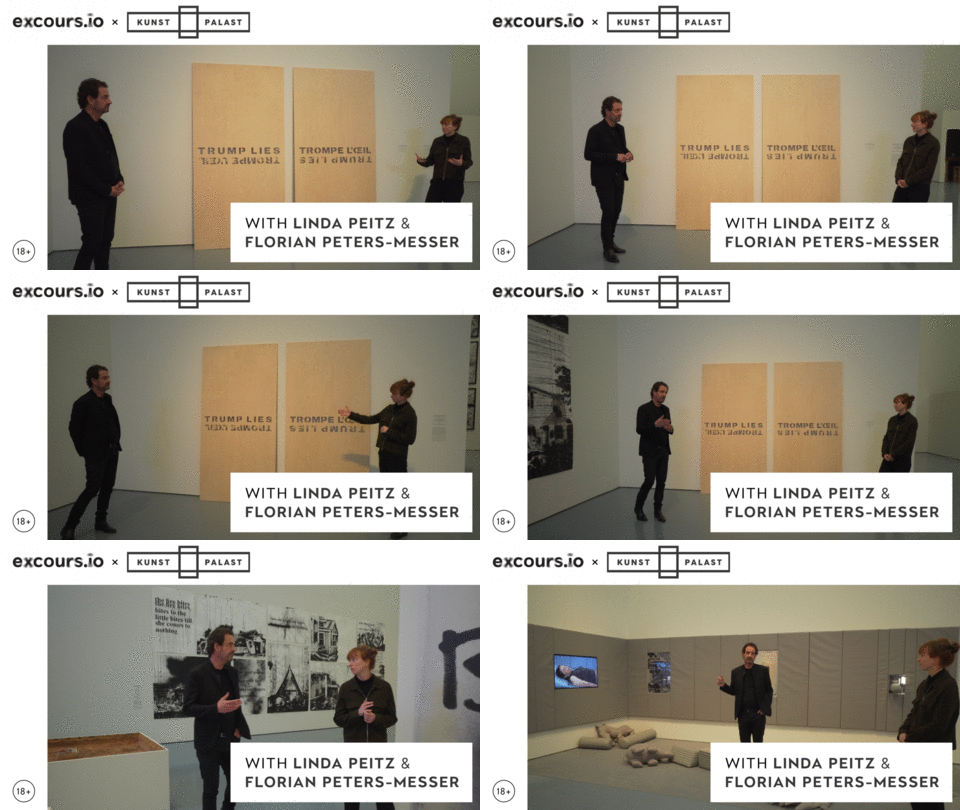
TIME FOR OUTRAGE! Art in Times of Social Anger | Trumpism
Germany
Dusseldorf
2020
33
Can anger and rage be justified in a world riddled with oppression and inequality? Are these emotions destructive forces or vital catalysts for social change? As democracy faces crises and populism gains ground globally, these questions have sparked renewed debate. Contemporary artists have responded, using their work to navigate and challenge the pressing issues of our time.
The exhibition ‘Time for Outrage!’ in Düsseldorf explores these questions through six thematic blocks: Right-wing Shift, Trumpism, Protest, Postcolonialism, Feminism, and Discrimination. Across a diverse range of mediums — including installations, drawings, paintings, sculptures, photography, and video art — 40 international artists immerse viewers in the visceral realms of protest, social dissent, and public anger. The exhibition doesn’t just present anger as a raw emotion; it portrays it as a vehicle for dialogue, resistance, and empowerment in the face of systemic injustice.
A substantial portion of the works on display come from the collection of entrepreneur and collector Florian Peters-Messer, whose commitment to socially engaged art amplifies the urgent messages these pieces convey.
Why should you watch this?
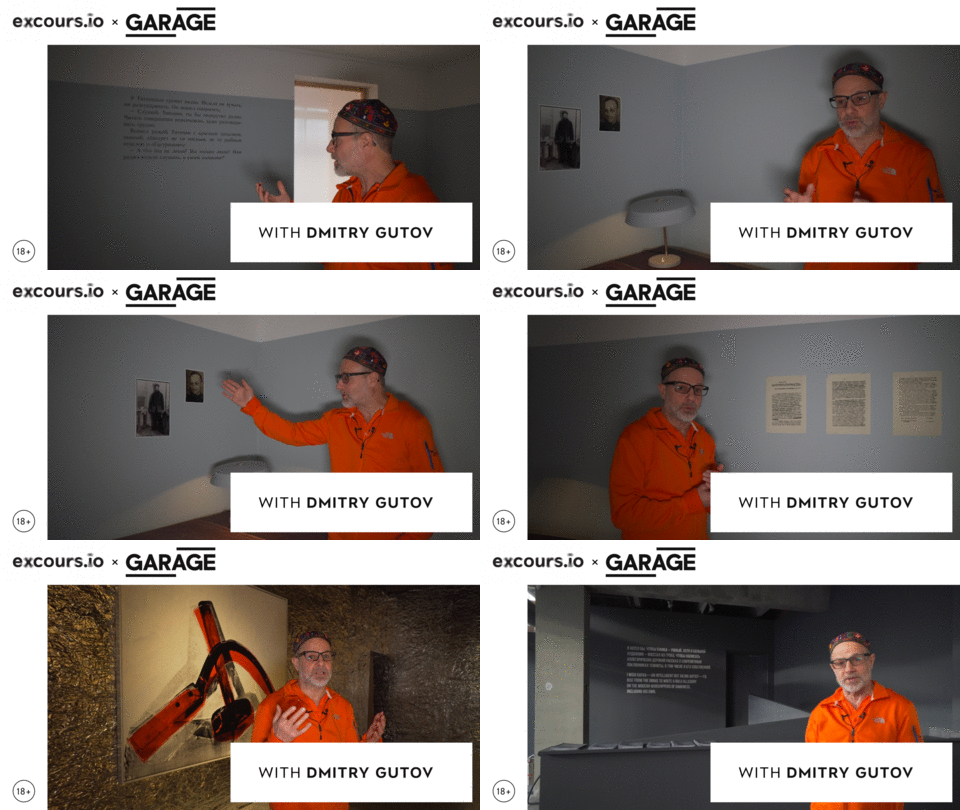
If our soup can could speak: Mikhail Lifshitz and the Soviet Sixties
Russia
Moscow
2018
59
The exhibition is dedicated to one of the most enigmatic, mysterious, and controversial philosophers of the USSR and his famous anthology of polemical texts, The Crisis of Ugliness, which criticizes the art of the 20th century. The retrospective showcases never presented before archive documents, Lifshitz’s texts, and artworks in ten interiors, each representing a milestone in the development of modernism or Lifshitz’s thought: 10 rooms – 10 stages of Soviet history – 10 knots in Lifshitz’s biography. The project is the first large-scale analysis attempt of the tense relationship between so-called progressive art and politics in the XX-XXI century.
Why should you watch this?
This exhibition is a must-see for anyone interested in the deep connections between art, politics, and society. Lifshitz’s The Crisis of Ugliness offers a rare Soviet critique of modernism, challenging Cubism and Pop Art in ways that still resonate today. The exhibition’s exploration of these ideas through archival materials, artworks, and Lifshitz’s own writings sheds light on the complex relationship between avant-garde art and political ideology. In a time of global crisis, Lifshitz’s critiques are more relevant than ever, inviting viewers to reconsider the role of art in shaping social consciousness.
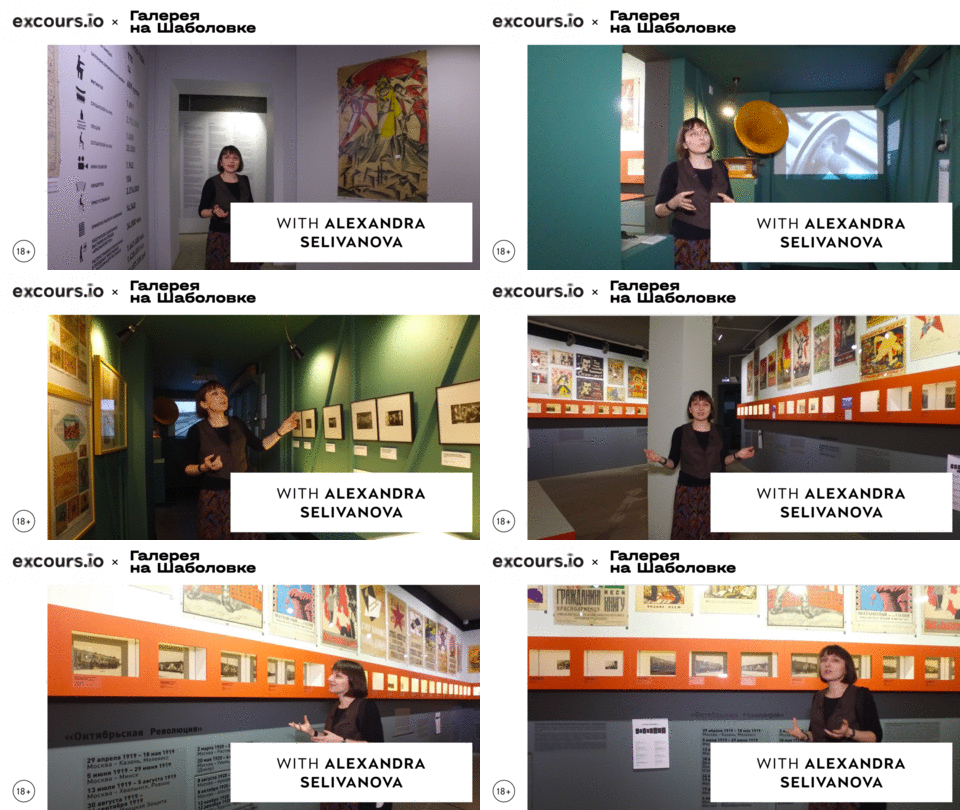
Agitprop Trains
Russia
Moscow
2018
55
The exhibition delves into a groundbreaking aspect of Russian cultural history birthed from the revolution—mobile propaganda trains. These unique vehicles served as a fusion of art and technology, transforming into vibrant mobile platforms that combined exhibitions, theater, libraries, and cinema on wheels. Launched in 1918 under the directive of the All-Russian Central Executive Committee, these trains traversed vast distances, reaching from Odessa to Irkutsk and engaging communities with their painted exteriors and rich artistic content. Supervised by renowned graphic artist Ignatiy Nivinsky, the trains featured contributions from a diverse array of artists, blending Symbolism with early avant-garde ideas. This exhibition promises an in-depth exploration of their socio-political significance during the Civil War, showcasing archival photos, posters, and various artifacts that capture the ethos of an era where art became instrumental in uniting and inspiring a nation.
Why should you watch this?
Watching a guided tour of this exhibition is particularly essential in today’s context, as it illuminates the enduring power of art as a vehicle for social change and collective identity. In a world increasingly fractured by division and misinformation, the exhibition serves as a poignant reminder of how creative expression can be mobilized to unite communities and convey critical messages. As contemporary society grapples with its own political upheavals, understanding the historical context of these mobile propaganda trains reveals the importance of merging various forms of media and art to engage the public constructively. This tour not only highlights the innovative spirit of artists who contributed to the movement but also encourages dialogue about the role of culture in shaping our narratives and responding to social challenges.

When I see the future, I close my eyes: Chapter II
Germany
Berlin
2023
45
Why should you watch this?
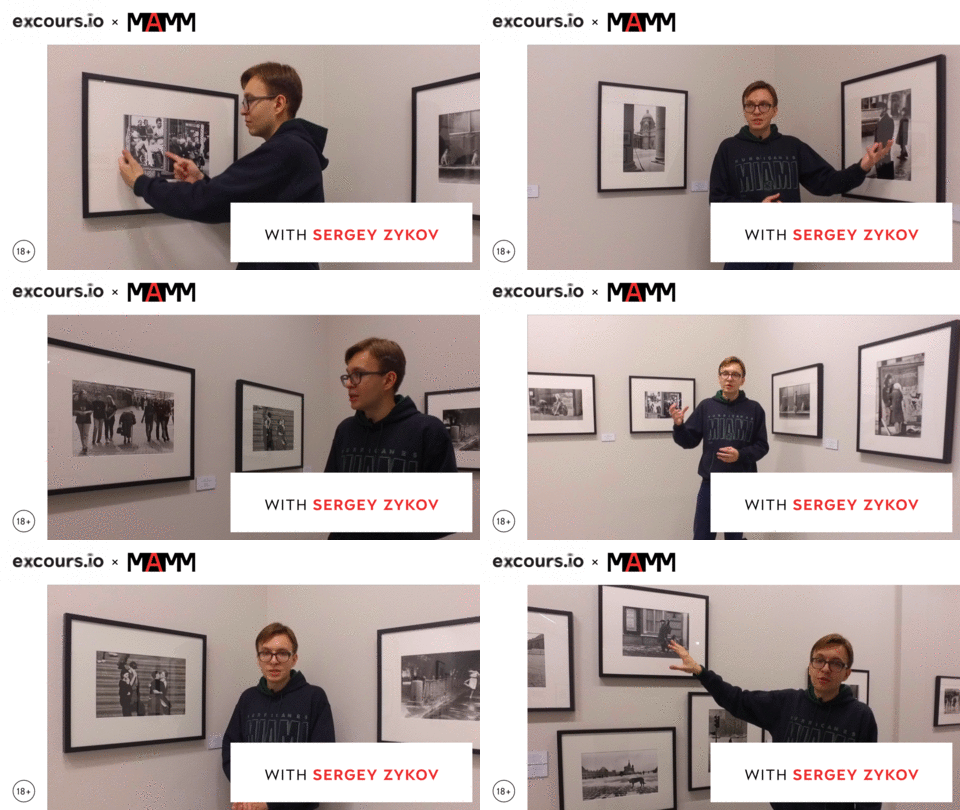
Vladimir Bogdanov. Retrospective. Part of The Classics of Russian Photography Program
Russia
Moscow
2017
80
As part of the Classics of Russian Photography program, MAMM presents the first large-scale retrospective of renowned contemporary photographer Vladimir Bogdanov. The exhibition features over 100 photographs from the Multimedia Art Museum, Moscow, highlighting his work from the 1960s to the 1990s. Born in 1937, Bogdanov’s artistic journey began during the Khrushchev thaw, a period that allowed artists to explore themes beyond socialist realism. This era marked a shift where humanism replaced official dogma, enabling photographers to capture the lives of ordinary people. In 1955, while studying at the Textile Institute, he joined the Leningrad photo club VDK, transforming his passion into a profession. His compelling images reflect a deep connection to Russian society and its complexities during a time of change.
Why should you watch this?
The retrospective exhibition of Vladimir Bogdanov at MAMM is a must-see for anyone interested in the evolution of Russian photography. With over 100 photographs spanning three decades, it showcases Bogdanov’s profound ability to capture the nuances of everyday life against the backdrop of a rapidly changing society. Emerging during the Khrushchev thaw, his work offers a rare glimpse into a time when artists could break free from the constraints of socialist realism. Each image is not just a photograph but a reflection of human experience and resilience, making this exhibition a poignant exploration of cultural identity and history. Engaging with Bogdanov’s art invites viewers to reflect on the complexities of Russian society, enriching their understanding of both past and present.
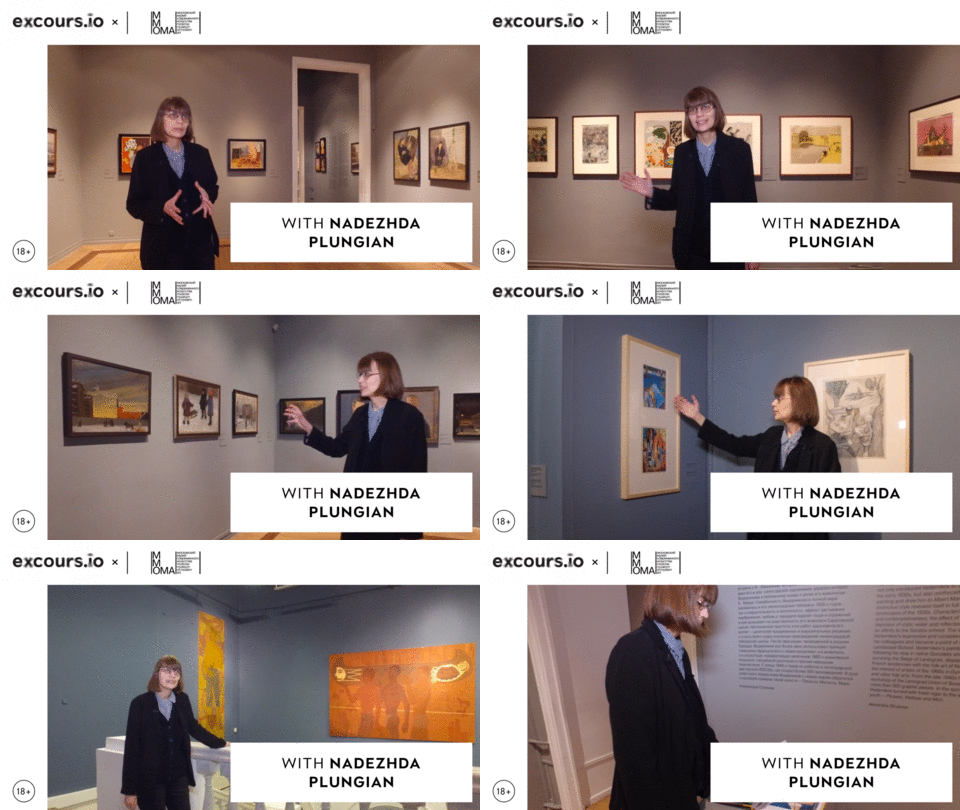
Implicit Modernism. Roman Babichev’s Collection. Part II.
Russia
Moscow
2017
95
The exhibition presents Roman Babichev’s collection as a compelling exploration of Soviet modernism, challenged by decades of controversy surrounding the term due to the anti-formalist campaigns of the 1930s and Cold War ideological battles. Offering a fresh lens, the exhibition sheds light on the often-overlooked variety within Soviet art, breaking down entrenched stereotypes and revealing the interconnections among post-avant-garde communities active after the 1932 ban on creative associations. By emphasizing the nuanced expressions of these artists—whose declarations were rendered in their unique painting styles rather than explicit statements—the exhibition invites viewers to reassess the rich tapestry of Soviet artistic heritage through a symbolist perspective, encouraging a more multidimensional understanding of its evolving narrative.
Why should you watch this?
The exhibition challenges prevailing narratives about art and encourages critical engagement with the complexities of cultural identity. In a time when discussions about artistic censorship, identity politics, and the role of art in society are more pertinent than ever, this exhibition provides a vital platform to explore how historical legacies shape contemporary artistic expressions. By delving into the often-misunderstood facets of Soviet modernism, viewers will uncover important parallels with current global movements calling for the recognition of marginalized voices and the reevaluation of entrenched ideologies. The guided experience not only enriches understanding of the artwork but also fosters a dialogue about the role of art as a form of resistance and expression in addressing modern societal challenges.
HOW TO SURVIVE ― Art as Survival Strategy | with Paula Schwerdtfeger
Germany
Hanover
2020
34
The group exhibition presents a compelling exploration of how art provides resilience in times of personal and societal crisis. The exhibition features works by renowned artists like Gustav Metzger, Shusaku Arakawa, and Alina Szapocznikow, each of whom faced extreme adversity and transformed their experiences into profound artistic statements. Whether addressing environmental destruction, illness, or existential threats, these artists used creativity as a means to survive and challenge the limits of human endurance. The exhibition emphasizes the power of art to propose alternative perspectives when the world seems trapped in binary thinking. By engaging with radical artistic responses to crisis, visitors are invited to reflect on how creativity can offer strength, hope, and new possibilities for navigating the uncertainties of modern life. Art, in this context, becomes more than expression — it becomes a strategy for survival and transformation.
Why should you watch this?
The exhibition tackles pressing issues like climate change, personal trauma, and social upheaval, and having a knowledgeable guide helps to bring those themes to life. It’s not just about admiring the art; it’s about understanding the stories and survival strategies that inspired each piece. This context makes the art resonate even more, helping you connect with the messages in a meaningful way. In a time when we’re all looking for ways to navigate challenges, a guided tour offers fresh insights that can spark reflection and inspire hope.