
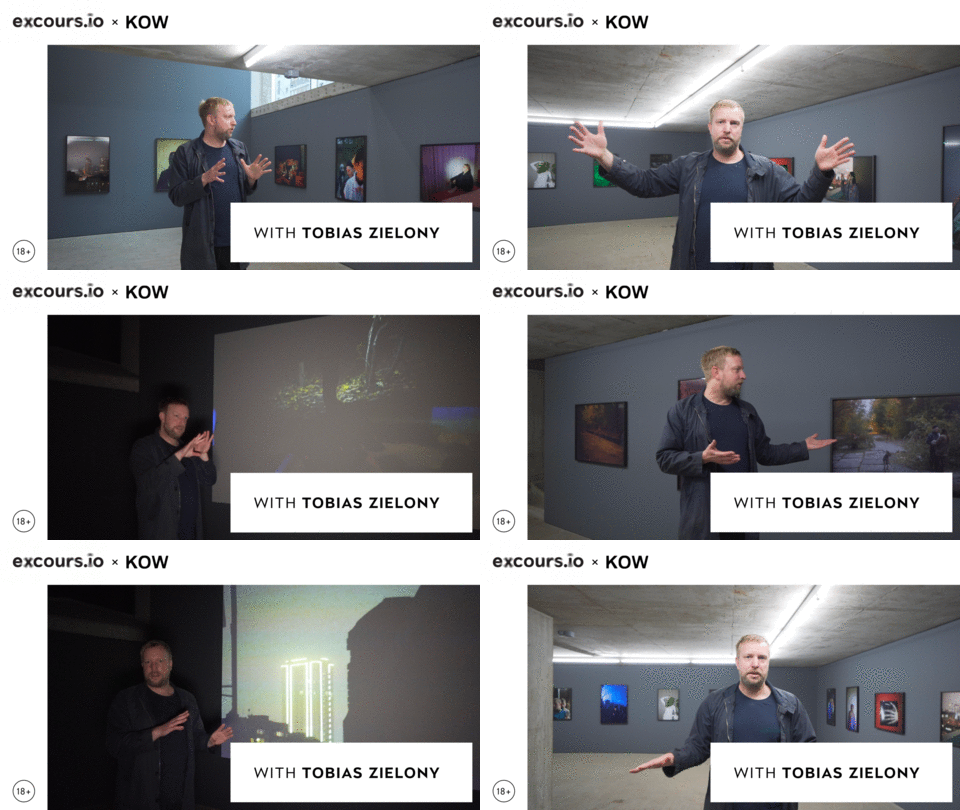
Tobias Zielony. Maskirovka [Concealment]
 Germany
 Berlin
 2018
2018
 37
37
Why should you watch this?
Tobias Zielony’s “Maskirovka” is a compelling reflection on the resilience and creativity of Kyiv’s queer techno scene, resonating profoundly in today’s world marked by social and political upheaval. Set against the backdrop of the post-Maidan era, this exhibition underscores the ongoing struggle for identity and belonging in the face of repression and misinformation, themes that echo in various global contexts today. By employing the concept of “maskirovka”—a tactic of deception used in conflict—Zielony captures how both artists and activists navigate the complexities of expression and resistance. His photographs and dynamic animated film form a visual narrative that invites critical reflection on the intersection of culture, politics, and personal agency. As societies grapple with fragmentation and polarization, “Maskirovka” reminds us of the power of art to forge connections, challenge norms, and provoke dialogue, making it an essential commentary on contemporary struggles for freedom.
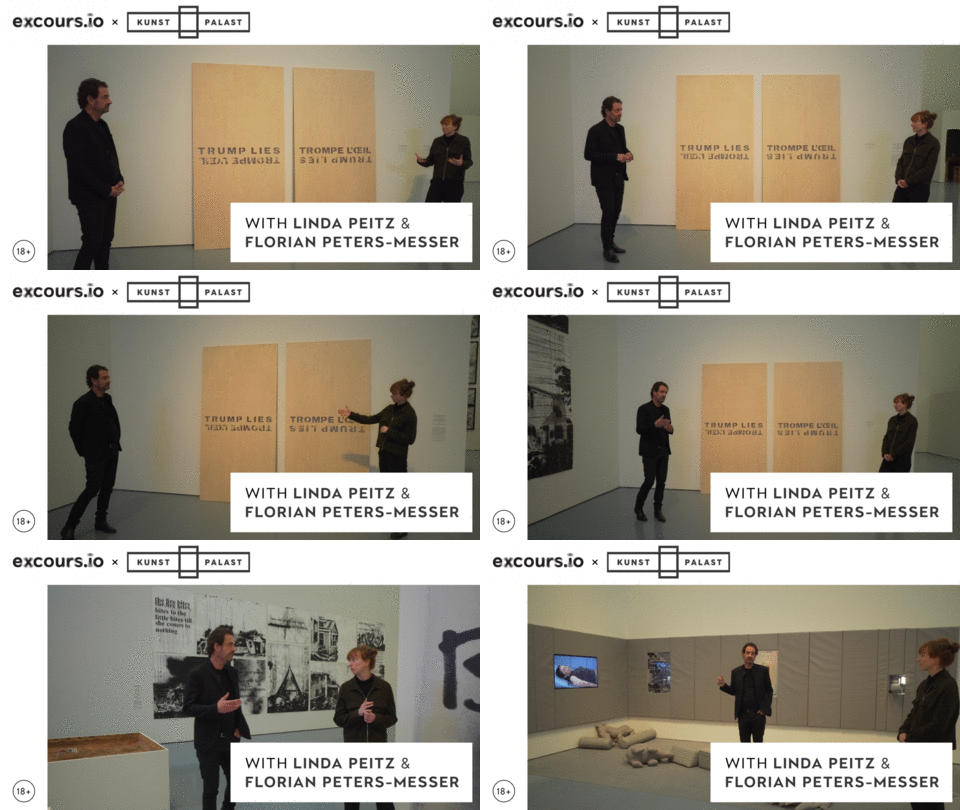
TIME FOR OUTRAGE! Art in Times of Social Anger | Trumpism
Germany
Dusseldorf
2020
33
Can anger and rage be justified in a world riddled with oppression and inequality? Are these emotions destructive forces or vital catalysts for social change? As democracy faces crises and populism gains ground globally, these questions have sparked renewed debate. Contemporary artists have responded, using their work to navigate and challenge the pressing issues of our time.
The exhibition ‘Time for Outrage!’ in Düsseldorf explores these questions through six thematic blocks: Right-wing Shift, Trumpism, Protest, Postcolonialism, Feminism, and Discrimination. Across a diverse range of mediums — including installations, drawings, paintings, sculptures, photography, and video art — 40 international artists immerse viewers in the visceral realms of protest, social dissent, and public anger. The exhibition doesn’t just present anger as a raw emotion; it portrays it as a vehicle for dialogue, resistance, and empowerment in the face of systemic injustice.
A substantial portion of the works on display come from the collection of entrepreneur and collector Florian Peters-Messer, whose commitment to socially engaged art amplifies the urgent messages these pieces convey.
Why should you watch this?
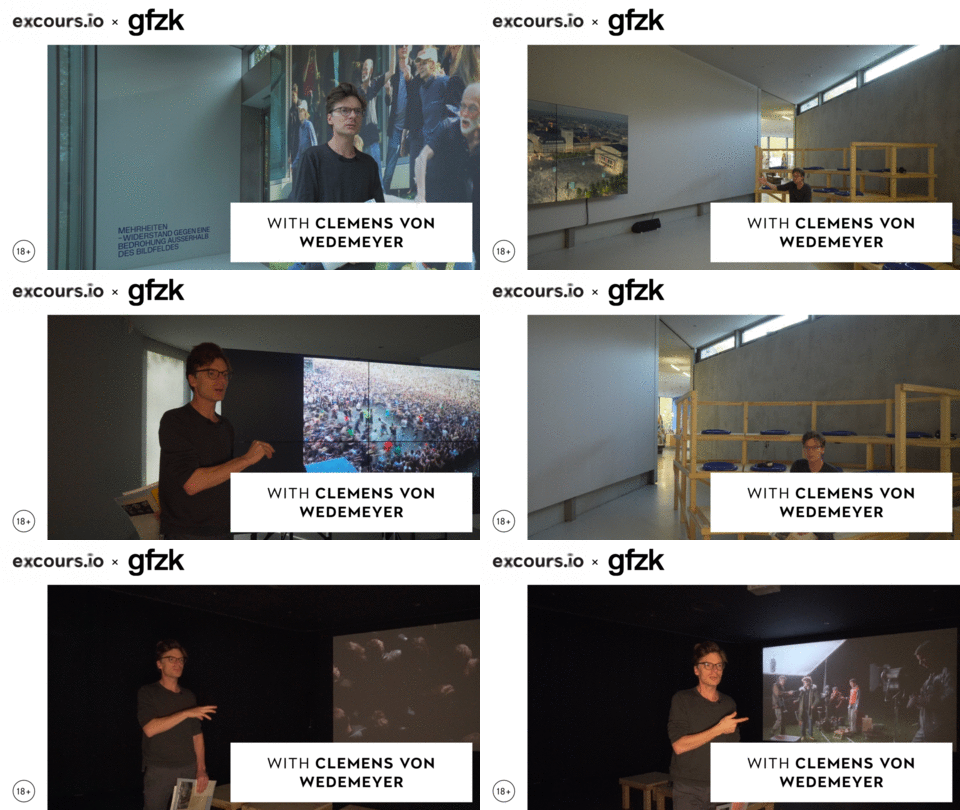
Clemens von Wedemeyer – Mehrheiten [Majorities]
Germany
Leipzig
2019
27
The exhibition critically examines the evolution of mass mobilization and crowd dynamics in both historical and contemporary contexts, drawing inspiration from Elias Canetti’s “Crowds and Power.” Set against the backdrop of the GfZK’s new architectural space, the exhibition engages with the complexities of collective action, exploring how digital public spheres shape democratic participation while simultaneously being exploited for exclusionary practices. Featuring a rich array of video installations and cinematic works, including the new production “70.001,” which reimagines the 1989 Leipzig demonstrations, “Majorities” invites reflection on the nuances of social behavior and the implications of simulated experiences in gaming and surveillance. Through this thoughtful presentation, Wedemeyer prompts us to consider the intertwining narratives of isolation and community, resonating powerfully in today’s fragmented society.
Why should you watch this?
Watching this guided tour is crucial in our current landscape marked by digital polarization and the resurgence of mass movements. As societies grapple with issues of identity, representation, and exclusion within online spaces, this exhibition offers a vital framework for understanding how crowd dynamics shape our collective psyche and political discourse. In an age where social media can amplify divisive ideologies, gaining insights into the historical and psychological underpinnings of mass mobilization is essential. The tour encourages participants to critically examine how these dynamics operate today, heightening awareness of the fine line between community engagement and manipulation. By exploring these themes, viewers are invited to reflect on their agency within the digital public sphere, making the experience not just an exploration of art and history, but also a compelling call to engage thoughtfully in the ongoing dialogue about democracy and social responsibility in our interconnected world.