
Menu

  • Categories
    • Arts
    • Culture
    • History
    • Music
    • Philosophy
    • Society & Politics
    • Technology & Science
  • Collections
  • Tags
  • Institutions
  • Contributors
  • All Films
  • Random Film

About

excoursio is a free platform for immersive guided tours, turning one-time walkthroughs into lasting learning experiences. excours.io means culture for everyone, everywhere.

Stay tuned

  • instagram
  • facebook
  • linkedin
  • bluesky
  • mastodon
Eloquent Simplicity in Wood and Fiber is an exhibition exploring the versatility of natural materials, presenting sculptural forms and functional objects that blend traditional expression with contemporary design. The display defines the distinct aesthetic sensibilities of the Cordillera Mountain groups, including the Ifugao and Kalinga, who have long used wood and fiber to create objects for both utilitarian and ritual purposes. Juxtaposed against these traditional items, the exhibition features contemporary works by notable voices like National Artist Napoleon Abueva and designer Claude Tayag, who utilize Philippine hardwoods such as narra and molave. Addressing the modern scarcity of natural resources, the project highlights how artists continue to create meaningful, practical objects. This presentation encourages visitors to appreciate the enduring beauty, tactile quality, and profound functionality inherent in the world’s simplest materials.The exhibition delves deep into the captivating world of shells and snails as seen through the lenses of iconic modern photographers like Edward Weston and Imogen Cunningham. This pioneering showcase assembles a rich tapestry of images, tracing humanity’s longstanding fascination with these natural forms—from their mathematical elegance to their cosmic symbolism. Grounded in Alfred Ehrhardt’s seminal works, including his influential books “Muscheln und Schnecken” and “Geprägte Form,” the exhibition also highlights the intersection of art and science, featuring innovative techniques like X-ray photography and the New Objectivity movement. Beyond mere visual appeal, the show offers an exploration of cultural significance, inviting viewers to reflect on the beauty and complexity of these “structural forms in nature,” culminating in the screening of Ehrhardt’s award-winning film “Tanz der Muscheln.”The exhibition illuminates the profound influence of the Great October Revolution on Eastern art. Featuring over 100 works from Soviet Turkmenistan, Uzbekistan, Azerbaijan, Mongolia, China, and Vietnam, the exhibition showcases a rich tapestry of artistic expressions—embroideries, posters, paper cutouts, and more—that reflect a unique amalgamation of local traditions and Soviet ideologies. Visitors will encounter the cult of personality through portraits of revolutionary leaders, discover the vibrant propaganda posters that redefined societal roles, and engage with stunning engravings depicting the industrial ambitions of China. This exhibition not only highlights the artistic responses to political shifts but also serves as a testament to the complex legacy of the Russian Revolution, revealing how hope, trauma, and cultural identity were woven into the fabric of artistry across nations. Many of these pieces are being showcased to the Russian public for the first time in decades, offering fresh insights into this historical narrative.Klaus Staeck’s exhibition offers a captivating journey through the provocative artistry that defined West Germany’s visual landscape from the late 1960s to the late 1980s. Celebrated as a political agitator, Staeck’s posters not only sparked public discourse but also reflected the turbulent social climate of the time. The display features around 180 of his striking designs, alongside early prints and three-dimensional multiples, showcasing his ability to intertwine art with activism. Each piece acts as a visual commentary on pressing societal issues, daring viewers to confront the challenges of their era. Staeck’s work serves as a reminder of the profound impact that art can have in shaping collective memory and igniting conversations long after the initial scandal has faded.“Arrival of the Train” is a captivating exhibition that unites over a hundred artistic works from both Russian and international creators, celebrating the train’s rich cultural significance as a harbinger of change and progress. It delves into the multifaceted roles of trains throughout history—from transformative technological marvels to poignant symbols in art—inviting viewers to journey through time and space. Showcasing everything from the historic funeral train of Lenin to the nostalgic echoes of the Trans-Siberian Railway, the exhibition highlights the train’s enduring impact on civilization and its power as a vessel for communication and innovation, ultimately crafting a shared narrative that connects cultures and eras in a uniquely dynamic way.
Toggle sidebar & navigation
  • Categories
    • Arts
    • Culture
    • History
    • Music
    • Philosophy
    • Society & Politics
    • Technology & Science
  • Collections
  • Tags
  • Institutions
  • Contributors
  • All Films
  • Random Film
excoursio

Category / Culture

Filtered (0)
Duration
  • Reset all ×
  • 30-59 min ×

Duration

0 post found

Show (0)
Cancel

Sort by Date

Filtered (0)
Sort by Spoken Language
  • Reset all ×
  • Estonian ×

Sort by Spoken Language

0 post found

Language

N/A

Show (0)
Cancel
Filters
Sort by Subtitle Language

Sort by Subtitle Language


Show (0)
Cancel
Filters
Select a Country

Select a Country


Country

N/A

Show (0)
Cancel
Filters
Select a City

Select a City


Cities

N/A

Show (0)
Cancel
Tartu Art Museum Arts | Culture | Music
18+

Museum Choreography

Muuseumi Koreograafia
Estonia Tartu 2018 53

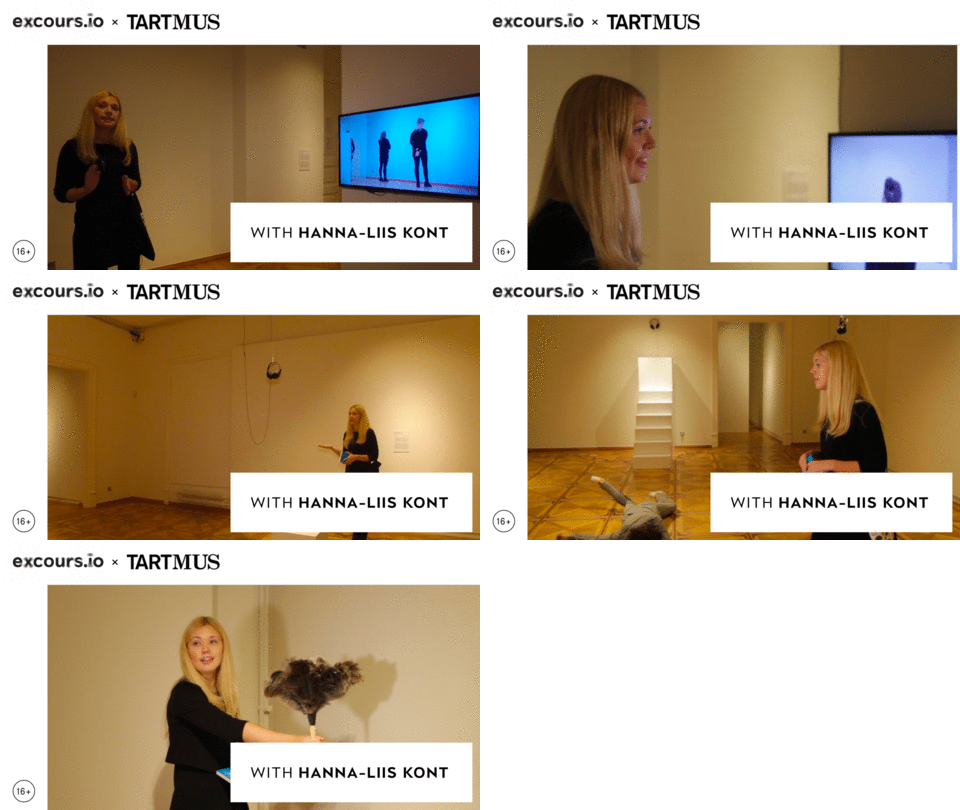
This innovative exhibition reimagines the traditional museum experience through the lens of dance and choreography, inviting audiences to become active participants in the artistic dialogue. It foregrounds the unpredictable interplay between viewer movement and static artworks, showcasing how personal histories, cultural contexts, and physical presence transform the museum into a living, dynamic space. By exploring the nuances of how we look at and engage with art, the exhibition challenges visitors to reflect on their own movement and interactions within the gallery. This exhibition is a thought-provoking exploration of the embodied experience of art, making the viewer an integral part of the creative narrative.

Why should you watch this?

In today’s rapidly evolving cultural landscape, this exhibition stands out by positioning dance and choreography as vital means of understanding and engaging with art in the museum context. By centering the audience’s experience, it reflects our collective need for connection and interaction in spaces that often feel static and distant. In an era where individual perspectives and cultural backgrounds shape our understanding of art, this exhibition invites viewers to reclaim their role, reminding us that museums are not just repositories of art but vibrant environments shaped by human presence and movement. As the act of looking becomes more layered and complex in our digital world, this exhibition challenges us to reconsider our relationship with art, encouraging a deeper engagement that resonates well beyond the gallery walls.

Explore

  • About
  • Contacts
  • FAQ
  • Collaborate
  • Any ideas?

Network

  • Institutions
  • Contributors
  • Partners
  • Support us

Transparency

  • Accessibility
  • Sustainability
  • #GoodForEducation
  • Usage Policy
  • Cookies

Latest guided tour films

loader

By subscribing, you acknowledge and agree that we will store, process, and manage your personal information in accordance with our Privacy Policy.

Stay tuned

  • instagram
  • facebook
  • linkedin
  • bluesky
  • mastodon
  • Imprint
  • Privacy Policy
  • Community Guidelines
  • Jobs

© 2026 excoursio e.V. (non-profit). All rights reserved.

We use cookies to ensure that we give you the best experience on our website. If you continue to use this site we will assume that you are happy with it.