
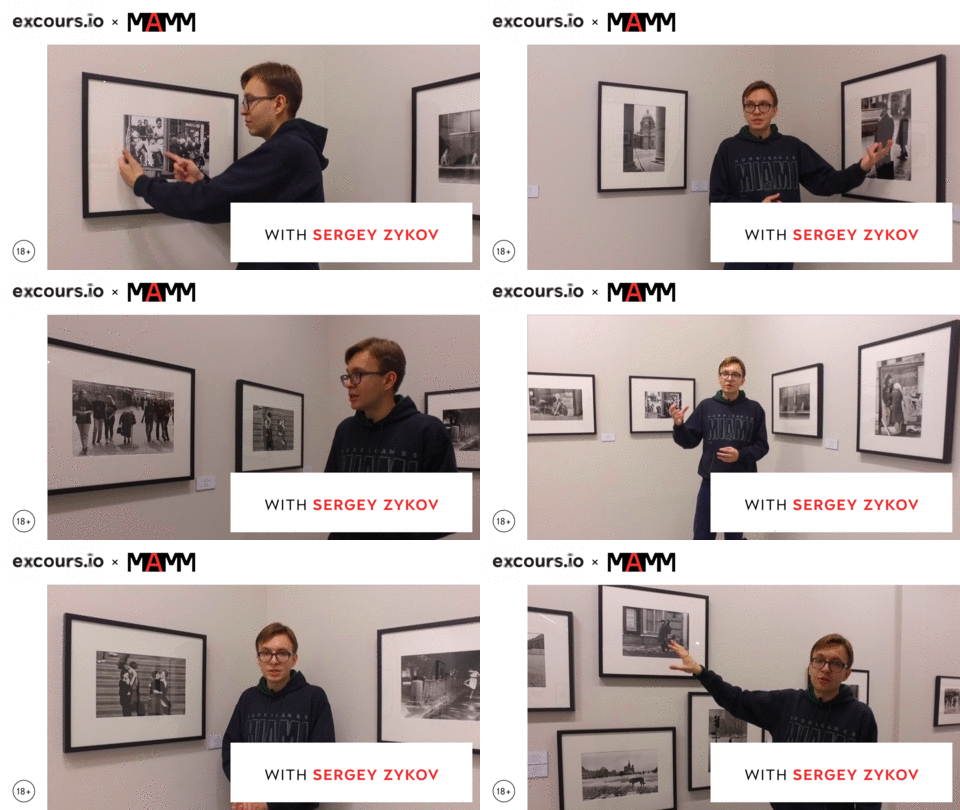
Vladimir Bogdanov. Retrospective. Part of The Classics of Russian Photography Program
 Russia
 Moscow
 2017
2017
 80
80
As part of the Classics of Russian Photography program, MAMM presents the first large-scale retrospective of renowned contemporary photographer Vladimir Bogdanov. The exhibition features over 100 photographs from the Multimedia Art Museum, Moscow, highlighting his work from the 1960s to the 1990s. Born in 1937, Bogdanov’s artistic journey began during the Khrushchev thaw, a period that allowed artists to explore themes beyond socialist realism. This era marked a shift where humanism replaced official dogma, enabling photographers to capture the lives of ordinary people. In 1955, while studying at the Textile Institute, he joined the Leningrad photo club VDK, transforming his passion into a profession. His compelling images reflect a deep connection to Russian society and its complexities during a time of change.
Why should you watch this?
The retrospective exhibition of Vladimir Bogdanov at MAMM is a must-see for anyone interested in the evolution of Russian photography. With over 100 photographs spanning three decades, it showcases Bogdanov’s profound ability to capture the nuances of everyday life against the backdrop of a rapidly changing society. Emerging during the Khrushchev thaw, his work offers a rare glimpse into a time when artists could break free from the constraints of socialist realism. Each image is not just a photograph but a reflection of human experience and resilience, making this exhibition a poignant exploration of cultural identity and history. Engaging with Bogdanov’s art invites viewers to reflect on the complexities of Russian society, enriching their understanding of both past and present.
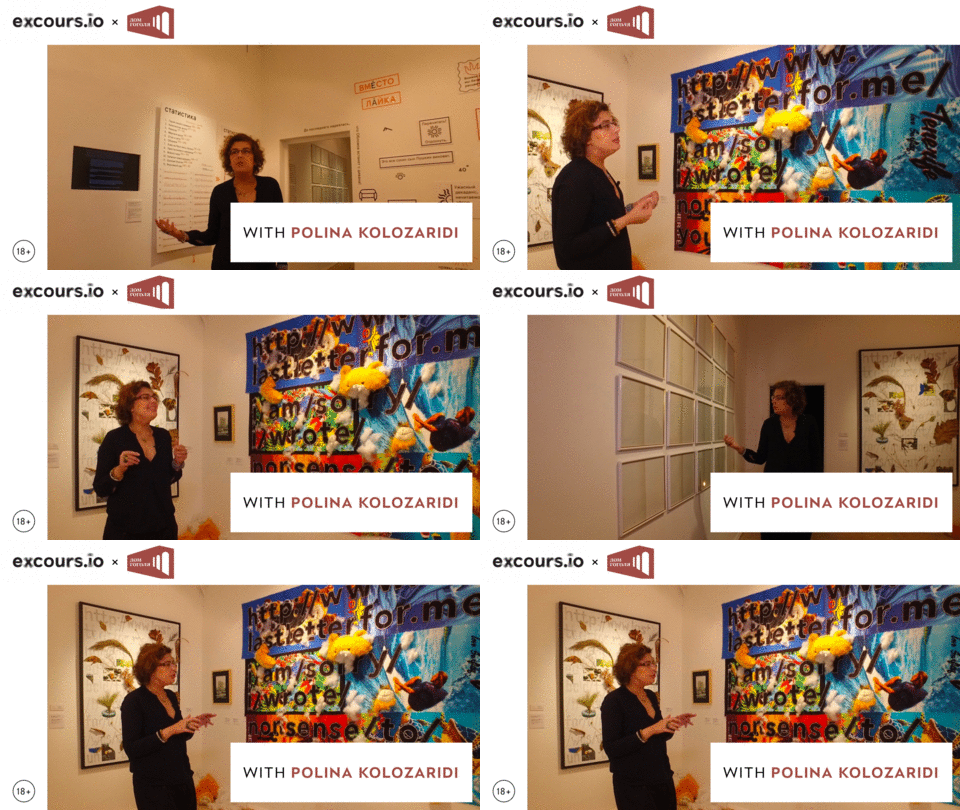
“Your Feedback is Very Important for Us”
Russia
Moscow
2018
47
The exhibition “Your review is very important to us” delves into the evolving landscape of reader engagement with classical literature, inviting visitors to explore how expressions of opinion have transformed from the 19th century to today’s digital era. Through a compelling blend of research by philologist Anna Gerasimova and innovative works from contemporary Russian artists, the show raises thought-provoking questions about the interplay between amateur reviews and literary criticism. Viewers will experience how machine learning interprets text, engage with an audio installation that echoes voices from the past and present, and even connect Nabokov’s correspondence to modern digital discourse.
Why should you watch this?
The exhibition “Your review is very important to us” holds significant relevance in today’s digital landscape, where reader voices and online reviews have transformed the way we engage with classical literature. In an age that celebrates individual expression, the show challenges traditional hierarchies of literary criticism by emphasizing the importance of personal perspectives alongside established viewpoints. It invites us to reflect on how technology, from machine learning to social media, reshapes our interaction with texts and broadens our understanding of art and literature. By highlighting the dynamic relationship between modern readers, artists, and classical works, this exhibition not only redefines the role of the audience in literary discourse but also underscores the importance of diverse interpretations in a cultural dialogue increasingly shaped by digital platforms.
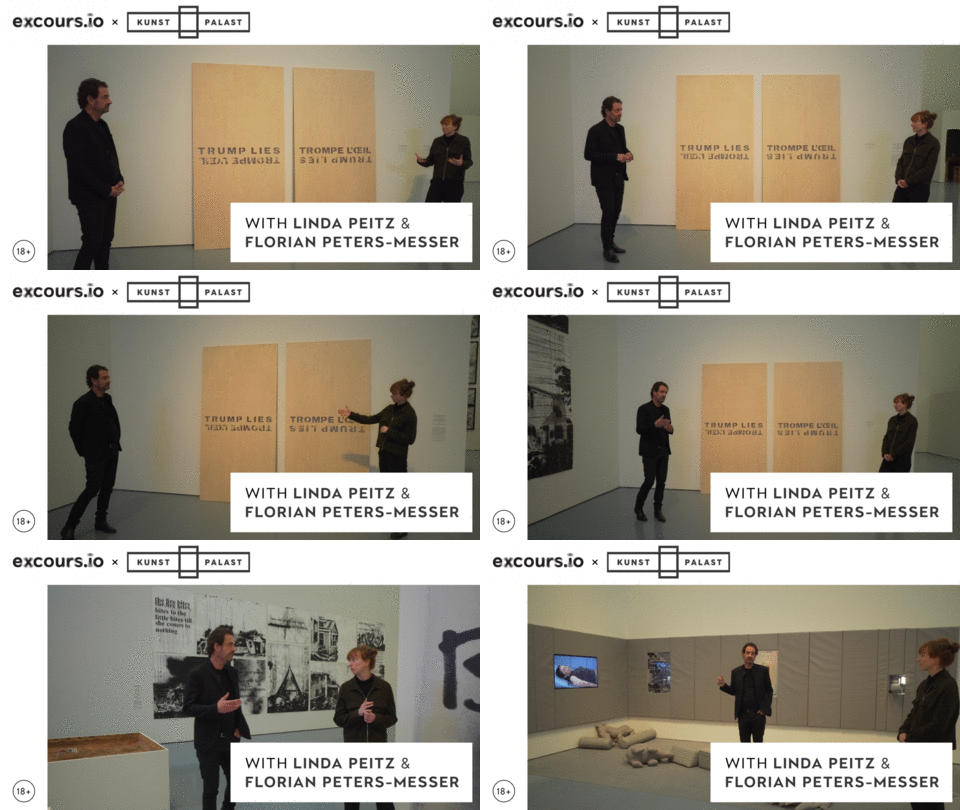
TIME FOR OUTRAGE! Art in Times of Social Anger | Trumpism
Germany
Dusseldorf
2020
33
Can anger and rage be justified in a world riddled with oppression and inequality? Are these emotions destructive forces or vital catalysts for social change? As democracy faces crises and populism gains ground globally, these questions have sparked renewed debate. Contemporary artists have responded, using their work to navigate and challenge the pressing issues of our time.
The exhibition ‘Time for Outrage!’ in Düsseldorf explores these questions through six thematic blocks: Right-wing Shift, Trumpism, Protest, Postcolonialism, Feminism, and Discrimination. Across a diverse range of mediums — including installations, drawings, paintings, sculptures, photography, and video art — 40 international artists immerse viewers in the visceral realms of protest, social dissent, and public anger. The exhibition doesn’t just present anger as a raw emotion; it portrays it as a vehicle for dialogue, resistance, and empowerment in the face of systemic injustice.
A substantial portion of the works on display come from the collection of entrepreneur and collector Florian Peters-Messer, whose commitment to socially engaged art amplifies the urgent messages these pieces convey.
Why should you watch this?
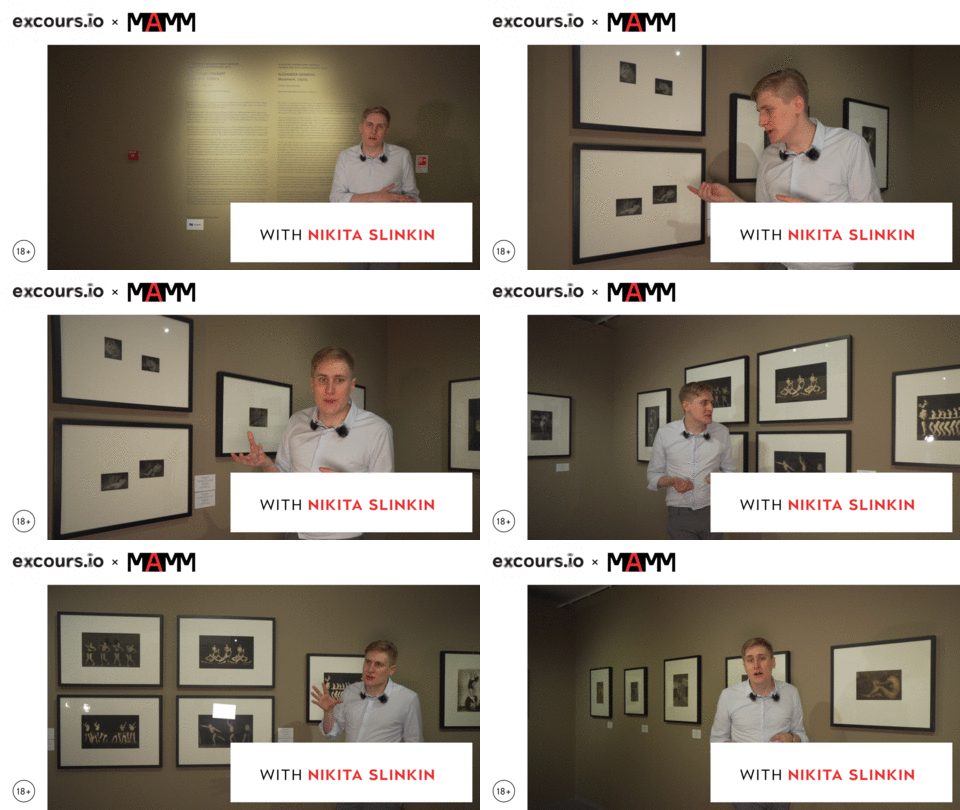
Alexander Grinberg. Movement. 1920s
Russia
Moscow
2019
53
Step back into the vibrant world of the 1920s with the Movement. 1920s exhibition, which captures the revolutionary spirit and artistic innovation of this transformative decade. Celebrating a surge of creativity across visual arts, architecture, and design, the exhibit showcases how artists challenged traditional norms and embraced new mediums and themes. Through a carefully curated selection of works and engaging installations, visitors can explore the interplay between art, politics, and society during a time marked by upheaval and change. From the bold geometries of constructivism to the experimental forms of avant-garde movements, Movement. 1920s invites audiences to witness how the decade laid the groundwork for contemporary art, illuminating the ongoing dialogue between past and present in the ever-evolving landscape of visual culture.
Why should you watch this?
This exhibition features a diverse array of works that reflect the pulse of a society in transformation — bold colors, experimental forms, and a celebration of motion that captures the zeitgeist of post-war optimism. Each piece invites the viewer to engage with the revolutionary ideas that shaped modern art, making it a must-see for anyone interested in the interplay between culture and creativity. It demonstrates how artists of the 1920s broke boundaries and redefined artistic expression, leaving an indelible mark on the contemporary landscape.
Nautilus – Snails, Shells, and Mollusks in Photography
Germany
Berlin
2018
68
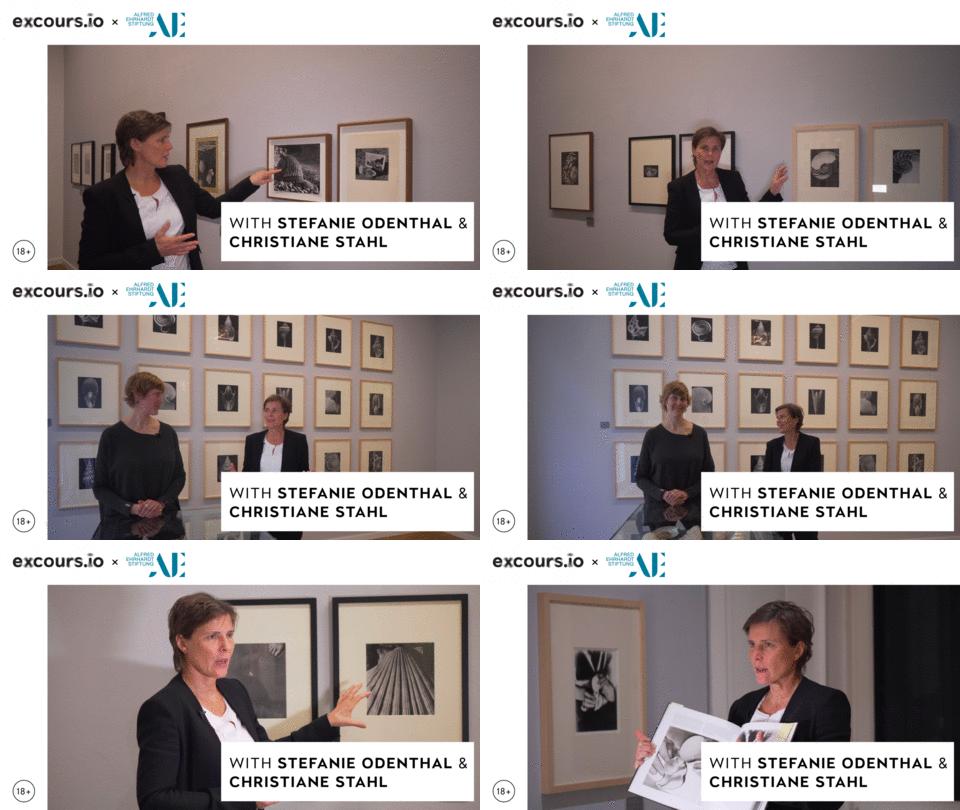
The exhibition delves deep into the captivating world of shells and snails as seen through the lenses of iconic modern photographers like Edward Weston and Imogen Cunningham. This pioneering showcase assembles a rich tapestry of images, tracing humanity’s longstanding fascination with these natural forms—from their mathematical elegance to their cosmic symbolism. Grounded in Alfred Ehrhardt’s seminal works, including his influential books “Muscheln und Schnecken” and “Geprägte Form,” the exhibition also highlights the intersection of art and science, featuring innovative techniques like X-ray photography and the New Objectivity movement. Beyond mere visual appeal, the show offers an exploration of cultural significance, inviting viewers to reflect on the beauty and complexity of these “structural forms in nature,” culminating in the screening of Ehrhardt’s award-winning film “Tanz der Muscheln.”
Why should you watch this?
The exhibition at the Alfred Ehrhardt Foundation serves as a timely reminder of the profound connection between art, nature, and cultural history, inviting contemporary audiences to reflect on our relationship with the natural world. In an era increasingly defined by technology and rapid change, this exploration of shells and snails highlights the enduring allure of organic forms, encouraging a return to appreciation for the intricate beauty found in nature. By showcasing how modern photographers have captured these motifs—often imbued with deep symbolic significance—the exhibition underscores the relevance of natural elements in contemporary art and design, prompting discussions about sustainability and the need for mindful engagement with our environment. Furthermore, the intersection of art and science represented in this collection resonates with current dialogues on ecological awareness, reminding us that aesthetic appreciation can foster a deeper understanding of the world we inhabit.