
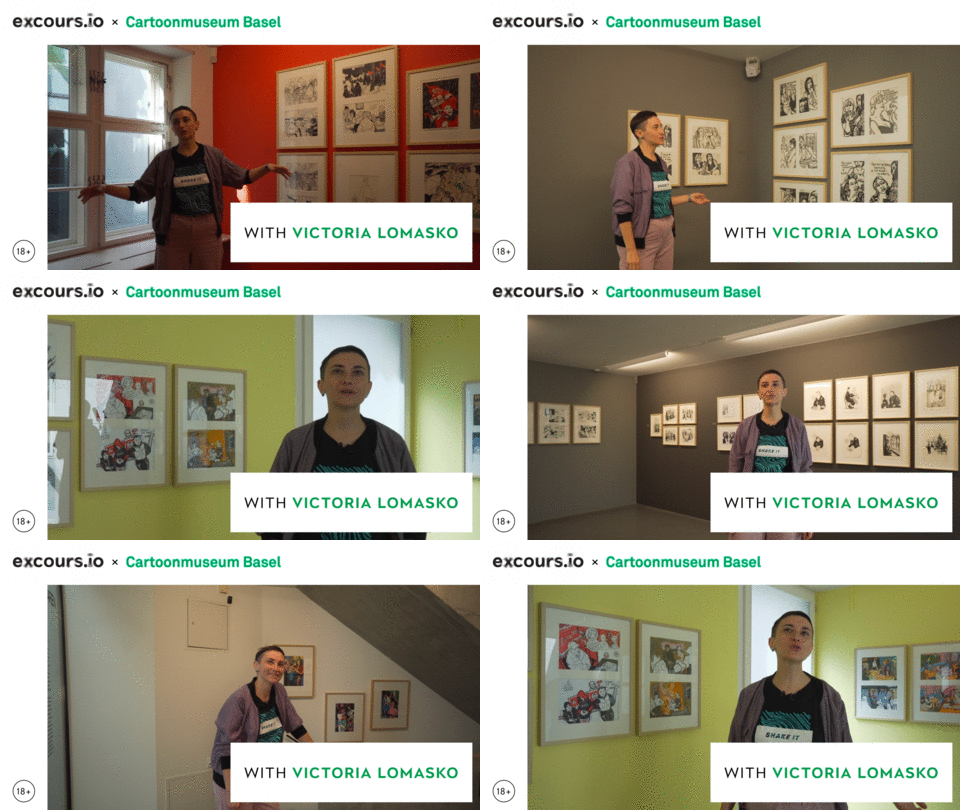
Victoria Lomasko. Other Russias
 Switzerland
 Basel
Basel
 2019
2019
 41
41
Victoria Lomasko’s retrospective at Cartoonmuseum Basel invites viewers to engage deeply with her explorations of Russia’s marginalized communities. This vibrant exhibition showcases her striking murals and drawings, which intricately depict the lives of LGBT activists, sex workers, and migrant laborers. Through her keen observations and bold, expressive style, Lomasko highlights the social injustices and political repression faced by these groups.
Why should you watch this?
Victoria Lomasko’s retrospective at Cartoonmuseum Basel resonates profoundly with today’s global landscape of social justice and human rights. As she illuminates the lives of Russia’s marginalized communities, her work serves as a poignant reminder of the ongoing struggles faced by those often overlooked in society. In a world increasingly confronted with issues of inequality, discrimination, and political repression, Lomasko’s murals and drawings act as both a testament to resilience and a call for advocacy. By capturing the essence of these lived experiences she invites audiences to reflect on the shared responsibility we hold in addressing injustices, igniting conversations that transcend borders. The exhibition serves as both a visual narrative and a call to action, reflecting her long-standing commitment to human rights advocacy. This exhibition underscores the enduring relevance of her work in fostering empathy and inspiring change in our contemporary era.
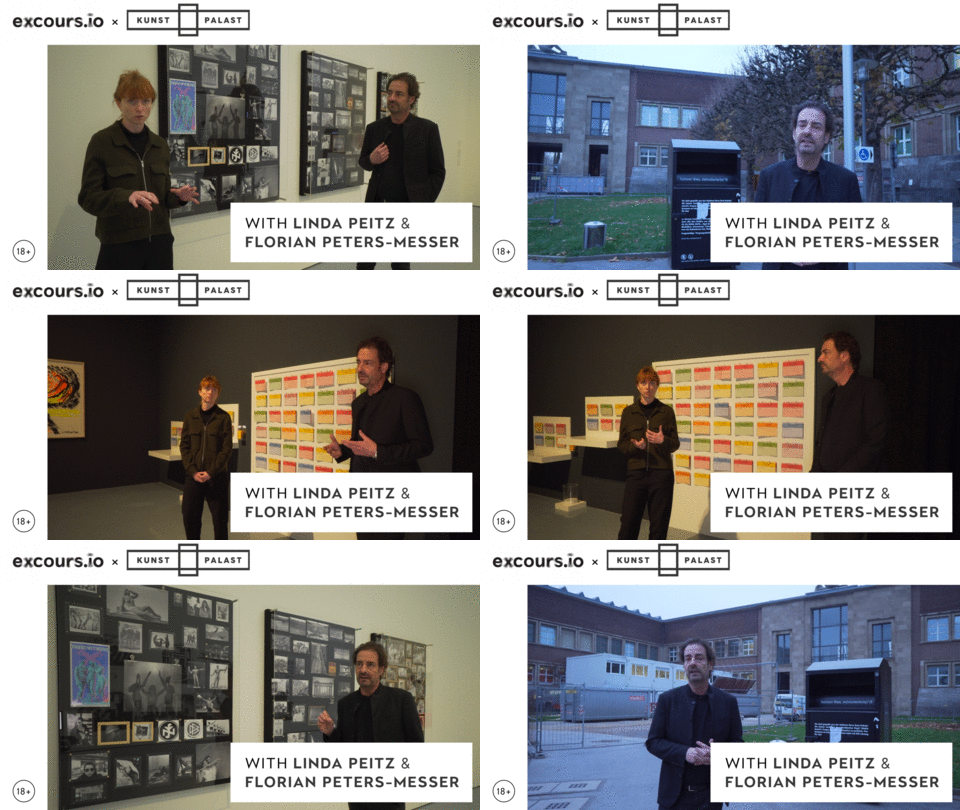
TIME FOR OUTRAGE! Art in Times of Social Anger | Right-wing Shift
Germany
Dusseldorf
2020
32
Can anger and rage be justified in a world riddled with oppression and inequality? Are these emotions destructive forces or vital catalysts for social change? As democracy faces crises and populism gains ground globally, these questions have sparked renewed debate. Contemporary artists have responded, using their work to navigate and challenge the pressing issues of our time.
The exhibition ‘Time for Outrage!’ in Düsseldorf explores these questions through six thematic blocks: Right-wing Shift, Trumpism, Protest, Postcolonialism, Feminism, and Discrimination. Across a diverse range of mediums — including installations, drawings, paintings, sculptures, photography, and video art — 40 international artists immerse viewers in the visceral realms of protest, social dissent, and public anger. The exhibition doesn’t just present anger as a raw emotion; it portrays it as a vehicle for dialogue, resistance, and empowerment in the face of systemic injustice.
A substantial portion of the works on display come from the collection of entrepreneur and collector Florian Peters-Messer, whose commitment to socially engaged art amplifies the urgent messages these pieces convey.
Why should you watch this?
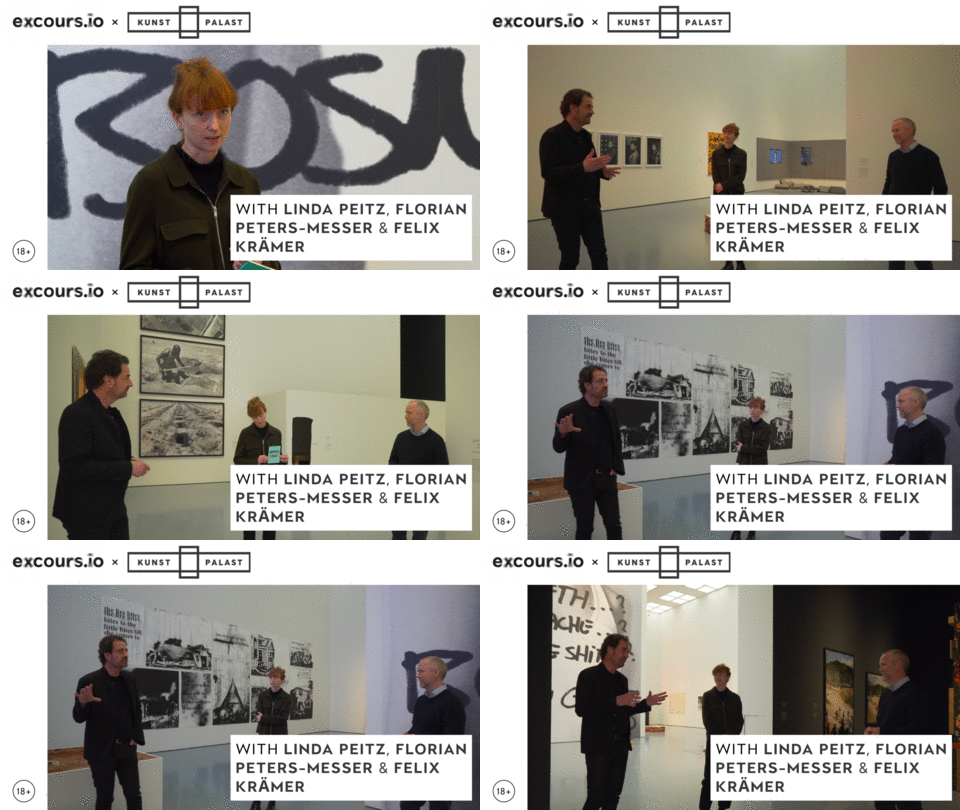
TIME FOR OUTRAGE! Art in Times of Social Anger | Introduction
Germany
Dusseldorf
2020
27
Can anger and rage be justified in a world riddled with oppression and inequality? Are these emotions destructive forces or vital catalysts for social change? As democracy faces crises and populism gains ground globally, these questions have sparked renewed debate. Contemporary artists have responded, using their work to navigate and challenge the pressing issues of our time.
The exhibition ‘Time for Outrage!’ in Düsseldorf explores these questions through six thematic blocks: Right-wing Shift, Trumpism, Protest, Postcolonialism, Feminism, and Discrimination. Across a diverse range of mediums — including installations, drawings, paintings, sculptures, photography, and video art — 40 international artists immerse viewers in the visceral realms of protest, social dissent, and public anger. The exhibition doesn’t just present anger as a raw emotion; it portrays it as a vehicle for dialogue, resistance, and empowerment in the face of systemic injustice.
A substantial portion of the works on display come from the collection of entrepreneur and collector Florian Peters-Messer, whose commitment to socially engaged art amplifies the urgent messages these pieces convey.
Why should you watch this?
Sergiy Bratkov. My Brother’s Cats | Curatorial Introduction with Annegret Laabs
Germany
Magdeburg
2024
25
Why should you watch this?
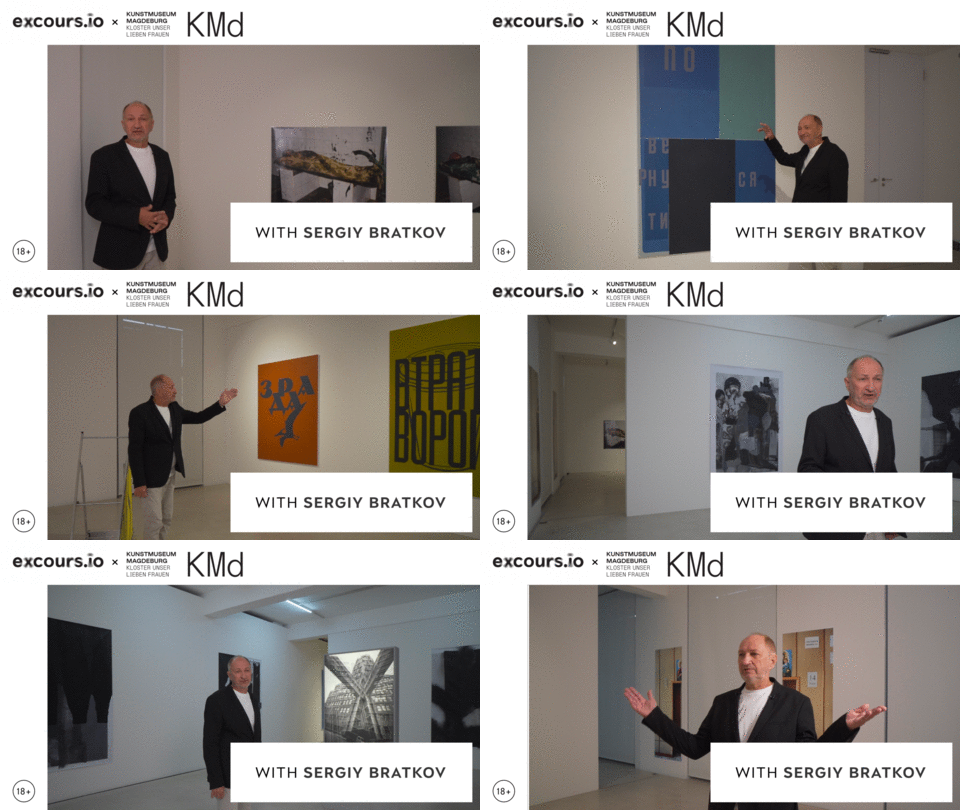
Sergiy Bratkov. My Brother’s Cats | Immersive Artist Tour
Germany
Magdeburg
2024
43