
Menu

  • Categories
    • Arts
    • Culture
    • History
    • Music
    • Philosophy
    • Society & Politics
    • Technology & Science
  • Collections
  • Tags
  • Institutions
  • Contributors
  • All Films
  • Random Film

About

excoursio is a free platform for immersive guided tours, turning one-time walkthroughs into lasting learning experiences. excours.io means culture for everyone, everywhere.

Stay tuned

  • instagram
  • facebook
  • linkedin
  • bluesky
  • mastodon
The exhibition serves as a poignant exploration of the pervasive and often absurd censorship that defined Soviet culture over 70 years. By navigating through the Russian alphabet—from the arrest of manuscripts to the Yauza tape recorder and the underground phenomenon of magnitizdat—visitors will uncover a narrative rich in both cruelty and resilience. Each letter unveils stories of meticulous scrutiny and cold repression, highlighting the complex interplay between censorship and state security, while also showcasing remarkable acts of civil defiance against artistic oppression. Enhanced by an array of documents, media, and artifacts, this exhibition invites you to explore the hidden layers of Soviet history and the power of creative expression that endeavored to resist the “red pencils” of authority.In the early 1960s, photography emerged as a recognized art form, yet, in Latvia, it struggled for acceptance in traditional art spaces. The establishment of the Photo Club “Rīga” in 1962 marked a pivotal moment, fostering a vibrant community that embraced photography’s artistic potential. This collective became a vital force in shaping the perception of art photography both locally and globally, drawing in visionary talents who pushed creative boundaries. The club’s ongoing legacy reflects not just the evolution of photography as an art form but also its enduring relevance within contemporary Latvian culture. As it adapts to new challenges and styles, the Photo Club remains a cherished cornerstone, celebrating its historical impact while inspiring future generations of photographers.BIG D@T@! BIG MON€Y! is a bold, thought-provoking exhibition that explores the intersection of data, finance, and digitalization. Featuring seven artists and collectives, the works explore how our everyday digital footprints and the rise of cryptocurrencies are reshaping economies, identities, and power structures. Through projects like a speculative trading AI, a data-driven remake of classic art, and an analysis of the hidden infrastructure behind Amazon transactions, the exhibition sheds light on the often-invisible forces governing our digital lives. In an era of increasing surveillance and technological control, the exhibition raises critical questions about freedom, privacy, and the future of society.The Human Condition exhibition, a thought-provoking exploration of contemporary art that delves into the complexities of human experience. This showcase features a diverse collection of works that challenge perceptions and provoke dialogue about identity, society, and the emotional landscape of modern life. Each piece serves as a mirror, reflecting the multifaceted nature of existence in today’s world. Through innovative mediums and striking visuals, the artists invite viewers to engage deeply with themes of vulnerability, connection, and resilience. This exhibition is not just a display of art; it’s an immersive journey that encourages introspection and a deeper understanding of what it means to be human in an ever-evolving society.The exhibition Hanbok, Poetics of Line and the Passage of Life presents the story of traditional Korean attire, tracing its cultural significance and transformation through time. With a basic style originating in the Three Kingdoms period (37 BCE – 668 CE), the Hanbok shown primarily reflects that of the Joseon dynasty (1392 – 1910). The exhibition explores how this clothing embodies Korean ancestral values, worldview, and reverence for nature through its use in life’s milestone ceremonies and its symbolic colours derived from Yin-Yang theory. Curated by EuiJung McGillis, the presentation showcases items from a baby’s first birthday dress to royal robes, alongside modern reinterpretations by early twentieth-century shinyeoseong (new women). Visitors will discover Hanbok as a transmitter of tradition and a dynamic symbol of Korean identity in a global context.
Toggle sidebar & navigation
  • Categories
    • Arts
    • Culture
    • History
    • Music
    • Philosophy
    • Society & Politics
    • Technology & Science
  • Collections
  • Tags
  • Institutions
  • Contributors
  • All Films
  • Random Film
excoursio

Contributor / Euijung McGillis

Korean Cultural Center (KCC) Arts | Culture | History
18+

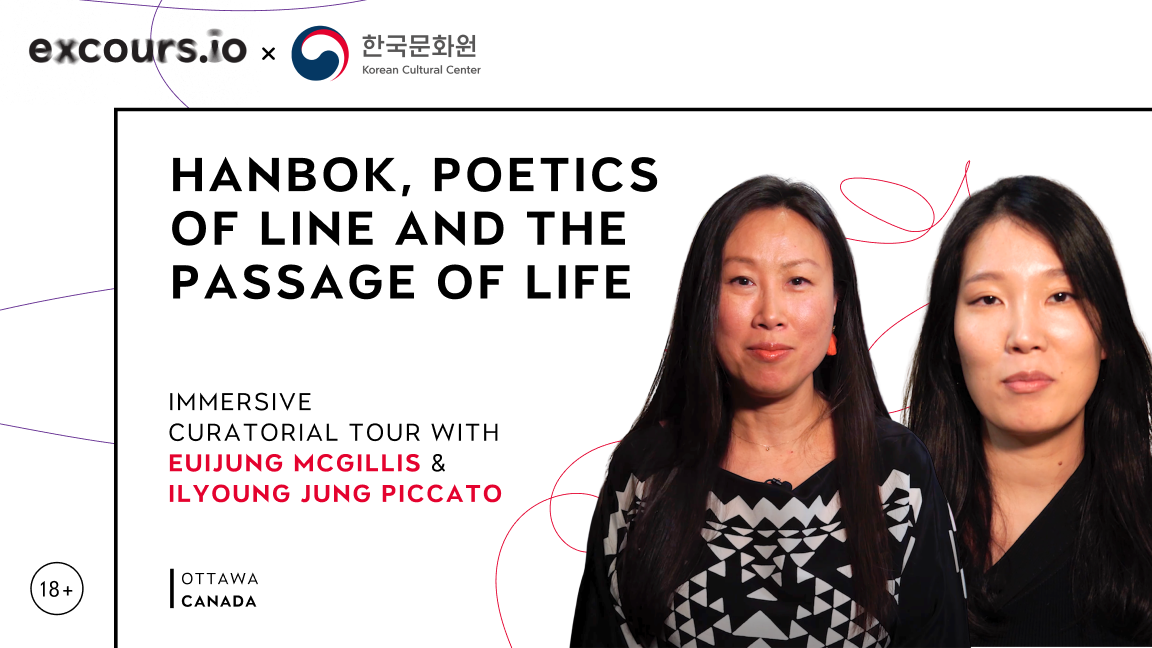
Hanbok, Poetics of Line and the Passage of Life

선이 흘러 삶, 그리고 한복이 되다
Canada Ottawa 2021 19

The exhibition Hanbok, Poetics of Line and the Passage of Life presents the story of traditional Korean attire, tracing its cultural significance and transformation through time. With a basic style originating in the Three Kingdoms period (37 BCE – 668 CE), the Hanbok shown primarily reflects that of the Joseon dynasty (1392 – 1910). The exhibition explores how this clothing embodies Korean ancestral values, worldview, and reverence for nature through its use in life’s milestone ceremonies and its symbolic colours derived from Yin-Yang theory. Curated by EuiJung McGillis, the presentation showcases items from a baby’s first birthday dress to royal robes, alongside modern reinterpretations by early twentieth-century shinyeoseong (new women). Visitors will discover Hanbok as a transmitter of tradition and a dynamic symbol of Korean identity in a global context.

Why should you watch this?

Hanbok, Poetics of Line and the Passage of Life resonates today because it frames clothing as both a vessel of memory and a mirror of change. The exhibition’s display of the Obangjang durumagi, alive with five elemental colors, reminds us of humanity’s search for balance with nature at a time when sustainability is a global concern. Equally striking are the “new women” who reshaped Hanbok to claim individuality during Korea’s modernization — a gesture that still feels bold and liberating. This exhibition shows that tradition is not fixed but evolving, offering viewers a timeless reflection on identity, resilience, and creativity.

Explore

  • About
  • Contacts
  • FAQ
  • Collaborate
  • Any ideas?

Network

  • Institutions
  • Contributors
  • Partners
  • Support us

Transparency

  • Accessibility
  • Sustainability
  • #GoodForEducation
  • Usage Policy
  • Cookies

Latest guided tour films

loader

By subscribing, you acknowledge and agree that we will store, process, and manage your personal information in accordance with our Privacy Policy.

Stay tuned

  • instagram
  • facebook
  • linkedin
  • bluesky
  • mastodon
  • Imprint
  • Privacy Policy
  • Community Guidelines
  • Jobs

© 2026 excoursio e.V. (non-profit). All rights reserved.

We use cookies to ensure that we give you the best experience on our website. If you continue to use this site we will assume that you are happy with it.