
Menu

  • Categories
    • Arts
    • Culture
    • History
    • Music
    • Philosophy
    • Society & Politics
    • Technology & Science
  • Collections
  • Tags
  • Institutions
  • Contributors
  • All Films
  • Random Film

About

excoursio is a free platform for immersive guided tours, turning one-time walkthroughs into lasting learning experiences. excours.io means culture for everyone, everywhere.

Stay tuned

  • instagram
  • facebook
  • linkedin
  • bluesky
  • mastodon
Can anger and rage be justified in a world riddled with oppression and inequality? Are these emotions destructive forces or vital catalysts for social change? As democracy faces crises and populism gains ground globally, these questions have sparked renewed debate. Contemporary artists have responded, using their work to navigate and challenge the pressing issues of our time. The exhibition ‘Time for Outrage!’ in Düsseldorf explores these questions through six thematic blocks: Right-wing Shift, Trumpism, Protest, Postcolonialism, Feminism, and Discrimination. Across a diverse range of mediums — including installations, drawings, paintings, sculptures, photography, and video art — 40 international artists immerse viewers in the visceral realms of protest, social dissent, and public anger. The exhibition doesn’t just present anger as a raw emotion; it portrays it as a vehicle for dialogue, resistance, and empowerment in the face of systemic injustice. A substantial portion of the works on display come from the collection of entrepreneur and collector Florian Peters-Messer, whose commitment to socially engaged art amplifies the urgent messages these pieces convey.Tobias Zielony’s “Maskirovka” offers a striking exploration of Kyiv’s queer techno scene in the wake of the post-Maidan era, blending artistic expression with a profound commentary on societal resistance. This project reflects the duality of its title, capturing moments where identity is both concealed and celebrated amid an unstable political landscape. Through his evocative photographs and a dynamic animated film composed of 5,400 images, Zielony provides a lens into a vibrant, underground community that challenges nationalism and conventional norms. The interplay of nighttime revelry and the stark realities of conflict creates a vivid tapestry, inviting viewers to engage with the multi-faceted narratives of the individuals within, while questioning the representation of Ukraine within broader sociopolitical dialogues. In this nuanced portrayal, Zielony reveals the fragility and resilience of a generation caught between chaos and the pursuit of self-determination.Eloquent Simplicity in Wood and Fiber is an exhibition exploring the versatility of natural materials, presenting sculptural forms and functional objects that blend traditional expression with contemporary design. The display defines the distinct aesthetic sensibilities of the Cordillera Mountain groups, including the Ifugao and Kalinga, who have long used wood and fiber to create objects for both utilitarian and ritual purposes. Juxtaposed against these traditional items, the exhibition features contemporary works by notable voices like National Artist Napoleon Abueva and designer Claude Tayag, who utilize Philippine hardwoods such as narra and molave. Addressing the modern scarcity of natural resources, the project highlights how artists continue to create meaningful, practical objects. This presentation encourages visitors to appreciate the enduring beauty, tactile quality, and profound functionality inherent in the world’s simplest materials.Yokoo in Wonderland invites visitors into artist Yokoo Tadanori’s parallel realm, where the boundaries of reality dissolve into a collection of wonders. Drawing inspiration from Lewis Carroll’s classic Alice in Wonderland, the exhibition guides viewers through a journey that begins with a girl falling into an underground kingdom, then continues into space and an unknown world. The experience progresses through “The Looking-Glass World,” where real and virtual images intertwine, and concludes in “The Land of Dreams,” blurring reality and unreality. Through Yokoo’s distinctive artistic vision, this exhibition encourages a deep immersion into an infinitely expanding universe, prompting reflection on how art can transport and reshape our perception of the world.The exhibition Notes from the Underground. Art and Alternative Music in Eastern Europe 1968–1994 examines the intersection of underground music and visual arts under communist regimes in Eastern Europe. It highlights how rock, punk, and new wave music, alongside performance art, fashion, and film, became tools of countercultural expression against state control. In response to censorship and scarcity, artists and musicians created homemade instruments, produced Samizdat magazines, and distributed recordings. The exhibition underscores the role of improvisation and irony in resisting authoritarianism, with works from Poland, Yugoslavia, the Soviet Union, and Czechoslovakia, offering a new perspective on how art and music intertwined as forms of dissent.
Toggle sidebar & navigation
  • Categories
    • Arts
    • Culture
    • History
    • Music
    • Philosophy
    • Society & Politics
    • Technology & Science
  • Collections
  • Tags
  • Institutions
  • Contributors
  • All Films
  • Random Film
excoursio

Contributor / Ilyoung Jung Piccato

Korean Cultural Center (KCC) Arts | Culture | History
18+

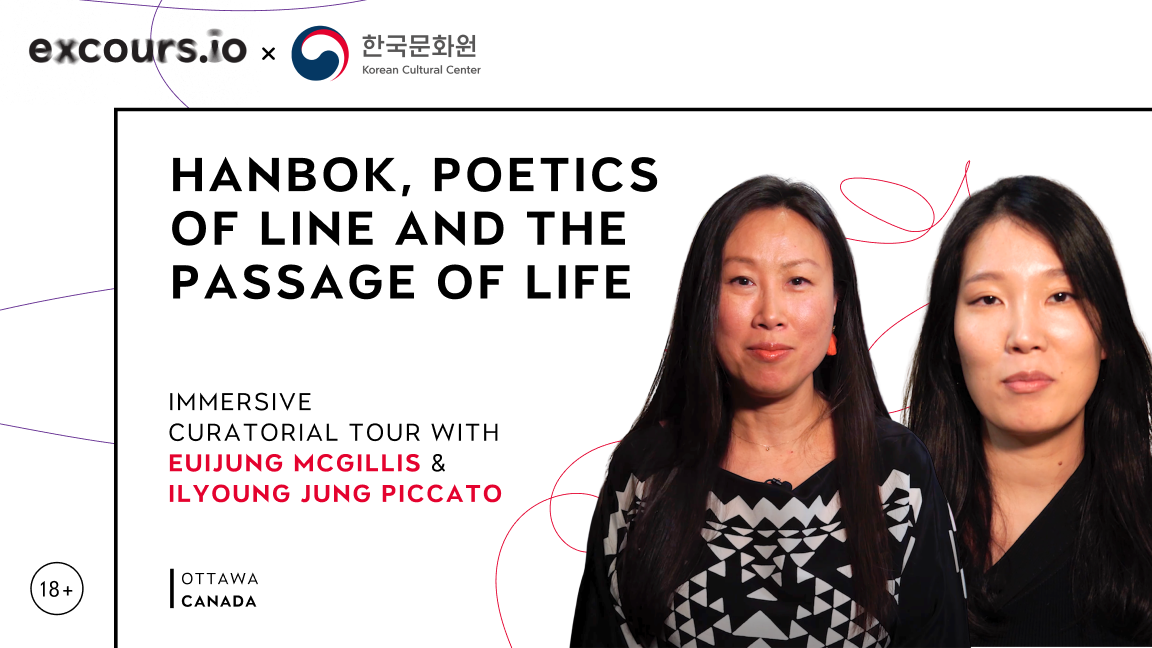
Hanbok, Poetics of Line and the Passage of Life

선이 흘러 삶, 그리고 한복이 되다
Canada Ottawa 2021 19

The exhibition Hanbok, Poetics of Line and the Passage of Life presents the story of traditional Korean attire, tracing its cultural significance and transformation through time. With a basic style originating in the Three Kingdoms period (37 BCE – 668 CE), the Hanbok shown primarily reflects that of the Joseon dynasty (1392 – 1910). The exhibition explores how this clothing embodies Korean ancestral values, worldview, and reverence for nature through its use in life’s milestone ceremonies and its symbolic colours derived from Yin-Yang theory. Curated by EuiJung McGillis, the presentation showcases items from a baby’s first birthday dress to royal robes, alongside modern reinterpretations by early twentieth-century shinyeoseong (new women). Visitors will discover Hanbok as a transmitter of tradition and a dynamic symbol of Korean identity in a global context.

Why should you watch this?

Hanbok, Poetics of Line and the Passage of Life resonates today because it frames clothing as both a vessel of memory and a mirror of change. The exhibition’s display of the Obangjang durumagi, alive with five elemental colors, reminds us of humanity’s search for balance with nature at a time when sustainability is a global concern. Equally striking are the “new women” who reshaped Hanbok to claim individuality during Korea’s modernization — a gesture that still feels bold and liberating. This exhibition shows that tradition is not fixed but evolving, offering viewers a timeless reflection on identity, resilience, and creativity.

Explore

  • About
  • Contacts
  • FAQ
  • Collaborate
  • Any ideas?

Network

  • Institutions
  • Contributors
  • Partners
  • Support us

Transparency

  • Accessibility
  • Sustainability
  • #GoodForEducation
  • Usage Policy
  • Cookies

Latest guided tour films

loader

By subscribing, you acknowledge and agree that we will store, process, and manage your personal information in accordance with our Privacy Policy.

Stay tuned

  • instagram
  • facebook
  • linkedin
  • bluesky
  • mastodon
  • Imprint
  • Privacy Policy
  • Community Guidelines
  • Jobs

© 2026 excoursio e.V. (non-profit). All rights reserved.

We use cookies to ensure that we give you the best experience on our website. If you continue to use this site we will assume that you are happy with it.