
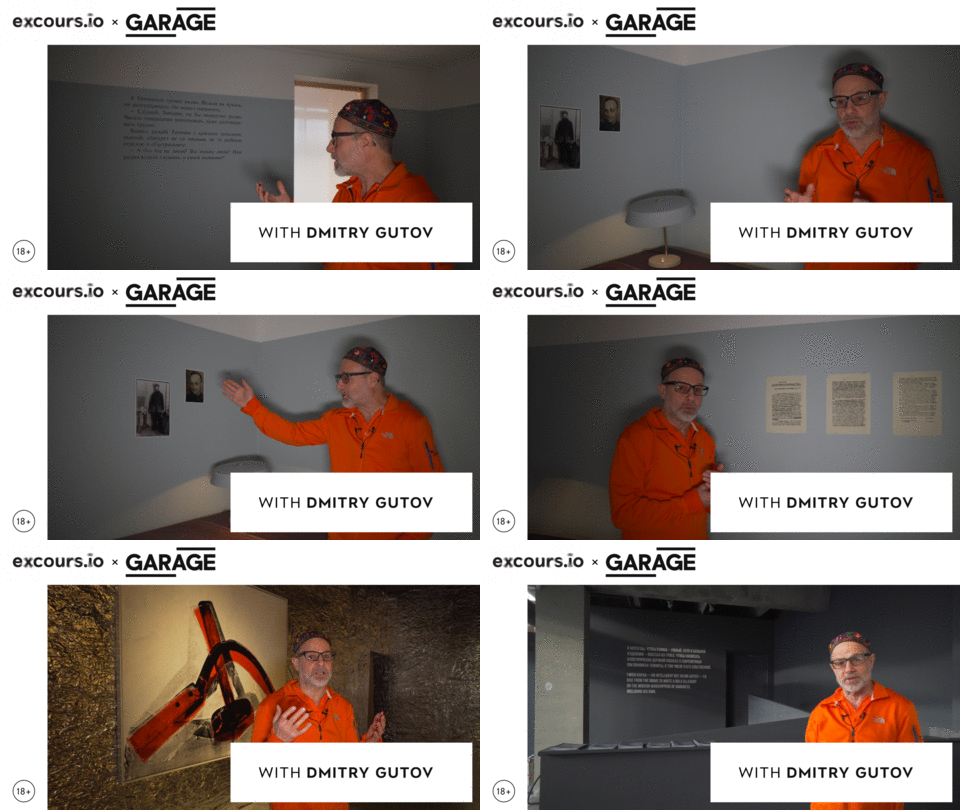
If our soup can could speak: Mikhail Lifshitz and the Soviet Sixties
 Russia
 Moscow
 2018
2018
 59
59
The exhibition is dedicated to one of the most enigmatic, mysterious, and controversial philosophers of the USSR and his famous anthology of polemical texts, The Crisis of Ugliness, which criticizes the art of the 20th century. The retrospective showcases never presented before archive documents, Lifshitz’s texts, and artworks in ten interiors, each representing a milestone in the development of modernism or Lifshitz’s thought: 10 rooms – 10 stages of Soviet history – 10 knots in Lifshitz’s biography. The project is the first large-scale analysis attempt of the tense relationship between so-called progressive art and politics in the XX-XXI century.
Why should you watch this?
This exhibition is a must-see for anyone interested in the deep connections between art, politics, and society. Lifshitz’s The Crisis of Ugliness offers a rare Soviet critique of modernism, challenging Cubism and Pop Art in ways that still resonate today. The exhibition’s exploration of these ideas through archival materials, artworks, and Lifshitz’s own writings sheds light on the complex relationship between avant-garde art and political ideology. In a time of global crisis, Lifshitz’s critiques are more relevant than ever, inviting viewers to reconsider the role of art in shaping social consciousness.
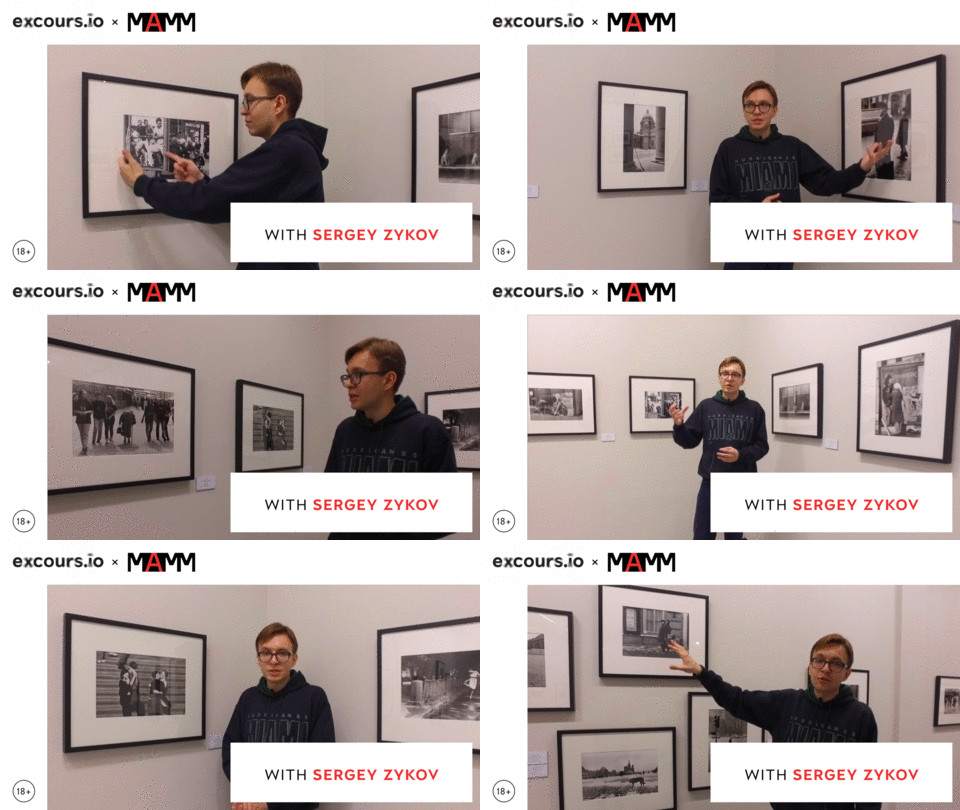
Vladimir Bogdanov. Retrospective. Part of The Classics of Russian Photography Program
Russia
Moscow
2017
80
As part of the Classics of Russian Photography program, MAMM presents the first large-scale retrospective of renowned contemporary photographer Vladimir Bogdanov. The exhibition features over 100 photographs from the Multimedia Art Museum, Moscow, highlighting his work from the 1960s to the 1990s. Born in 1937, Bogdanov’s artistic journey began during the Khrushchev thaw, a period that allowed artists to explore themes beyond socialist realism. This era marked a shift where humanism replaced official dogma, enabling photographers to capture the lives of ordinary people. In 1955, while studying at the Textile Institute, he joined the Leningrad photo club VDK, transforming his passion into a profession. His compelling images reflect a deep connection to Russian society and its complexities during a time of change.
Why should you watch this?
The retrospective exhibition of Vladimir Bogdanov at MAMM is a must-see for anyone interested in the evolution of Russian photography. With over 100 photographs spanning three decades, it showcases Bogdanov’s profound ability to capture the nuances of everyday life against the backdrop of a rapidly changing society. Emerging during the Khrushchev thaw, his work offers a rare glimpse into a time when artists could break free from the constraints of socialist realism. Each image is not just a photograph but a reflection of human experience and resilience, making this exhibition a poignant exploration of cultural identity and history. Engaging with Bogdanov’s art invites viewers to reflect on the complexities of Russian society, enriching their understanding of both past and present.
Katrin Nenasheva. Between Here and There: Stories of City Isolations
Russia
Moscow
2017
50
Between Here and There: Stories of Urban Isolation is an exhibition by Katrin Nenasheva that explores the lives of individuals permanently isolated in psychiatric institutions. In her performance, Nenasheva traversed city streets wearing virtual reality glasses displaying panoramic images from these institutions, highlighting the barriers that separate their world from ours. She engaged with the public in various locations, including the subway and Red Square, inviting them to experience her perspective and share the motivations behind her work. The exhibition presents documentation of her journey, allowing visitors to engage with virtual reality themselves, fostering a dialogue between “here” and “there.” This immersive experience encourages reflection on societal isolation and connection.
Why should you watch this?
Katrin Nenasheva’s exhibition Between Here and There: Stories of Urban Isolation offers a profound exploration of the often-overlooked lives of individuals in psychiatric institutions. By donning virtual reality glasses that display panoramic views of these spaces, Nenasheva creates a striking connection between the isolated and the public, inviting visitors to step into her shoes as she navigates familiar urban landscapes. This immersive performance, paired with documentation of her interactions in locations like the subway and Red Square, blurs the lines between separation and engagement. Through this unique experience, attendees are encouraged to confront their perceptions of mental health, societal isolation, and human connection, prompting vital conversations about empathy and understanding in our communities.
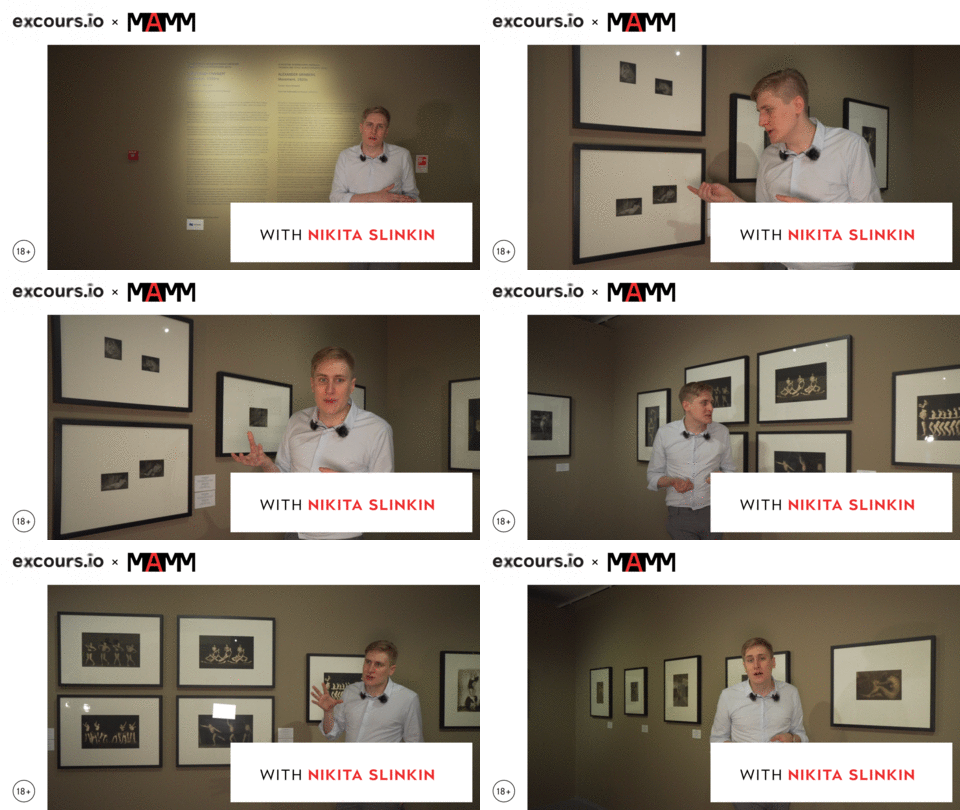
Alexander Grinberg. Movement. 1920s
Russia
Moscow
2019
53
Step back into the vibrant world of the 1920s with the Movement. 1920s exhibition, which captures the revolutionary spirit and artistic innovation of this transformative decade. Celebrating a surge of creativity across visual arts, architecture, and design, the exhibit showcases how artists challenged traditional norms and embraced new mediums and themes. Through a carefully curated selection of works and engaging installations, visitors can explore the interplay between art, politics, and society during a time marked by upheaval and change. From the bold geometries of constructivism to the experimental forms of avant-garde movements, Movement. 1920s invites audiences to witness how the decade laid the groundwork for contemporary art, illuminating the ongoing dialogue between past and present in the ever-evolving landscape of visual culture.
Why should you watch this?
This exhibition features a diverse array of works that reflect the pulse of a society in transformation — bold colors, experimental forms, and a celebration of motion that captures the zeitgeist of post-war optimism. Each piece invites the viewer to engage with the revolutionary ideas that shaped modern art, making it a must-see for anyone interested in the interplay between culture and creativity. It demonstrates how artists of the 1920s broke boundaries and redefined artistic expression, leaving an indelible mark on the contemporary landscape.