
Menu

  • Categories
    • Arts
    • Culture
    • History
    • Music
    • Philosophy
    • Society & Politics
    • Technology & Science
  • Collections
  • Tags
  • Institutions
  • Contributors
  • All Films
  • Random Film

About

excoursio is a free platform for immersive guided tours, turning one-time walkthroughs into lasting learning experiences. excours.io means culture for everyone, everywhere.

Stay tuned

  • instagram
  • facebook
  • linkedin
  • bluesky
  • mastodon
A Poet Passes Through celebrates the expansive world of Abdellatif Laâbi, the Moroccan writer, poet, and painter, at the Mohammed VI Museum in Rabat. This exhibition explores Laâbi’s rich and engaged body of work, presenting him as a voice for a generation seeking meaning through art. It unveils the creative spirit of an era, featuring literary works, archival documents, paintings, and videos that trace his journey and reveal his less-known facet as a painter. A significant focus is the groundbreaking Souffles review, co-founded by Laâbi, which profoundly transformed Moroccan culture and liberated minds. Visitors will discover how one artist’s vision and intellectual struggle historically shaped artistic expression and continue to resonate today, offering a unique insight into a life dedicated to creative impact.As part of the Classics of Russian Photography program, MAMM presents the first large-scale retrospective of renowned contemporary photographer Vladimir Bogdanov. The exhibition features over 100 photographs from the Multimedia Art Museum, Moscow, highlighting his work from the 1960s to the 1990s. Born in 1937, Bogdanov’s artistic journey began during the Khrushchev thaw, a period that allowed artists to explore themes beyond socialist realism. This era marked a shift where humanism replaced official dogma, enabling photographers to capture the lives of ordinary people. In 1955, while studying at the Textile Institute, he joined the Leningrad photo club VDK, transforming his passion into a profession. His compelling images reflect a deep connection to Russian society and its complexities during a time of change.In Mikhail Grachev. Soviet Daily Life. 1930s—1960s through an array of photographs, artifacts, and multimedia installations, attendees are invited to experience the complexities of everyday existence during a transformative era in Russian history. The exhibition captures the interplay of culture, politics, and personal narratives, reflecting how art and design were interwoven into the fabric of daily routines — from the bustling streets to communal celebrations. By showcasing both the mundane and the extraordinary, the exhibition offers a unique lens on how people lived, worked, and dreamt in a time of significant socio-political change, encouraging visitors to ponder the lasting impact of this period on contemporary society and culture.The group exhibition presents a compelling exploration of how art provides resilience in times of personal and societal crisis. The exhibition features works by renowned artists like Gustav Metzger, Shusaku Arakawa, and Alina Szapocznikow, each of whom faced extreme adversity and transformed their experiences into profound artistic statements. Whether addressing environmental destruction, illness, or existential threats, these artists used creativity as a means to survive and challenge the limits of human endurance. The exhibition emphasizes the power of art to propose alternative perspectives when the world seems trapped in binary thinking. By engaging with radical artistic responses to crisis, visitors are invited to reflect on how creativity can offer strength, hope, and new possibilities for navigating the uncertainties of modern life. Art, in this context, becomes more than expression — it becomes a strategy for survival and transformation.Can anger and rage be justified in a world riddled with oppression and inequality? Are these emotions destructive forces or vital catalysts for social change? As democracy faces crises and populism gains ground globally, these questions have sparked renewed debate. Contemporary artists have responded, using their work to navigate and challenge the pressing issues of our time. The exhibition ‘Time for Outrage!’ in Düsseldorf explores these questions through six thematic blocks: Right-wing Shift, Trumpism, Protest, Postcolonialism, Feminism, and Discrimination. Across a diverse range of mediums — including installations, drawings, paintings, sculptures, photography, and video art — 40 international artists immerse viewers in the visceral realms of protest, social dissent, and public anger. The exhibition doesn’t just present anger as a raw emotion; it portrays it as a vehicle for dialogue, resistance, and empowerment in the face of systemic injustice. A substantial portion of the works on display come from the collection of entrepreneur and collector Florian Peters-Messer, whose commitment to socially engaged art amplifies the urgent messages these pieces convey.
Toggle sidebar & navigation
  • Categories
    • Arts
    • Culture
    • History
    • Music
    • Philosophy
    • Society & Politics
    • Technology & Science
  • Collections
  • Tags
  • Institutions
  • Contributors
  • All Films
  • Random Film
excoursio

Tag / Art and Dance

Filters
Duration

Duration


Show (1)
Cancel

Sort by Date

Museum Choreography
Tartu Art Museum Arts | Culture | Music
18+

Museum Choreography

Muuseumi Koreograafia
Estonia Tartu 2018 53

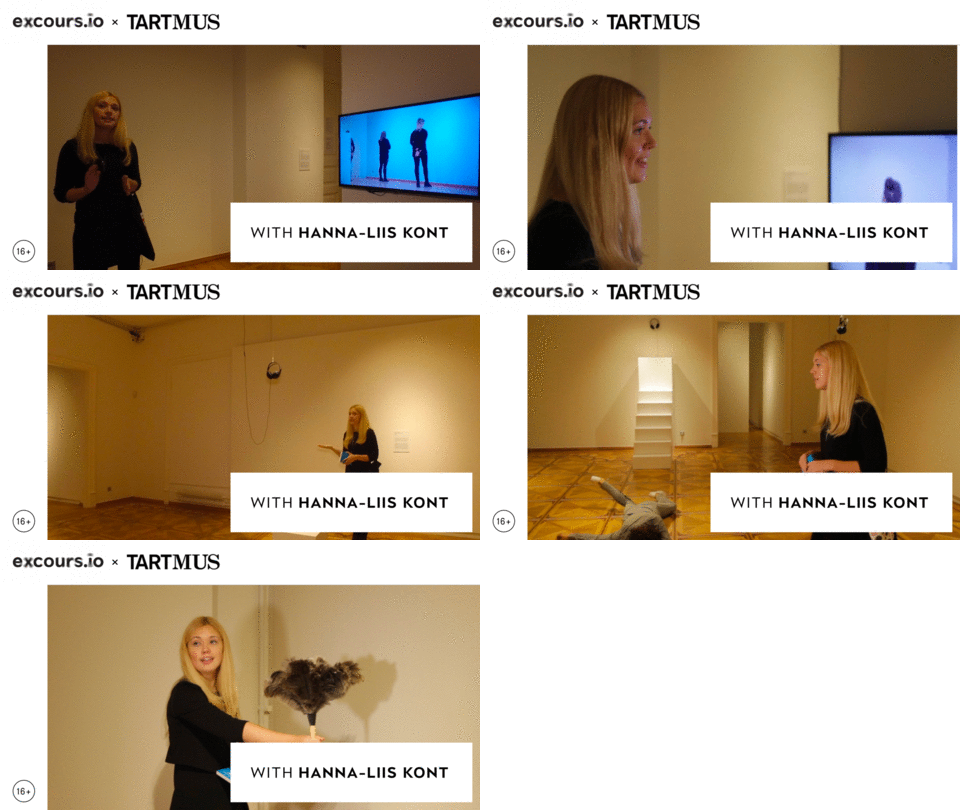
This innovative exhibition reimagines the traditional museum experience through the lens of dance and choreography, inviting audiences to become active participants in the artistic dialogue. It foregrounds the unpredictable interplay between viewer movement and static artworks, showcasing how personal histories, cultural contexts, and physical presence transform the museum into a living, dynamic space. By exploring the nuances of how we look at and engage with art, the exhibition challenges visitors to reflect on their own movement and interactions within the gallery. This exhibition is a thought-provoking exploration of the embodied experience of art, making the viewer an integral part of the creative narrative.

Why should you watch this?

In today’s rapidly evolving cultural landscape, this exhibition stands out by positioning dance and choreography as vital means of understanding and engaging with art in the museum context. By centering the audience’s experience, it reflects our collective need for connection and interaction in spaces that often feel static and distant. In an era where individual perspectives and cultural backgrounds shape our understanding of art, this exhibition invites viewers to reclaim their role, reminding us that museums are not just repositories of art but vibrant environments shaped by human presence and movement. As the act of looking becomes more layered and complex in our digital world, this exhibition challenges us to reconsider our relationship with art, encouraging a deeper engagement that resonates well beyond the gallery walls.

Explore

  • About
  • Contacts
  • FAQ
  • Collaborate
  • Any ideas?

Network

  • Institutions
  • Contributors
  • Partners
  • Support us

Transparency

  • Accessibility
  • Sustainability
  • #GoodForEducation
  • Usage Policy
  • Cookies

Latest guided tour films

loader

By subscribing, you acknowledge and agree that we will store, process, and manage your personal information in accordance with our Privacy Policy.

Stay tuned

  • instagram
  • facebook
  • linkedin
  • bluesky
  • mastodon
  • Imprint
  • Privacy Policy
  • Community Guidelines
  • Jobs

© 2025 excoursio e.V. (non-profit). All rights reserved.

We use cookies to ensure that we give you the best experience on our website. If you continue to use this site we will assume that you are happy with it.