
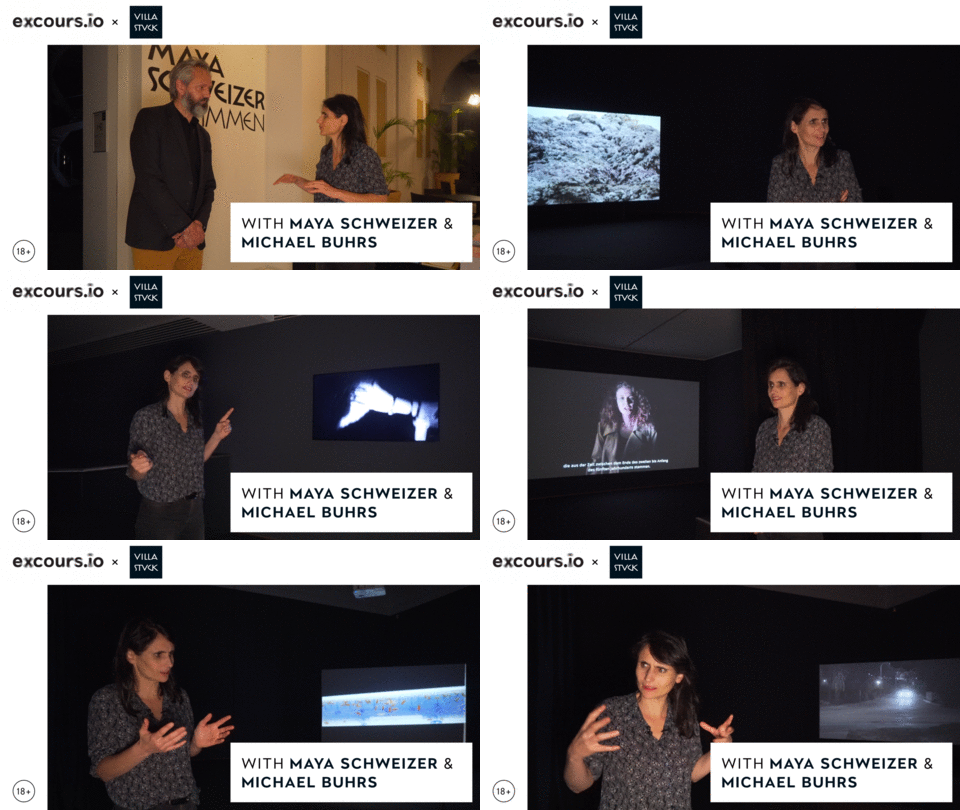
Maya Schweizer – Voices
 Germany
 Munich
 2020
2020
 43
43
Human perception of time often resembles a collage — fragmented and layered, shaped by memory and experience. Berlin-based artist Maya Schweizer captures this complexity through her unique language of short film. In her work, everyday spaces become carriers of memory, interweaving found footage, situational observations, and soundscapes to create immersive, multifaceted narratives. Schweizer’s art subtly explores the intricacies of cultural identity and the role individuals play as political actors, encouraging deeper reflection on how we engage with our surroundings and their embedded histories. In her solo exhibition Stimmen (Voices) at the Museum Villa Stuck, composed of 10 films spanning the past 14 years, Schweizer gives voice to those who have disappeared, recounting stories of violence, memory, and loss, particularly within the context of German history and Munich’s past. By blending personal and collective histories, her work oscillates between documentation and staged reality, using urban spaces as laboratories for examining overlapping historical layers. As viewers dive into the culture of remembrance, Schweizer uncovers new and often unsettling depths of human memory, sparking a reflection on the invisible ties between people, places, and their histories.
Why should you watch this?
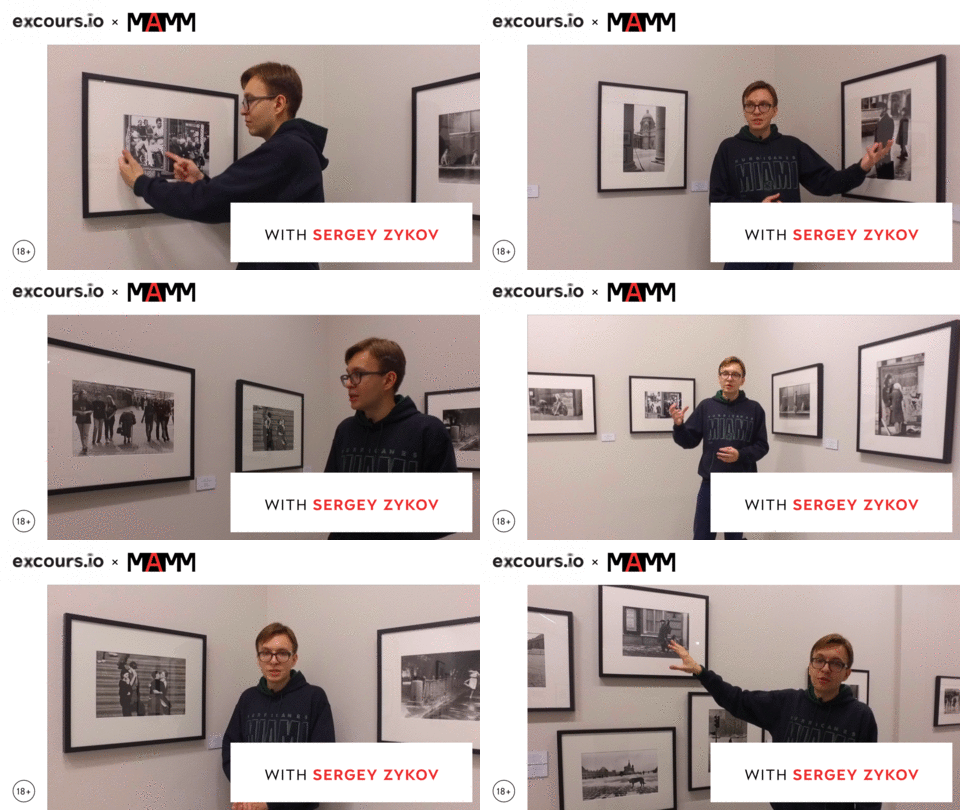
Vladimir Bogdanov. Retrospective. Part of The Classics of Russian Photography Program
Russia
Moscow
2017
80
As part of the Classics of Russian Photography program, MAMM presents the first large-scale retrospective of renowned contemporary photographer Vladimir Bogdanov. The exhibition features over 100 photographs from the Multimedia Art Museum, Moscow, highlighting his work from the 1960s to the 1990s. Born in 1937, Bogdanov’s artistic journey began during the Khrushchev thaw, a period that allowed artists to explore themes beyond socialist realism. This era marked a shift where humanism replaced official dogma, enabling photographers to capture the lives of ordinary people. In 1955, while studying at the Textile Institute, he joined the Leningrad photo club VDK, transforming his passion into a profession. His compelling images reflect a deep connection to Russian society and its complexities during a time of change.
Why should you watch this?
The retrospective exhibition of Vladimir Bogdanov at MAMM is a must-see for anyone interested in the evolution of Russian photography. With over 100 photographs spanning three decades, it showcases Bogdanov’s profound ability to capture the nuances of everyday life against the backdrop of a rapidly changing society. Emerging during the Khrushchev thaw, his work offers a rare glimpse into a time when artists could break free from the constraints of socialist realism. Each image is not just a photograph but a reflection of human experience and resilience, making this exhibition a poignant exploration of cultural identity and history. Engaging with Bogdanov’s art invites viewers to reflect on the complexities of Russian society, enriching their understanding of both past and present.