
Menu

  • Categories
    • Arts
    • Culture
    • History
    • Music
    • Philosophy
    • Society & Politics
    • Technology & Science
  • Collections
  • Tags
  • Institutions
  • Contributors
  • All Films
  • Random Film

About

excoursio is a free platform for immersive guided tours, turning one-time walkthroughs into lasting learning experiences. excours.io means culture for everyone, everywhere.

Stay tuned

  • instagram
  • facebook
  • linkedin
  • bluesky
  • mastodon
Tobias Zielony’s “Maskirovka” offers a striking exploration of Kyiv’s queer techno scene in the wake of the post-Maidan era, blending artistic expression with a profound commentary on societal resistance. This project reflects the duality of its title, capturing moments where identity is both concealed and celebrated amid an unstable political landscape. Through his evocative photographs and a dynamic animated film composed of 5,400 images, Zielony provides a lens into a vibrant, underground community that challenges nationalism and conventional norms. The interplay of nighttime revelry and the stark realities of conflict creates a vivid tapestry, inviting viewers to engage with the multi-faceted narratives of the individuals within, while questioning the representation of Ukraine within broader sociopolitical dialogues. In this nuanced portrayal, Zielony reveals the fragility and resilience of a generation caught between chaos and the pursuit of self-determination.The exhibition delves into a groundbreaking aspect of Russian cultural history birthed from the revolution—mobile propaganda trains. These unique vehicles served as a fusion of art and technology, transforming into vibrant mobile platforms that combined exhibitions, theater, libraries, and cinema on wheels. Launched in 1918 under the directive of the All-Russian Central Executive Committee, these trains traversed vast distances, reaching from Odessa to Irkutsk and engaging communities with their painted exteriors and rich artistic content. Supervised by renowned graphic artist Ignatiy Nivinsky, the trains featured contributions from a diverse array of artists, blending Symbolism with early avant-garde ideas. This exhibition promises an in-depth exploration of their socio-political significance during the Civil War, showcasing archival photos, posters, and various artifacts that capture the ethos of an era where art became instrumental in uniting and inspiring a nation.The group exhibition presents a compelling exploration of how art provides resilience in times of personal and societal crisis. The exhibition features works by renowned artists like Gustav Metzger, Shusaku Arakawa, and Alina Szapocznikow, each of whom faced extreme adversity and transformed their experiences into profound artistic statements. Whether addressing environmental destruction, illness, or existential threats, these artists used creativity as a means to survive and challenge the limits of human endurance. The exhibition emphasizes the power of art to propose alternative perspectives when the world seems trapped in binary thinking. By engaging with radical artistic responses to crisis, visitors are invited to reflect on how creativity can offer strength, hope, and new possibilities for navigating the uncertainties of modern life. Art, in this context, becomes more than expression — it becomes a strategy for survival and transformation.The exhibition Hanbok, Poetics of Line and the Passage of Life presents the story of traditional Korean attire, tracing its cultural significance and transformation through time. With a basic style originating in the Three Kingdoms period (37 BCE – 668 CE), the Hanbok shown primarily reflects that of the Joseon dynasty (1392 – 1910). The exhibition explores how this clothing embodies Korean ancestral values, worldview, and reverence for nature through its use in life’s milestone ceremonies and its symbolic colours derived from Yin-Yang theory. Curated by EuiJung McGillis, the presentation showcases items from a baby’s first birthday dress to royal robes, alongside modern reinterpretations by early twentieth-century shinyeoseong (new women). Visitors will discover Hanbok as a transmitter of tradition and a dynamic symbol of Korean identity in a global context.The exhibition delves deep into the captivating world of shells and snails as seen through the lenses of iconic modern photographers like Edward Weston and Imogen Cunningham. This pioneering showcase assembles a rich tapestry of images, tracing humanity’s longstanding fascination with these natural forms—from their mathematical elegance to their cosmic symbolism. Grounded in Alfred Ehrhardt’s seminal works, including his influential books “Muscheln und Schnecken” and “Geprägte Form,” the exhibition also highlights the intersection of art and science, featuring innovative techniques like X-ray photography and the New Objectivity movement. Beyond mere visual appeal, the show offers an exploration of cultural significance, inviting viewers to reflect on the beauty and complexity of these “structural forms in nature,” culminating in the screening of Ehrhardt’s award-winning film “Tanz der Muscheln.”
Toggle sidebar & navigation
  • Categories
    • Arts
    • Culture
    • History
    • Music
    • Philosophy
    • Society & Politics
    • Technology & Science
  • Collections
  • Tags
  • Institutions
  • Contributors
  • All Films
  • Random Film
excoursio

Tag / Intercultural Relations

Filtered (1)
Duration
  • Reset all ×
  • <10 min ×

Duration

1 post found

Show (1)
Cancel

Sort by Date

Mohammed VI Museum of Modern and Contemporary Art (MMVI Rabat) Arts | Culture | History
18+

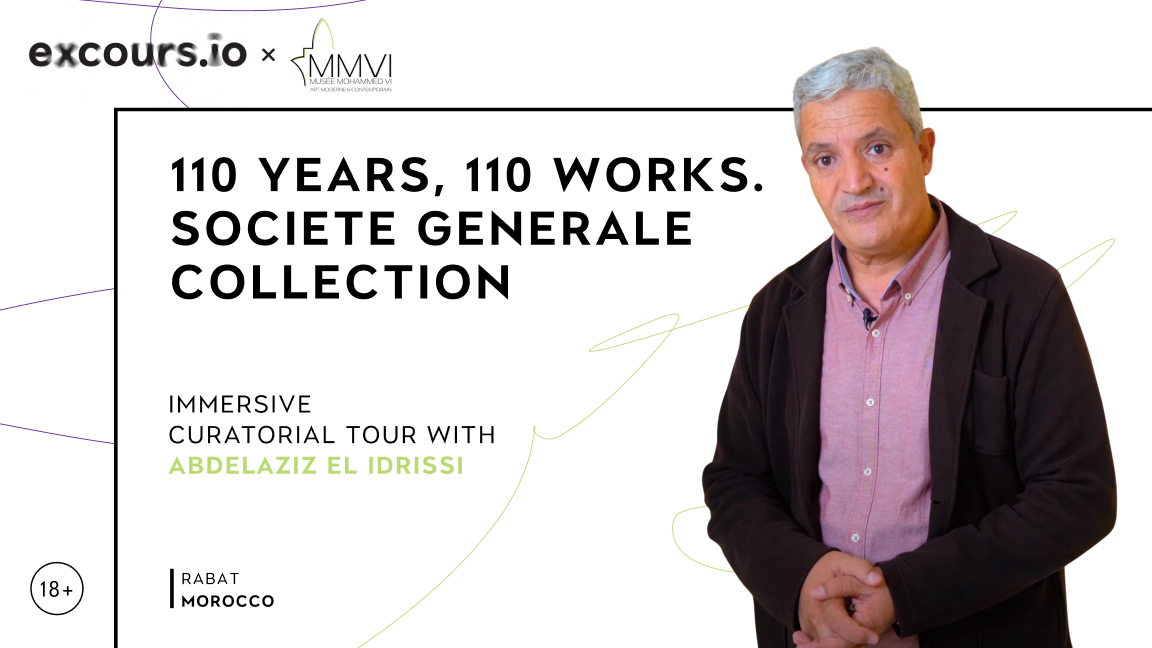
110 Years, 110 Works. Société Générale Collection

110 ans, 110 oeuvres. Collection Société Générale
Morocco Rabat 2024 8

110 ans, 110 œuvres, at the Mohammed VI Museum of Modern and Contemporary Art in Rabat, commemorates Société Générale Maroc’s 110th anniversary and its long-standing commitment to art and Moroccan culture. This exceptional exhibition, a collaboration with the National Museum Foundation, features a precious part of the bank’s collection, including previously unseen works. It takes visitors on a timeless journey, tracing Moroccan art’s evolution from the early 20th century, starting with pioneers like Ben Ali R’bati, across four distinct periods to the present day. The exhibition highlights Moroccan artists’ contribution to national identity. It celebrates a rich artistic heritage and Société Générale Maroc’s enduring role in art’s promotion, anticipating the opening of its own museum in 2024. Visitors gain insight into Morocco’s artistic dynamism and the intricate relationship between banking and cultural patronage over more than a century.

Why should you watch this?

The exhibition 110 ans, 110 œuvres matters today because it shows how art can carry a nation’s memory while speaking to its future. Moving between the early brushstrokes of Ben Ali R’bati and the global perspectives of contemporary Moroccan artists, it evokes both pride and questioning: how does creativity define who we are in a world of constant change? Visitors may feel inspired by the intimate voices of the 1980s generation, who turned personal experience into universal expression, or by today’s works shaped through worldwide dialogue. Ultimately, the exhibition reminds us that art’s power to connect time, place, and people remains urgently relevant.

Explore

  • About
  • Contacts
  • FAQ
  • Collaborate
  • Any ideas?

Network

  • Institutions
  • Contributors
  • Partners
  • Support us

Transparency

  • Accessibility
  • Sustainability
  • #GoodForEducation
  • Usage Policy
  • Cookies

Latest guided tour films

loader

By subscribing, you acknowledge and agree that we will store, process, and manage your personal information in accordance with our Privacy Policy.

Stay tuned

  • instagram
  • facebook
  • linkedin
  • bluesky
  • mastodon
  • Imprint
  • Privacy Policy
  • Community Guidelines
  • Jobs

© 2026 excoursio e.V. (non-profit). All rights reserved.

We use cookies to ensure that we give you the best experience on our website. If you continue to use this site we will assume that you are happy with it.