
Menu

  • Categories
    • Arts
    • Culture
    • History
    • Music
    • Philosophy
    • Society & Politics
    • Technology & Science
  • Collections
  • Tags
  • Institutions
  • Contributors
  • All Films
  • Random Film

About

excoursio is a free platform for immersive guided tours, turning one-time walkthroughs into lasting learning experiences. excours.io means culture for everyone, everywhere.

Stay tuned

  • instagram
  • facebook
  • linkedin
  • bluesky
  • mastodon
Sergiy Bratkov (b. 1960) is renowned for his radically unsettling and striking photographs that, beneath their vivid surface, present an unflinching report on societal conditions. Like other members of the “Kharkiv School of Photography,” his work over the past 30 years has focused on social photography. In spring 2022, the Ukrainian artist, who had been living in Moscow since 2004, emigrated to Berlin. His recent work, previously centered on outdated Soviet-era clichés and the brash new capitalism of post-Soviet Ukraine, has now been sharply refocused by the brutal realities of the ongoing war. In this exhibition, Bratkov presents new cycles of images and videos created since Russia’s invasion of Ukraine. The once ironic observer has transformed into a reflective analyst, confronting the horrors of war in his former homeland. His new works grapple with this trauma while resisting the pull of hopelessness.The exhibition Notes from the Underground. Art and Alternative Music in Eastern Europe 1968–1994 examines the intersection of underground music and visual arts under communist regimes in Eastern Europe. It highlights how rock, punk, and new wave music, alongside performance art, fashion, and film, became tools of countercultural expression against state control. In response to censorship and scarcity, artists and musicians created homemade instruments, produced Samizdat magazines, and distributed recordings. The exhibition underscores the role of improvisation and irony in resisting authoritarianism, with works from Poland, Yugoslavia, the Soviet Union, and Czechoslovakia, offering a new perspective on how art and music intertwined as forms of dissent.Yokoo Tadanori’s Game of Life transforms the artist’s remarkable journey into an interactive board game, inviting visitors to experience his extensive artistic world firsthand. Born in 1936, Yokoo Tadanori has navigated a career spanning decades, marked by a philosophy that embraces destiny and chance. The exhibition explores how his art reflects life’s unpredictable path, where outcomes are often left to fate, much like reaching the “Finish” square in a game. Through this engaging format, featuring the visionary artist’s work, the exhibition encourages reflection on the interplay of choice and fortune in shaping creative expression and individual trajectories. Visitors will gain a fresh perspective on his unique artistic vision and the unpredictable nature of life itself.The exhibition delves into a groundbreaking aspect of Russian cultural history birthed from the revolution—mobile propaganda trains. These unique vehicles served as a fusion of art and technology, transforming into vibrant mobile platforms that combined exhibitions, theater, libraries, and cinema on wheels. Launched in 1918 under the directive of the All-Russian Central Executive Committee, these trains traversed vast distances, reaching from Odessa to Irkutsk and engaging communities with their painted exteriors and rich artistic content. Supervised by renowned graphic artist Ignatiy Nivinsky, the trains featured contributions from a diverse array of artists, blending Symbolism with early avant-garde ideas. This exhibition promises an in-depth exploration of their socio-political significance during the Civil War, showcasing archival photos, posters, and various artifacts that capture the ethos of an era where art became instrumental in uniting and inspiring a nation.In the early 1960s, photography emerged as a recognized art form, yet, in Latvia, it struggled for acceptance in traditional art spaces. The establishment of the Photo Club “Rīga” in 1962 marked a pivotal moment, fostering a vibrant community that embraced photography’s artistic potential. This collective became a vital force in shaping the perception of art photography both locally and globally, drawing in visionary talents who pushed creative boundaries. The club’s ongoing legacy reflects not just the evolution of photography as an art form but also its enduring relevance within contemporary Latvian culture. As it adapts to new challenges and styles, the Photo Club remains a cherished cornerstone, celebrating its historical impact while inspiring future generations of photographers.
Toggle sidebar & navigation
  • Categories
    • Arts
    • Culture
    • History
    • Music
    • Philosophy
    • Society & Politics
    • Technology & Science
  • Collections
  • Tags
  • Institutions
  • Contributors
  • All Films
  • Random Film
excoursio

Tag / Museum Engagement

Filtered (1)
Duration
  • Reset all ×
  • <10 min ×

Duration

1 post found

Show (1)
Cancel

Sort by Date

Mohammed VI Museum of Modern and Contemporary Art (MMVI Rabat) Arts | Culture | History
18+

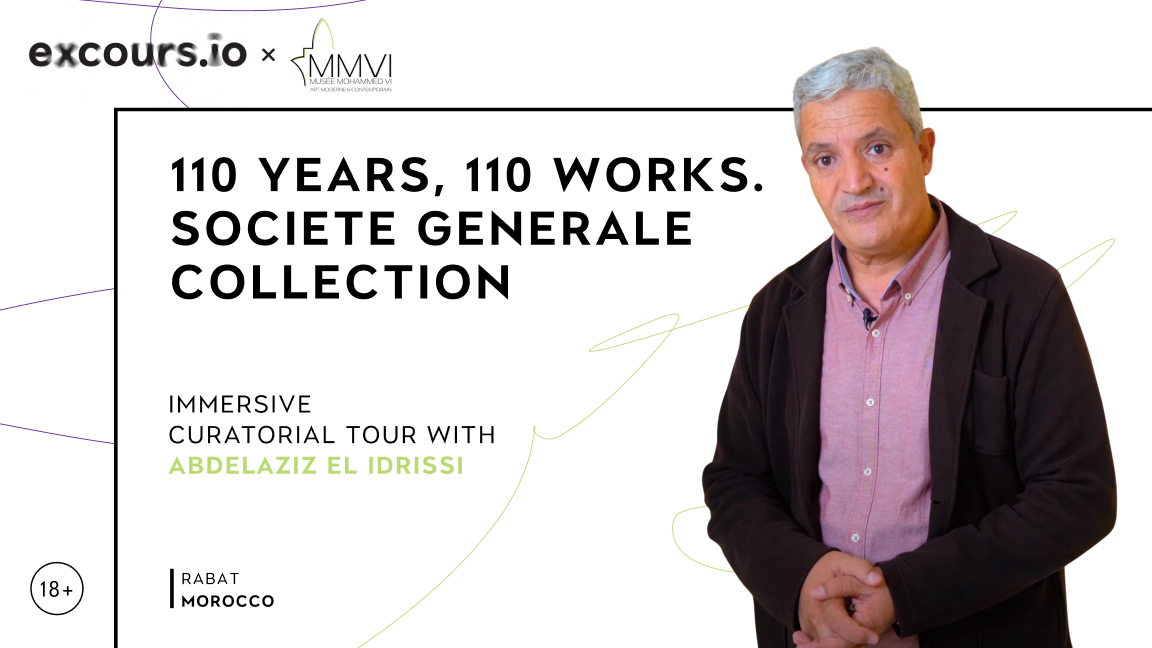
110 Years, 110 Works. Société Générale Collection

110 ans, 110 oeuvres. Collection Société Générale
Morocco Rabat 2024 8

110 ans, 110 œuvres, at the Mohammed VI Museum of Modern and Contemporary Art in Rabat, commemorates Société Générale Maroc’s 110th anniversary and its long-standing commitment to art and Moroccan culture. This exceptional exhibition, a collaboration with the National Museum Foundation, features a precious part of the bank’s collection, including previously unseen works. It takes visitors on a timeless journey, tracing Moroccan art’s evolution from the early 20th century, starting with pioneers like Ben Ali R’bati, across four distinct periods to the present day. The exhibition highlights Moroccan artists’ contribution to national identity. It celebrates a rich artistic heritage and Société Générale Maroc’s enduring role in art’s promotion, anticipating the opening of its own museum in 2024. Visitors gain insight into Morocco’s artistic dynamism and the intricate relationship between banking and cultural patronage over more than a century.

Why should you watch this?

The exhibition 110 ans, 110 œuvres matters today because it shows how art can carry a nation’s memory while speaking to its future. Moving between the early brushstrokes of Ben Ali R’bati and the global perspectives of contemporary Moroccan artists, it evokes both pride and questioning: how does creativity define who we are in a world of constant change? Visitors may feel inspired by the intimate voices of the 1980s generation, who turned personal experience into universal expression, or by today’s works shaped through worldwide dialogue. Ultimately, the exhibition reminds us that art’s power to connect time, place, and people remains urgently relevant.

Explore

  • About
  • Contacts
  • FAQ
  • Collaborate
  • Any ideas?

Network

  • Institutions
  • Contributors
  • Partners
  • Support us

Transparency

  • Accessibility
  • Sustainability
  • #GoodForEducation
  • Usage Policy
  • Cookies

Latest guided tour films

loader

By subscribing, you acknowledge and agree that we will store, process, and manage your personal information in accordance with our Privacy Policy.

Stay tuned

  • instagram
  • facebook
  • linkedin
  • bluesky
  • mastodon
  • Imprint
  • Privacy Policy
  • Community Guidelines
  • Jobs

© 2026 excoursio e.V. (non-profit). All rights reserved.