
Menu

  • Categories
    • Arts
    • Culture
    • History
    • Music
    • Philosophy
    • Society & Politics
    • Technology & Science
  • Collections
  • Tags
  • Institutions
  • Contributors
  • All Films
  • Random Film

About

excoursio is a free platform for immersive guided tours, turning one-time walkthroughs into lasting learning experiences. excours.io means culture for everyone, everywhere.

Stay tuned

  • instagram
  • facebook
  • linkedin
  • bluesky
  • mastodon
In Mikhail Grachev. Soviet Daily Life. 1930s—1960s through an array of photographs, artifacts, and multimedia installations, attendees are invited to experience the complexities of everyday existence during a transformative era in Russian history. The exhibition captures the interplay of culture, politics, and personal narratives, reflecting how art and design were interwoven into the fabric of daily routines — from the bustling streets to communal celebrations. By showcasing both the mundane and the extraordinary, the exhibition offers a unique lens on how people lived, worked, and dreamt in a time of significant socio-political change, encouraging visitors to ponder the lasting impact of this period on contemporary society and culture.Vasily Ulitin. Elegy is a poignant exploration of memory and the human experience, showcasing contemporary artworks that delve into themes of loss and nostalgia. This compelling exhibition brings together a diverse array of artists, each offering a unique lens on the fragility of existence and the echoes of the past. Through striking visuals and thought-provoking installations, visitors are invited to reflect on the transient nature of life and the artifacts of memory that linger in our minds. The careful curation weaves a narrative that transcends individual perspectives, creating a shared space for solace and contemplation.The exhibition is dedicated to one of the most enigmatic, mysterious, and controversial philosophers of the USSR and his famous anthology of polemical texts, The Crisis of Ugliness, which criticizes the art of the 20th century. The retrospective showcases never presented before archive documents, Lifshitz’s texts, and artworks in ten interiors, each representing a milestone in the development of modernism or Lifshitz’s thought: 10 rooms – 10 stages of Soviet history – 10 knots in Lifshitz’s biography. The project is the first large-scale analysis attempt of the tense relationship between so-called progressive art and politics in the XX-XXI century.The exhibition illuminates the profound influence of the Great October Revolution on Eastern art. Featuring over 100 works from Soviet Turkmenistan, Uzbekistan, Azerbaijan, Mongolia, China, and Vietnam, the exhibition showcases a rich tapestry of artistic expressions—embroideries, posters, paper cutouts, and more—that reflect a unique amalgamation of local traditions and Soviet ideologies. Visitors will encounter the cult of personality through portraits of revolutionary leaders, discover the vibrant propaganda posters that redefined societal roles, and engage with stunning engravings depicting the industrial ambitions of China. This exhibition not only highlights the artistic responses to political shifts but also serves as a testament to the complex legacy of the Russian Revolution, revealing how hope, trauma, and cultural identity were woven into the fabric of artistry across nations. Many of these pieces are being showcased to the Russian public for the first time in decades, offering fresh insights into this historical narrative.Richard Paulick’s career was a mosaic of contradictions — modernist Bauhaus ideals alongside socialist industrialism, avant-garde innovation woven into national architectural traditions. His life was marked by war, shifting ideologies, and forced relocations, yet his dedication to architecture never wavered. Paulick emerged as one of the most influential architects of the German Democratic Republic, breathing new life into war-torn cities like Dresden and Berlin, while also shaping the industrial landscapes of smaller East German towns. Remarkably, his work extended far beyond Europe’s borders, leaving a legacy in pre-communist Shanghai as well. The exhibition at the Bauhaus Dessau Foundation, a beacon of German avant-garde architecture, vividly captures Paulick’s lifelong quest for self-realization in the face of the political and social currents of the 20th century. Through his work, the complexities of personal and ideological resilience unfold, offering viewers a window into both the man and the turbulent world he helped to shape.
Toggle sidebar & navigation
  • Categories
    • Arts
    • Culture
    • History
    • Music
    • Philosophy
    • Society & Politics
    • Technology & Science
  • Collections
  • Tags
  • Institutions
  • Contributors
  • All Films
  • Random Film
excoursio

Tag / Museum Engagement

Filters
Duration

Duration


Show (12)
Cancel

Sort by Date

Mohammed VI Museum of Modern and Contemporary Art (MMVI Rabat) Arts | Culture | History
18+

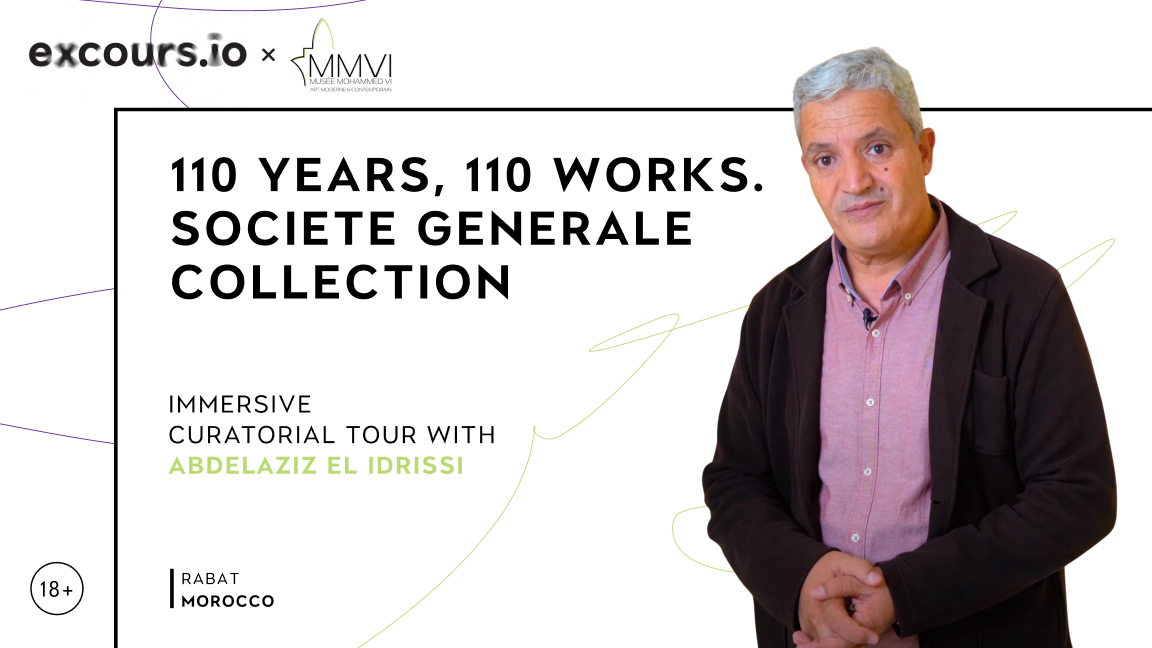
110 Years, 110 Works. Société Générale Collection

110 ans, 110 oeuvres. Collection Société Générale
Morocco Rabat 2024 8

110 ans, 110 œuvres, at the Mohammed VI Museum of Modern and Contemporary Art in Rabat, commemorates Société Générale Maroc’s 110th anniversary and its long-standing commitment to art and Moroccan culture. This exceptional exhibition, a collaboration with the National Museum Foundation, features a precious part of the bank’s collection, including previously unseen works. It takes visitors on a timeless journey, tracing Moroccan art’s evolution from the early 20th century, starting with pioneers like Ben Ali R’bati, across four distinct periods to the present day. The exhibition highlights Moroccan artists’ contribution to national identity. It celebrates a rich artistic heritage and Société Générale Maroc’s enduring role in art’s promotion, anticipating the opening of its own museum in 2024. Visitors gain insight into Morocco’s artistic dynamism and the intricate relationship between banking and cultural patronage over more than a century.

Why should you watch this?

The exhibition 110 ans, 110 œuvres matters today because it shows how art can carry a nation’s memory while speaking to its future. Moving between the early brushstrokes of Ben Ali R’bati and the global perspectives of contemporary Moroccan artists, it evokes both pride and questioning: how does creativity define who we are in a world of constant change? Visitors may feel inspired by the intimate voices of the 1980s generation, who turned personal experience into universal expression, or by today’s works shaped through worldwide dialogue. Ultimately, the exhibition reminds us that art’s power to connect time, place, and people remains urgently relevant.
Korean Cultural Center (KCC) Arts | Culture | History
18+

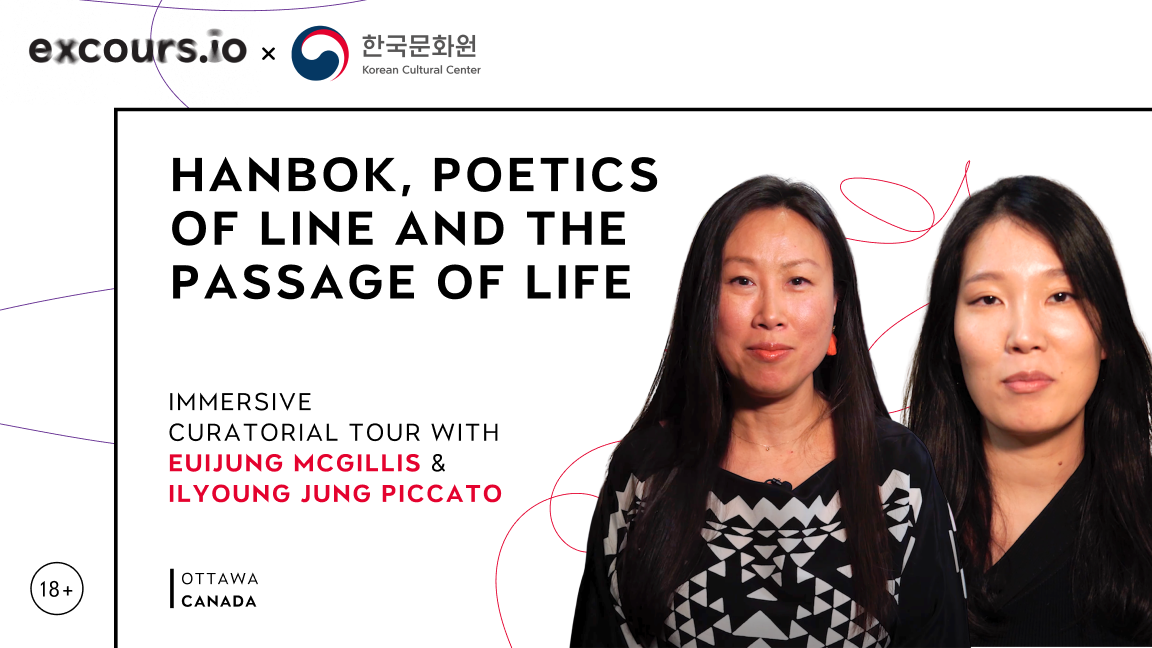
Hanbok, Poetics of Line and the Passage of Life

선이 흘러 삶, 그리고 한복이 되다
Canada Ottawa 2021 19

The exhibition Hanbok, Poetics of Line and the Passage of Life presents the story of traditional Korean attire, tracing its cultural significance and transformation through time. With a basic style originating in the Three Kingdoms period (37 BCE – 668 CE), the Hanbok shown primarily reflects that of the Joseon dynasty (1392 – 1910). The exhibition explores how this clothing embodies Korean ancestral values, worldview, and reverence for nature through its use in life’s milestone ceremonies and its symbolic colours derived from Yin-Yang theory. Curated by EuiJung McGillis, the presentation showcases items from a baby’s first birthday dress to royal robes, alongside modern reinterpretations by early twentieth-century shinyeoseong (new women). Visitors will discover Hanbok as a transmitter of tradition and a dynamic symbol of Korean identity in a global context.

Why should you watch this?

Hanbok, Poetics of Line and the Passage of Life resonates today because it frames clothing as both a vessel of memory and a mirror of change. The exhibition’s display of the Obangjang durumagi, alive with five elemental colors, reminds us of humanity’s search for balance with nature at a time when sustainability is a global concern. Equally striking are the “new women” who reshaped Hanbok to claim individuality during Korea’s modernization — a gesture that still feels bold and liberating. This exhibition shows that tradition is not fixed but evolving, offering viewers a timeless reflection on identity, resilience, and creativity.
Tartu Art Museum Arts | Culture | Music
18+

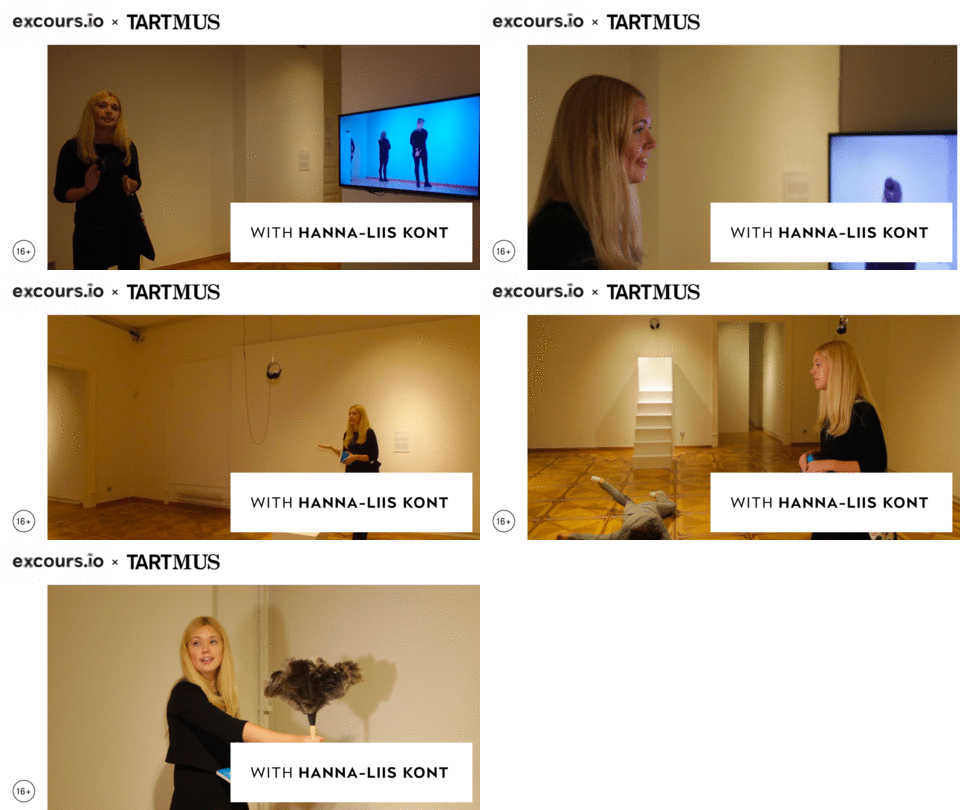
Museum Choreography

Muuseumi Koreograafia
Estonia Tartu 2018 53

This innovative exhibition reimagines the traditional museum experience through the lens of dance and choreography, inviting audiences to become active participants in the artistic dialogue. It foregrounds the unpredictable interplay between viewer movement and static artworks, showcasing how personal histories, cultural contexts, and physical presence transform the museum into a living, dynamic space. By exploring the nuances of how we look at and engage with art, the exhibition challenges visitors to reflect on their own movement and interactions within the gallery. This exhibition is a thought-provoking exploration of the embodied experience of art, making the viewer an integral part of the creative narrative.

Why should you watch this?

In today’s rapidly evolving cultural landscape, this exhibition stands out by positioning dance and choreography as vital means of understanding and engaging with art in the museum context. By centering the audience’s experience, it reflects our collective need for connection and interaction in spaces that often feel static and distant. In an era where individual perspectives and cultural backgrounds shape our understanding of art, this exhibition invites viewers to reclaim their role, reminding us that museums are not just repositories of art but vibrant environments shaped by human presence and movement. As the act of looking becomes more layered and complex in our digital world, this exhibition challenges us to reconsider our relationship with art, encouraging a deeper engagement that resonates well beyond the gallery walls.

1 2

Explore

  • About
  • Contacts
  • FAQ
  • Collaborate
  • Any ideas?

Network

  • Institutions
  • Contributors
  • Partners
  • Support us

Transparency

  • Accessibility
  • Sustainability
  • #GoodForEducation
  • Usage Policy
  • Cookies

Latest guided tour films

loader

By subscribing, you acknowledge and agree that we will store, process, and manage your personal information in accordance with our Privacy Policy.

Stay tuned

  • instagram
  • facebook
  • linkedin
  • bluesky
  • mastodon
  • Imprint
  • Privacy Policy
  • Community Guidelines
  • Jobs

© 2026 excoursio e.V. (non-profit). All rights reserved.

We use cookies to ensure that we give you the best experience on our website. If you continue to use this site we will assume that you are happy with it.